

Resident Physician Shortage Reduction Act of 2021 This bill increases the number of residency positions eligible for graduate medical education payments under Medicare for qualifying hospitals, including hospitals in rural areas and health professional shortage areas. Current law provides for an increase of up to 200 positions per fiscal year beginning in FY2023, with a total increase of 1,000 positions; each hospital may receive up to 25 additional positions. The bill provides for an additional increase of 2,000 positions per fiscal year from FY2023-FY2029; during this period, each hospital may receive up to 75 additional positions in total under the bill and current law. Additionally, one-third of the positions that are made available under the bill must be allocated to hospitals that are already operating above applicable resident limits. The bill also requires the Government Accountability Office to report on strategies to increase the diversity of the health professional workforce, including with respect to representation from rural, low-income, and minority communities.
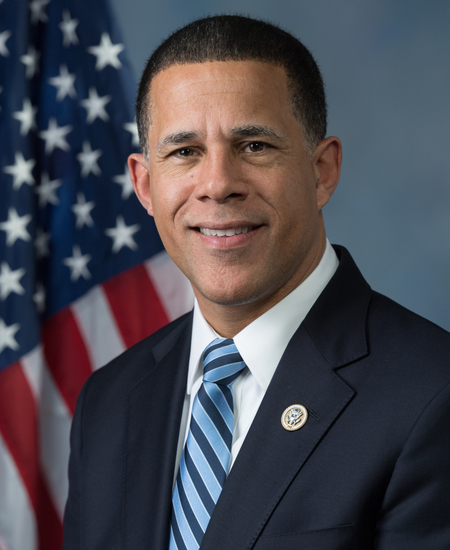
Rep. Anthony G. Brown
Sponsored bills
Willie O'Ree Congressional Gold Medal Act This bill provides for the award of a Congressional Gold Medal to Willie O'Ree or, if unavailable, to a member of his family, in recognition of his contributions and commitment to hockey, inclusion, and recreational opportunity.
This bill requires the Joint Committee on the Library to enter into an agreement to obtain a statue of Shirley Chisholm, the first African American woman elected to Congress. The committee shall place the statue in a permanent public location in the U.S. Capitol.
Remove the Stain Act This bill rescinds each Medal of Honor awarded for acts that occurred on December 29, 1890, at Wounded Knee Creek, Lakota Pine Ridge Indian Reservation, South Dakota. The bill requires the Army, Navy, Air Force, and Coast Guard to remove the names of those award recipients from the Medal of Honor Roll.
Emmett Till and Mamie Till-Mobley Congressional Gold Medal Act of 2021 This bill provides for the posthumous presentation of a Congressional Gold Medal in commemoration of Emmett Till and Mamie Till-Mobley. After the award the medal shall be given to the National Museum of African American History and Culture.
No Honor for Treason Act This bill prohibits the provision of military honors at the funeral or burial of any person who has been convicted of a felony committed on January 6, 2021, in or on the U.S. Capitol buildings and grounds.
This resolution declares that decreasing the spread of COVID-19 (i.e., coronavirus disease 2019) in Africa is in the national interest of the United States, commends the work of Africa's frontline health workers, and calls on the United States and the international community to support African countries' responses to the pandemic.
Access to Genetic Counselor Services Act of 2021 This bill provides for coverage under Medicare of genetic counseling services that are furnished by genetic counselors. Covered services include those services, as well as incidental services and supplies, that would otherwise be covered under Medicare if provided by a physician.
Public Transit Safety Improvement Act of 2021 This bill modifies requirements for approval of a public transportation agency safety plan to include a requirement that a safety committee approve the plan and any updates to the plan. The committee must consist of an equal number of frontline employee representatives (selected by the labor organization representing the plurality of the frontline workforce employed by the public transportation agency) and employer or state representatives.
National Transit Frontline Workforce Training Act of 202 1 This bill directs the Department of Transportation to establish a national transit frontline workforce training center to meet the needs of the rural and urban transit system frontline workforce through standards-based training relating to relevant maintenance and operations occupations. It must also evaluate, and provide a grant to, a nonprofit organization with demonstrated capacity to develop and provide transit career ladder programs through labor-management partnerships and apprenticeships on a nationwide basis to carry out the duties of the center. The center must develop and carry out training and educational programs for public transportation employees serving in the frontline workforce, including programs relating to (1) developing consensus national training standards for key frontline occupations with demonstrated skill gaps; (2) developing national systems of qualification and apprenticeship for transit maintenance and operations occupations; and (3) establishing local, regional, and statewide transit training partnerships.