

Gun Violence Prevention and Safe Communities Act of 2022 This bill increases by .5% the excise tax on firearms, including pistols, revolvers, and shells and cartridges. The bill establishes the Gun Violence Prevention Trust Fund into which the increased tax revenues are deposited to fund gun violence prevention programs. The Trust Fund creates separate accounts for violence prevention, gun violence research, hate crimes data collection and enforcement, and firearm forensics. The bill also requires an inflation adjustment to the amount of the special tax on importers, manufacturers, and dealers in firearms and the transfer tax on firearms.
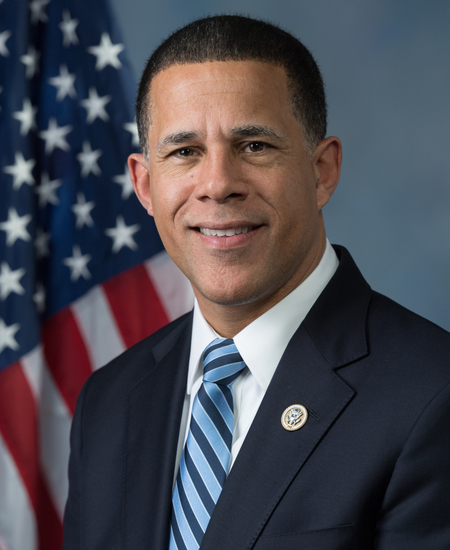
Rep. Anthony G. Brown
Sponsored bills
Saving Abortion Facilities from Extremists for Patients Act or the SAFE for Patients Act This bill establishes a civil action for damaging or destroying a reproductive health care facility or for harassing, injuring, or intimidating a person who provides or obtains reproductive health services.
ATF Improvement and Modernization Act of 2022 or the AIM Act This bill removes limitations on the authority of the Bureau of Alcohol, Tobacco, Firearms and Explosives (ATF) to conduct activities related to the administration of federal firearms laws. Specifically, the bill removes provisions that limit the use of firearms tracing data; prohibit consolidating or centralizing records maintained by federal firearm licensees, or FFLs (e.g., gun dealers); prohibit imposing a requirement that gun dealers conduct a physical inventory; require national instant criminal background check records to be destroyed within 24 hours; limit the disclosure of data under the Freedom of Information Act; prohibit the ATF from altering the definition of a curio or relic firearm; prohibit the denial of a federal firearms license due to lack of business activity; prohibit transferring the ATF's functions, missions, or activities to other agencies or departments; prohibit the electronic retrieval of information gathered from firearm transaction records of FFLs that go out of business; and prohibit the ATF from denying an application to import certain shotguns. Additionally, the bill raises the liability standard for denying or revoking a federal firearms license from a willful violation to a knowing violation of federal firearms laws or regulations, and removes the de novo standard of judicial review for appealing the denial or revocation of a federal firearms license.
Renewing Immigration Provisions of the Immigration Act of 1929 This bill expands eligibility for a program that authorizes the Department of Homeland Security to, at its discretion, provide lawful permanent resident status to certain long-term residents of the United States, including individuals who are unlawfully present. Currently, this program, sometimes referred to as the Registry program, is only available to eligible non-U.S. nationals ( aliens under federal law) who entered the United States before January 1, 1972. The bill removes this entry cutoff date and opens up the program to eligible individuals who have resided in the United States for at least seven years. Existing requirements (e.g., the individual must not be inadmissible or deportable due to certain grounds related to crime or terrorism) continue to apply.
ATF Data and Anti-Trafficking Accountability Act or the ATF DATA Act This bill directs the Bureau of Alcohol, Tobacco, Firearms and Explosives to report to Congress and make publicly available certain data sets regarding firearms tracing data.
Aaron Salter, Jr., Responsible Body Armor Possession Act This bill establishes a federal statutory framework to restrict the purchase, ownership, or possession of enhanced body armor by civilians. The term enhanced body armor means body armor, including a helmet or shield, with a ballistic resistance that meets or exceeds the ballistic performance standard of Type III armor, as determined using the National Institute of Justice standard in effect at the time the person purchases, owns, or possesses the armor.
Stealthing Act of 2022 This bill establishes a civil action for the nonconsensual removal of a sexual protection barrier (e.g., a condom). A person may recover compensatory and punitive damages, injunctive and declaratory relief, and such other relief as a court may deem appropriate.
Consent is Key Act This bill directs the Department of Justice to increase a state's allocation of funds under the Sexual Assault Services Program if the state has in effect a law that authorizes civil damages and equitable relief against a person who engages in the nonconsensual removal of a sexual protection barrier (e.g., a condom).
This bill requires states to prioritize additional groups (i.e., victims of firearm violence or the family members of victims of homicide) for state victim assistance formula grants.
Strengthen and Tackle Opportunities to Prevent Violence Act of 2022 or the STOP Violence Act of 2022 This bill allows funds under the Antiterrorism and Emergency Assistance Program to be used for efforts to prepare against mass violence and protect public assembly facilities.