

Veteran Service Recognition Act of 2022 This bill addresses immigration-related issues pertaining to noncitizen (or non-U.S. national) military veterans, including by authorizing the Department of Homeland Security (DHS) to provide lawful permanent resident status to a veteran subject to removal. If a noncitizen veteran appears to be eligible for lawful permanent resident status under this bill, that veteran must receive a reasonable opportunity to apply for such status and may not be removed until there is a final administrative decision on the veteran's eligibility. For the purposes of providing such status under this bill, DHS may waive any applicable grounds of inadmissibility, except for certain crime- or security-related grounds. The bill also extends certain deadlines relating to obtaining citizenship after serving in the Armed Forces. DHS must create a system for identifying noncitizens who are or may be veterans. Before initiating removal proceedings against a noncitizen, DHS must attempt to determine whether the noncitizen is a veteran. DHS must ensure that veteran status is considered in immigration proceedings. The bill also requires U.S. Citizenship and Immigration Services (USCIS) and the Department of Defense to take certain actions to facilitate opportunities for military recruits and veterans to obtain U.S. citizenship, such as by training Judge Advocate General Corps members to act as liaisons between the Armed Forces and USCIS on servicemember citizenship applications. The bill also establishes the Military Family Immigration Advisory Committee to provide recommendations on cases involving the removal of a servicemember, veteran, or certain family members of a servicemember or veteran. Such an individual may not be removed until the committee has provided a recommendation to DHS about the individual's case, unless the individual is inadmissible due to a conviction for an aggravated felony. The bill also waives certain grounds of inadmissibility (e.g., being unlawfully present in the United States) for certain noncitizens applying for lawful permanent resident status as an immediate relative of a U.S. citizen who has served at least two years in the Armed Forces.
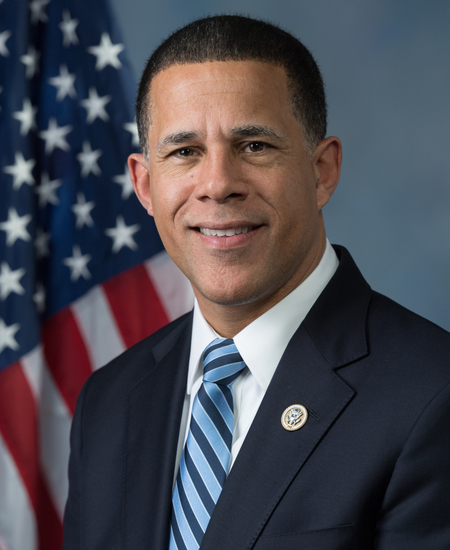
Rep. Anthony G. Brown
Sponsored bills
Save Oak Flat Act This bill repeals the requirement for the Department of Agriculture to convey the 2,422 acres of Forest System land located in Tonto National Forest in Pinal County, Arizona, known as Oak Flat, to Resolution Copper Mining, LLC, in exchange for various parcels of land owned by Resolution Copper. Oak Flat is withdrawn from (1) entry, appropriation, or disposal under the public land laws; (2) location, entry, and patent under the mining laws; and (3) disposition under all laws pertaining to mineral and geothermal leasing or mineral materials.
Maddy summaryHRES 1489 is a resolution supporting the designation of the week beginning November 14, 2022, as "National Apprenticeship Week." It aims to raise awareness about registered apprenticeships, which provide on-the-job training and career pathways in high-demand industries like healthcare, technology, and advanced manufacturing. The resolution encourages expansion of these programs to increase workforce diversity and strengthen employer-employee partnerships without creating new laws or funding.
Lymphedema Treatment Act This bill provides for Medicare coverage of lymphedema compression treatment items. Specifically, the bill provides for coverage of standard and custom fitted gradient compression garments and other approved items that are prescribed by a physician or other specified health care professional to treat lymphedema.
Chesapeake Bay Science, Education, and Ecosystem Enhancement Act of 2021 This bill reauthorizes through FY2025 the National Oceanic and Atmospheric Administration's Chesapeake Bay Office and revises requirements concerning the office and its activities. It also authorizes the office to establish a Chesapeake Bay watershed education and training program as well as a program to support coordinated management, protection, characterization, and restoration of priority habitats and living resources.
Prevent All Soring Tactics Act of 2022 or the PAST Act of 2022 This bill addresses the practice of soring horses. The soring of horses includes various actions taken on horses' limbs to produce higher gaits that may cause pain, distress, inflammation, or lameness. Specifically, the bill expands soring regulation and enforcement at horse shows, exhibitions, sales, and auctions, including by establishing a new system for inspecting horses for soring. In addition, the bill increases penalties for violations.
Healthy Meals, Healthy Kids Act This bill reauthorizes and expands (1) child nutrition programs, including the National School Lunch Program (NSLP) and other institutional food service programs; and (2) the Special Supplemental Nutrition Program for Women, Infants, and Children (WIC).
Asunción Valdivia Heat Illness and Fatality Prevention Act of 2022 This bill directs the Occupational Safety and Health Administration to promulgate a standard that requires employers to implement certain measures for protecting workers from heat stress and related illnesses or injuries. Heat stress refers to the load of heat that a person experiences due to sources of heat or heat retention (including metabolic heat, environmental factors, and clothing or personal protective equipment) or the presence of heat in a work setting. Further, if an employer cannot reduce exposure to heat stress below hazardous levels through engineering controls (e.g., heat shields and insulation) or personal protective equipment (e.g., heat reflective clothing), the employer must implement a program that mitigates such exposure through access to appropriate hydration and cool-down spaces, acclimatization policies, and periodic paid rest breaks. Additionally, the bill establishes requirements concerning judicial review, implementation, enforcement, recordkeeping, and whistle-blower protections related to the standard. The bill also requires the Department of Labor to include questions about heat-related illness and injury in the National Agricultural Workers Survey (an employment-based, random-sample survey of U.S. crop workers that collects demographic, employment, and health information).
This concurrent resolution expresses opposition to the application of criminal laws to pregnancy outcomes and affirms that people deserve access to high-quality health care without fear of reprisal or punishment.
This joint resolution proposes a constitutional amendment related to the fundamental right to vote. Specifically, it grants every U.S. citizen of legal voting age the fundamental right to vote in any public election held in the jurisdiction in which the citizen resides.