

Student Loan Borrower Relief Act This bill revises income-driven repayment plans for federal student loans, including by reducing from 25 years to 15 years the maximum repayment period under these plans. Additionally, the bill makes changes to the Public Service Loan Forgiveness program, including by cancelling a portion of a borrower's student loans after every 12 months of eligible public service employment.
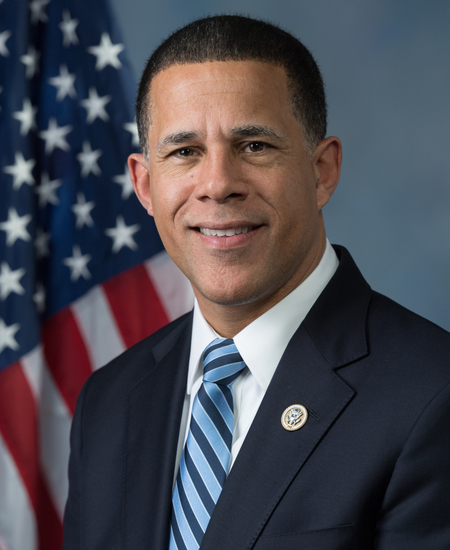
Rep. Anthony G. Brown
Sponsored bills
Restoring Equity For Offenses Related to Marijuana Act or the REFORM Act This bill limits the maximum punishment for offenses related to the wrongful use or possession of marijuana under the Uniform Code of Military Justice (UCMJ) and includes certain offenses related to controlled substances as ones handled by Special Trial Counsel.
Modernizing Aeronautical Standards Act This bill directs the National Aeronautics and Space Administration (NASA) to conduct a study on the modernization of aeronautical standards, to be known as the Modernization of Aeronautical Standards and Aircraft Performance Study .
Diversity and Inclusion Transparency in the Defense Industrial Base Act This bill provides that the Department of Defense (DOD) must require each contractor who is awarded a major contract to submit a report on diversity and inclusion by the last day of each full fiscal year during the period of the contract. In relation to a major defense acquisition program, a major contract means each of the six largest prime, associate, or government-furnished equipment contracts that is in excess of $40 million and that is not a firm, fixed-price contract. DOD must annually submit to Congress a report summarizing the diversity and inclusion reports. Such reports must be made publicly available on a DOD website.
Equal Justice Under Military Law Act This bill modifies various provisions under the Uniform Code of Military Justice, including to establish an independent convening authority for general and special courts-martial for certain offenses (e.g., murder or manslaughter).
Maddy summaryHR 7477, the CERTS Tax Exemption Act, ensures that grants provided under the Coronavirus Economic Relief for Transportation Services Act are tax-free for eligible transportation service providers. The bill directly affects companies and organizations providing transportation services that receive these specific federal grants. Key provisions state that grant amounts cannot be counted as taxable income, deductions related to grant-funded costs cannot be denied, and tax attributes (like basis increases) must be treated as tax-free for partnerships and S corporations. This change simplifies tax treatment for recipients by preventing unintended tax liabilities on relief funds.
Spaceport Tiering for Access Resiliency Act or the STAR Act This bill requires the Department of Defense (DOD), in coordination with the Department of Transportation (DOT), to submit to the appropriate congressional committees a report on the resiliency of space access infrastructure to meet national security requirements. DOT shall establish a tiered system for spaceports that categorizes their operation for planning, development, and expenditure of funds. DOT shall develop a plan, to be known as the national plan for spaceports , for developing spaceports in the United States. DOT shall publish such plan every two years. To the extent possible, the DOD shall make domestic military spaceports and spaceport facilities available for civil use. DOT, in coordination with DOD and the Department of Commerce, after providing an opportunity for public comment, shall submit to the appropriate congressional committees a report on the implementation of a spaceport improvement program.
Opportunity Zones Improvement, Transparency, and Extension Act This bill revises rules and reinstates reporting requirements relating to qualified opportunity zones (economically distressed communities where new investments, under specified conditions, may be eligible for preferential tax treatment). Specifically, the bill terminates the designation of zones that are disqualified due to median family income exceeding 130% of national median family income and permits states to identify and expand terminations of such zones. The bill also reinstates reporting requirements for qualified opportunity zones and imposes penalties for noncompliance with such requirements, extends the opportunity zones temporary deferral period for qualifying capital gain through 2028, and establishes a State and Community Dynamism Fund to support public and private investment in qualified opportunity zones.
This resolution supports a Month of the Military Child and urges the observation of the month with appropriate activities that show appreciation for military children.
Educators Expense Deduction Modernization Act of 2022 This bill increases the tax deduction for the expenses of eligible educators from $250 to $1,000, An eligible educator is, with respect to any taxable year, an individual who is a kindergarten through grade 12 teacher, instructor, counselor, principal, or aide in a school for at least 900 hours during a school year.