

Global Health, Empowerment and Rights Act This bill establishes that a foreign nongovernmental organization shall not be disqualified from receiving certain U.S. international development assistance solely because the organization provides medical services using non-U.S. government funds if the medical services are legal in both the United States and the country in which they are being provided. Such foreign organizations shall not be subject to requirements relating to their use of non-U.S. funds for advocacy or lobbying activities, other than those that apply to U.S. nongovernmental organizations. Current U.S. policy prohibits various foreign assistance from going to a foreign nongovernmental organization unless it agrees to not perform or actively promote abortions.
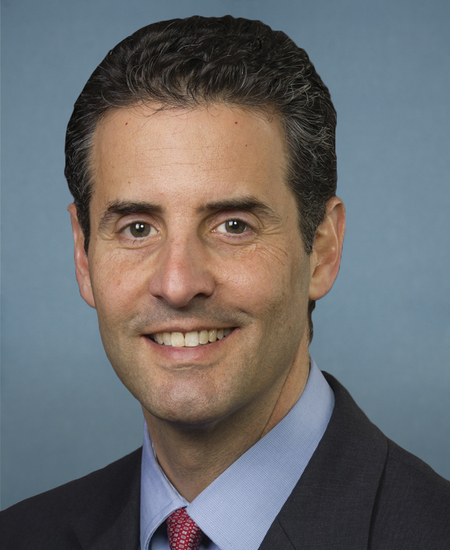
Rep. John P. Sarbanes
Sponsored bills
Next Generation Votes Act This bill prohibits a state from refusing to accept an individual's application to register to vote in federal elections on the grounds that the individual is under 18 years of age, so long as the individual is at least 16 years of age.
Raise the Wage Act of 2021 This bill increases the federal minimum wage for regular employees over a 5-year period, for tipped employees, and for newly hired employees who are less than 20 years old. The bill sets forth a schedule of annual increases in the federal minimum wage for individuals with disabilities. The Department of Labor shall no longer issue special certificates for the payment of subminimum wages to such individuals after the final wage increase under this bill for such individuals takes effect. Labor shall provide, upon request, technical assistance and information to employers to (1) help them transition their practices to comply with wage increases and other requirements under this bill for individuals with disabilities, and (2) ensure continuing employment opportunities for such individuals. The bill eliminates the separate minimum wage requirements for tipped, newly hired, and disabled employees. After a specified period, these employees shall be paid the same minimum wage as regular employees. Labor must publish any increase in the minimum wage in the Federal Register and on its website 60 days before it takes effect.
Health Care Fairness for Military Families Act of 2021 This bill modifies the extension of dependent coverage under TRICARE by allowing a dependent under the age of 26 to be covered without an additional premium. Additionally, the bill authorizes such coverage of dependents without a premium regardless of whether they are eligible to enroll in an employer sponsored plan.
Access Technology Affordability Act of 2021 This bill allows a refundable tax credit equal to the amounts paid for qualified access technology for use by a blind individual who is the taxpayer, the taxpayer's spouse, or a dependent of the taxpayer. Qualified access technology is hardware, software, or other information technology with the primary function of converting or adapting information that is visually represented into forms or formats useable by blind individuals. The credit is limited to (1) costs that are not compensated by insurance or otherwise, and (2) an aggregate amount of $2,000 per blind individual in any period of three consecutive taxable years. The credit must be adjusted for inflation after 2021 and terminates after 2026.
Federal Adjustment of Income Rates Act or the FAIR Act This bill modifies pay rates for federal employees in 2022. Specifically, the bill increases rates under the statutory pay systems and for prevailing rate employees by 2.2%, and increases locality pay by 1%.
This bill repeals the prohibition on the use of certain funds by the Securities and Exchange Commission to implement a rule, regulation, or order to require the disclosure of political contributions, contributions to tax exempt organizations, or dues paid to trade associations.
End Dark Money Act This bill repeals in FY2021 the restriction on the use of funds by the Internal Revenue Service to issue any regulation or guidance relating to the standard for determining whether certain nonprofit civic organizations are being operated exclusively for the promotion of social welfare.
Wall Street Tax Act of 2021 This bill imposes a 0.1% excise tax on certain purchases of stocks, bonds, and derivatives. The tax applies to the purchase of a security if (1) such purchase occurs on, or is subject to the rules of, a qualified board or exchange located in the United States; or (2) the purchaser or seller is a U.S. person. The tax applies to transactions with respect to a derivative if (1) the derivative is traded on, or is subject to the rules of, a qualified board or exchange located in the United States; or (2) any party with rights under the derivative is a U.S. person. The bill exempts from such tax (1) initial issues of securities; and (2) any note, bond, debenture, or other evidence of indebtedness which is traded on or is subject to the rules of, a qualified board or exchange located in the United States, and has a fixed maturity of not more than 100 days. The tax applies to transactions by a controlled foreign corporation and must be paid by its U.S. shareholders.
Saving the Civil Service Act This bill nullifies the executive order titled Creating Schedule F in the Excepted Service , which was issued on October 21, 2020. The order places executive agency positions that are of a confidential, policy-determining, policy-making, or policy-advocating character, and that are not normally subject to change as a result of a presidential transition, under a new schedule in the excepted service (Schedule F) instead of the competitive service. The order also requires any such positions in the excepted service to be reclassified to Schedule F. The bill also specifically prohibits positions or appointments in the competitive service or the Senior Executive Service from being converted to the excepted service, and prohibits certain noncompetitive appointments that were reclassified or made under the executive order from subsequently acquiring competitive status.