

Reconnecting Communities Act This bill establishes a grant program to remove, retrofit, or otherwise address infrastructural barriers (e.g., highways, railways, or viaducts) that impede mobility and connectivity, with a particular focus on communities of color and low-income communities. Under this program, the Department of Transportation (DOT) must award three types of grants: community engagement, education, and capacity-building grants to educate and involve community members in transportation and economic development planning; planning and feasibility study grants to develop designs, conduct environmental reviews, and carry out other preliminary activities required to remove, retrofit, or mitigate an infrastructural barrier; and capital construction grants to remove, retrofit, or mitigate an infrastructure barrier. DOT must award the community engagement, education, and capacity-building grants and the planning and feasibility study grants to state, tribal, and local governments; metropolitan planning organizations; and nonprofits. An eligible entity may apply for and receive funding from more than one type of grant. DOT must award the capital construction grants to the owner of an infrastructure barrier. The owner may, if applicable, partner with other eligible entities.
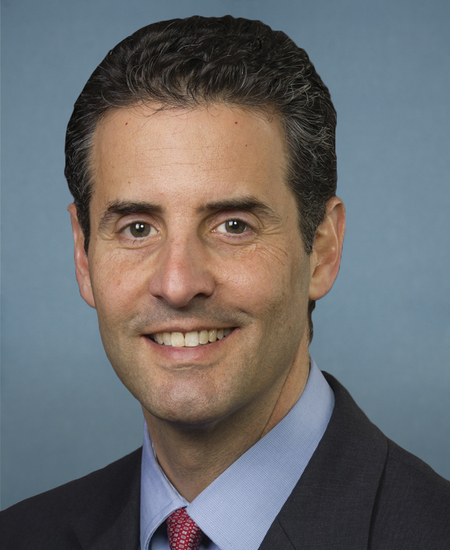
Rep. John P. Sarbanes
Sponsored bills
Elijah E. Cummings Lower Drug Costs Now Act This bill establishes several programs and requirements relating to the prices of prescription drugs. In particular, the bill requires the Department of Health and Human Services (HHS) to negotiate prices for certain drugs (current law prohibits HHS from doing so). Specifically, HHS must negotiate maximum prices for single-source, brand-name drugs that lack certain generics and that are among either the 125 drugs that account for the greatest national spending or the 125 drugs that account for the greatest Medicare spending. HHS must negotiate the prices of at least 25 such drugs for 2024 and of at least 50 such drugs thereafter and must also negotiate prices for certain newly approved drugs and for insulin products. The negotiated prices must be offered under Medicare and may also be offered under private health insurance unless the insurer opts out. The negotiated maximum price may not exceed (1) 120% of the average price in Australia, Canada, France, Germany, Japan, and the United Kingdom; or (2) if such information is not available, 85% of the U.S. average manufacturer price. Drug manufacturers that fail to comply with the bill's negotiation requirements are subject to civil and tax penalties. The bill also makes a series of additional changes to Medicare prescription drug coverage and pricing, including by (1) requiring drug manufacturers to issue rebates to the Centers for Medicare & Medicaid Services for covered drugs that cost $100 or more and for which the average manufacturer price increases faster than inflation, and (2) capping annual out-of-pocket spending under the Medicare prescription drug benefit. The bill also requires drug manufacturers to report specified information for certain high-cost drugs, and it provides funds for opioid epidemic initiatives and biomedical research.
Agriculture Resilience Act This bill establishes, expands, and revises multiple programs and activities of the Department of Agriculture (USDA) primarily to reduce carbon emissions from the agriculture sector. Specifically, USDA must finalize and implement a plan to achieve net-zero emissions from the sector by 2040. USDA must periodically review and revise the plan, as necessary, and annually report on its implementation. Additionally, the bill expands the scope of various USDA research, extension, and education programs; conservation programs; and livestock programs to incorporate climate change adaption and mitigation. Expanded activities include efforts to improve soil health and preserve farmland and grassland. Further, the bill changes programs that support renewable energy in rural areas to address carbon emissions in the agriculture sector. Among these changes, the bill provides statutory authority for a program for reducing methane emissions from livestock waste that is carried out by the Environmental Protection Agency and transitions the program to USDA. The bill also addresses food waste, for example, by (1) standardizing the voluntary labels used by food producers to indicate the date by which food should be used or discarded, and (2) making composting activities eligible for support through USDA conservation programs. Moreover, the bill establishes grants to reduce and prevent food waste in landfills and in schools.
Black Maternal Health Momnibus Act of 2021 This bill directs multi-agency efforts to improve maternal health, particularly among racial and ethnic minority groups, veterans, and other vulnerable populations. It also addresses maternal health issues related to COVID-19 (i.e., coronavirus disease 2019). The Department of Health and Human Services (HHS) and other specified departments must address the social determinants of maternal health, which include child care, housing, food security, transportation, and environmental conditions. The bill also extends to 24 months postpartum eligibility for the Special Supplemental Nutrition Program for Woman, Infants, and Children. Additionally, HHS and other agencies must take actions to grow and diversify the maternal health workforce. To increase access to maternity care, HHS and other agencies must (1) award specified grants; (2) test an alternative payment model for perinatal care under Medicaid and the Children's Health Insurance Program (CHIP); and (3) support training, technology, and telehealth initiatives. The bill also increases research and data collection on maternal morbidity and mortality, particularly among tribal populations and minority groups. The Bureau of Prisons and the Department of Justice must establish programs to improve maternity care for incarcerated populations. The Medicaid and CHIP Payment and Access Commission must also report on the impact of Medicaid ineligibility for pregnant and postpartum prisoners. Additionally, as a condition for certain grants, states and territories must have laws limiting the use of restraints on pregnant individuals in prisons. The bill also directs activities to mitigate adverse maternal health outcomes associated with climate change and to improve maternal vaccination rates.
This concurrent resolution calls for renewed U.S. leadership in addressing the climate crisis that is disproportionately affecting the health, economic opportunity, and fundamental rights of children. It also recognizes the need for the departments and agencies of the executive branch with delegated authority over energy and climate policy to prepare a climate recovery plan that puts the United States on a trajectory consistent with reducing global atmospheric carbon dioxide to below 350 parts per million by the year 2100.
Child Care for Working Families Act This bill provides funds and otherwise revises certain child care and early learning programs for low- to moderate-income families. Specifically, the bill provides funds for the Child Care and Development Block Grant program and reestablishes it as a child care and development assistance program. The bill also allocates program funds for states to provide services and supports to infants, toddlers, and children with disabilities. Further, the bill revises the program to require each state to create a tiered and transparent system for measuring the quality of child care providers, which must include evidence-based standards and payment rates that are based on a certain cost estimation model; ensure that copayments are based on a sliding scale and that no family receiving assistance pays more than 7% of its household income on child care; and use quality child care amounts for certain activities, such as increasing the supply of child care providers. The bill also provides funds and establishes grants for states to create preschool programs for low- to moderate-income children between the ages of three and five years. The Department of Health and Human Services (HHS) must make grants to Head Start agencies to provide children with access to full-school-year and full-school-day services, provide access to additional service hours for migrant and seasonal agencies, or enhance the quality of existing services. Finally, the bill requires, and provides funds for, HHS to assist Head Start agencies with ensuring their teachers and staff are paid a living wage.
National Origin-Based Antidiscrimination for Nonimmigrants Act or the NO BAN Act This bill imposes limitations on the President's authority to suspend or restrict aliens from entering the United States. It also prohibits religious discrimination in various immigration-related decisions, such as whether to issue an immigrant or nonimmigrant visa, unless there is a statutory basis for such discrimination. The President may temporarily restrict the entry of any aliens or class of aliens after the Department of State determines that the restriction would address specific and credible facts that threaten U.S. interests such as security or public safety. The bill also imposes limitations on such restrictions, such as requiring the President, State Department, and the Department of Homeland Security (DHS) to (1) only issue a restriction when required to address a compelling government interest, and (2) narrowly tailor the suspension to use the least restrictive means to achieve such an interest. Before imposing a restriction, the State Department and DHS shall consult with Congress. The State Department and DHS shall report to Congress about the restriction within 48 hours of the restriction's imposition. If such a report is not made, the restriction shall immediately terminate. Individuals or entities present in the United States and unlawfully harmed by such a restriction may sue in federal court. DHS may suspend the entry of aliens traveling to the United States on a commercial airline that failed to comply with regulations related to detecting fraudulent travel documents.
Washington, D.C. Admission Act This bill provides for admission into the United States of the state of Washington, Douglass Commonwealth, composed of most of the territory of the District of Columbia. The commonwealth shall be admitted to the Union on an equal footing with the other states. The Mayor of the District of Columbia shall issue a proclamation for the first elections to Congress of two Senators and one Representative of the commonwealth. The bill applies current District laws to the commonwealth and continues pending judicial proceedings. The commonwealth (1) shall consist of all District territory, with specified exclusions for federal buildings and monuments, including the principal federal monuments, the White House, the Capitol Building, the U.S. Supreme Court Building, and the federal executive, legislative, and judicial office buildings located adjacent to the Mall and the Capitol Building; and (2) may not impose taxes on federal property except as Congress permits. District territory excluded from the commonwealth shall be known as the Capital and shall be the seat of the federal government. The bill maintains the federal government's authority over military lands and specified other property. The bill provides for expedited consideration of a joint resolution repealing the Twenty-third Amendment to the Constitution, which provides for the appointment of electors of the President and Vice President. The bill continues certain federal authorities and responsibilities, including regarding employee benefits, agencies, courts, and college tuition assistance, until the commonwealth certifies that it is prepared to take over the authorities and responsibilities. The bill establishes the Statehood Transition Commission to advise the President, Congress, and District and commonwealth leaders on the transition.
Access to Contraception for Servicemembers and Dependents Act of 2021 This bill addresses Department of Defense (DOD) contraceptive care and family planning services. Specifically, the bill prohibits cost-sharing with respect to TRICARE beneficiaries for specified prescription contraceptives. Additionally, the bill prohibits cost-sharing for TRICARE Select and TRICARE Prime beneficiaries in relation to any in-network method of contraception or contraceptive care (including with respect to insertion, removal, and follow-up), any sterilization procedure, or any related patient education or counseling service. The bill requires DOD to provide information on all methods of emergency contraception and care to sexual assault survivors at its medical treatment facilities. Upon request by a sexual assault survivor, DOD must provide such emergency contraception or a prescription for emergency contraception. Finally, DOD must establish a uniform standard curriculum for education programs on family planning for all members of the Armed Forces. Such education programs must be provided to service members during their first year of service and at other appropriate times, as determined by each military department.
Workplace Violence Prevention for Health Care and Social Service Workers Act This bill requires the Department of Labor to address workplace violence in health care, social service, and other sectors. Specifically, Labor must issue an interim occupational safety and health standard that requires certain employers to take actions to protect workers and other personnel from workplace violence. The standard applies to employers in the health care sector, in the social service sector, and in sectors that conduct activities similar to those in the health care and social service sectors. In addition, Labor must promulgate a final standard within a specified time line.