

Maddy summaryHR 549, the Metastatic Breast Cancer Access to Care Act, removes waiting periods for disability and Medicare coverage for people diagnosed with metastatic breast cancer. Specifically, it amends Social Security Act sections to allow immediate eligibility for disability insurance benefits (eliminating the standard waiting period) and immediate Medicare coverage (waiving the 24-month waiting period) for these patients. The bill directly affects individuals with metastatic breast cancer who would otherwise face delays in accessing critical benefits. These changes apply to applications filed or benefits beginning after the bill's enactment date. The law makes no other policy changes beyond these specific eligibility adjustments.
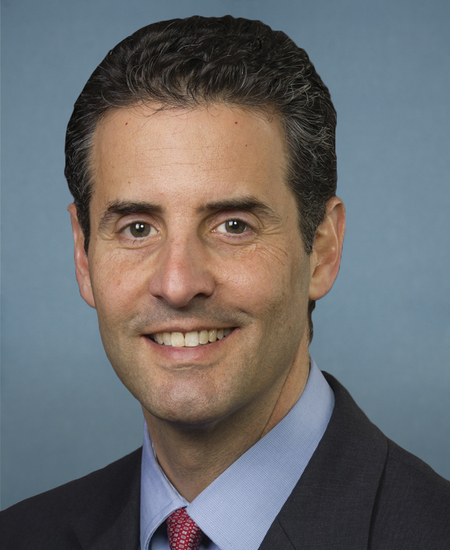
Rep. John P. Sarbanes
Sponsored bills
Maddy summaryThe EACH Act of 2023 would require federal health programs - including Medicaid, Medicare, the Indian Health Service, and TRICARE - to cover abortion services without restrictions. It repeals a provision in the Affordable Care Act that allowed states to limit abortion coverage in health insurance plans sold through state marketplaces. The bill also prohibits the federal government from restricting abortion coverage in private health insurance plans. This would directly affect millions of people, particularly low-income individuals and people of color, who are disproportionately enrolled in Medicaid and currently face barriers to abortion care due to coverage restrictions.
Maddy summaryHR 33 would expand Medicare to cover dental, vision, and hearing services for beneficiaries, which are currently not covered under Medicare. The bill provides 100% coverage for preventive dental services in 2024, with basic dental services gradually increasing to 80% coverage by 2027. Vision coverage would include routine eye exams and corrective lenses at 80% coverage, while hearing services would cover hearing exams and hearing aids at 80% coverage. The bill includes specific limitations, such as two dental cleanings per year and one pair of glasses every 24 months, with the Secretary of Health and Human Services having authority to apply additional limitations or modify coverage based on medical recommendations. The changes would take effect on January 1, 2024.
Maddy summaryThis bill requires federal courts to inform self-represented (pro se) litigants in civil cases - particularly those involving housing, employment, health, or civil rights - about their right to request appointed counsel if they cannot afford a lawyer. Courts must then evaluate requests using specific, objective factors like case complexity, the litigant's ability to navigate legal procedures (considering disabilities, language barriers, or education), and whether the opposing party has legal representation. The bill also prohibits denying requests solely because a case hasn't yet been ruled on and mandates privacy protections for sensitive personal details shared during the process. Additionally, it requires courts to submit biennial reports to Congress on how the new process affects case outcomes and access to justice.
Maddy summaryHR 6751 authorizes the U.S. Mint to produce commemorative coins honoring Roberto Clemente, a Hall of Fame baseball player and humanitarian, including 50,000 $5 gold coins, 400,000 $1 silver coins, and 750,000 half-dollar coins. The coins must feature Clemente's image and inscriptions like "Roberto Clemente" and "2027," with all sales including a surcharge ($5-$35 per coin) paid to the Roberto Clemente Foundation. The foundation, which supports youth sports, education, and disaster relief programs, will use these funds for its mission, while the U.S. Treasury must recover all production costs. The coins will be sold exclusively in 2027, with no net cost to the government.
Maddy summaryThe Working Dog Commemorative Coin Act (HR 807) directs the U.S. Treasury to mint three types of commemorative coins honoring working dogs' service: $5 gold coins, $1 silver coins, and half-dollar coins with specific weight and composition requirements. Each coin will carry a surcharge ($35 for $5 coins, $10 for $1 coins, $5 for half-dollars) that will be paid directly to America's VetDogs to support their programs providing service dogs for veterans, the disabled, and others. The coins will be issued in 2027 with designs reflecting working dogs' roles in military, detection, therapy, and assistance work. The legislation specifies that all surcharge revenue must fund America's VetDogs' operations without creating new government programs. This is a commemorative measure focused on honoring working dogs' contributions through coin sales, with all surcharge funds going to a specific nonprofit organization.
Maddy summaryThis bill establishes the Justice Thurgood Marshall National Historic Site at Public School 103 in Baltimore, Maryland - the elementary school attended by Justice Thurgood Marshall (the first Black U.S. Supreme Court Justice). The site, owned and managed by the nonprofit Beloved Community Services Corporation, will be designated as an "affiliated area" of the National Park System. Management will be handled by the nonprofit under a cooperative agreement with the National Park Service, which will provide technical assistance but not acquire the property or take over operations. The site aims to preserve and interpret Marshall's early life and legacy for public education.
Maddy summaryThe VA Employee Fairness Act of 2024 modifies collective bargaining rules for employees of the Veterans Health Administration (VHA). It removes existing subsections (b), (c), and (d) from the law governing VHA employee bargaining and renumbers the remaining provision. This change streamlines the collective bargaining framework but does not alter the Secretary of Veterans Affairs' existing authorities over incentive pay and expedited hiring. The bill directly affects VHA employees by changing how their collective bargaining rights are structured under federal law. The law remains neutral, focusing solely on procedural adjustments to the existing bargaining framework.
Maddy summaryHR 3433, the "Give Kids a Chance Act of 2024," requires pharmaceutical companies developing certain cancer drugs to conduct pediatric studies if the drugs target molecular pathways relevant to childhood cancers. It directly affects drug manufacturers submitting new applications for cancer treatments, particularly those combining previously approved adult cancer drugs or containing a single new active ingredient. The bill amends FDA regulations to mandate these pediatric investigations only when specific conditions are met, such as when a drug's molecular target is relevant to pediatric cancer growth. The FDA must issue implementing guidance within 12 months, and reports to Congress will track implementation and effectiveness starting 2 years after enactment.
Maddy summary# Summary of Health Equity and Accountability Act of 2024 This comprehensive legislation addresses multiple aspects of health care access, workforce development, and immigration policy with a strong focus on health equity. ## Key Themes 1. **Workforce Diversity**: Significant emphasis on increasing racial, ethnic, and socioeconomic diversity in the health care workforce 2. **Language Access**: Mandates for language access services for individuals with limited English proficiency 3. **Underserved Communities**: Targeted investments in medically underserved areas and communities 4. **Immigration Policy**: Modifications to programs that bring health care professionals to the U.S. ## Major Provisions ### Workforce Development - **$1 billion** for nursing education enhancement and modernization grants in underserved areas - **$552 million** for health professions workforce development in 2032 (increasing annually) - **$392 million** for health professions education programs in 2025 - New grants for schools of medicine and osteopathic medicine in underserved areas - Expansion of the Conrad State 30 program for foreign physicians to address physician shortages ### Language Access - Requires health care providers to provide language access services to individuals with limited English proficiency - Mandates translation services and interpretation services for all health care settings ### Diversity Initiatives - **David Satcher Public Health and Health Services Corps** to increase awareness of health career opportunities - **Louis Stokes Public Health Scholars Program** for underrepresented students - **Patsy Mink Health and Gender Research Fellowship Program** - **Paul David Wellstone International Health Fellowship Program** - **Edward R. Roybal Health Scholar Program** ### Immigration Policy - **Conrad State 30 program extension** through 2027 - **Physician retention** provisions to help foreign physicians stay in medically underserved areas - **Dual intent for physicians** seeking graduate medical training - **Clarifications to national interest waiver** requirements - **Automatic extension** of physician nonimmigrant status during residency transitions ### Funding - **Health Professions Workforce Fund** established with multi-year funding increasing from $392 million in 2025 to $552 million in 2032 - Specific allocations for nursing workforce development and health professions education This legislation represents a comprehensive approach to addressing health care disparities through workforce development, improved access, and policy changes to support a more diverse and equitable health care system.