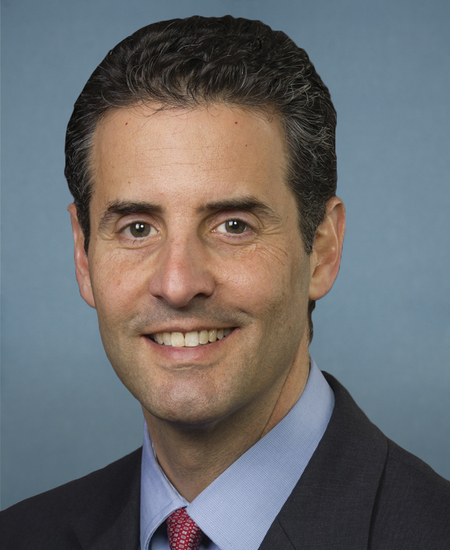
Photo of John P. Sarbanes
D United States House · District 3 · Maryland

Rep. John P. Sarbanes

Compare
Total votes
2,168
all sessions
Attendance
98%
41 missed
Near the chamber average
With party
98%
of cast votes
Higher than 92% of chamber peers
Bipartisan score
1%
crosses aisle rarely
Lower than 93% of chamber peers
Sponsored
554
bills & resolutions
Near the chamber average
Committees
0
assignments
554 bills and resolutions

Sponsored bills

Total
554
Primary
19
Co-sponsor
535
This page
554
matching current filters
Co-sponsor HRES 981
In committee · United States House · Co-sponsor
Commemorating the 1-year anniversary of the March 16, 2021, shootings in Atlanta, Georgia, and denouncing anti-Asian hate.

Maddy summaryThis resolution (HRES 981) commemorates the one-year anniversary of the March 16, 2021, Atlanta spa shootings that killed eight people, six of whom were Asian women, and denounces anti-Asian hate. It formally condemns the violence, honors the victims, and recognizes the ongoing impact of anti-Asian hate crimes on the Asian American and Pacific Islander community. The resolution reaffirms support for the existing COVID-19 Hate Crimes Act and commits the federal government to combating hate and violence against AAPI communities. As a symbolic measure, it does not create new laws or funding but serves as a formal statement of solidarity.

In committee Nov 1, 2022 1 co-sponsor
Co-sponsor HRES 891
In committee · United States House · Co-sponsor
Expressing the sense of the House of Representatives that the article of amendment (commonly known as the "Equal Rights Amendment") to the Constitution is valid.

This resolution expresses the sense of the House of Representatives that the proposed constitutional amendment known as the Equal Rights Amendment has been duly proposed by Congress and ratified by the states and is therefore valid as the Twenty-Eighth Amendment to the Constitution. (The proposed amendment prohibits the United States or any state from denying or abridging equal rights under the law on account of sex.)

In committee Nov 1, 2022 1 co-sponsor
Primary HR 9021
In committee · United States House · Lead sponsor
Websites and Software Applications Accessibility Act

Websites and Software Applications Accessibility Act This bill requires employers, public entities, and public accommodations that provide goods or services through a website or online application to make those websites and applications accessible to individuals with disabilities. The requirement applies even if the good or service is offered only digitally. The Department of Justice (DOJ) must issue standards of accessibility for applicable entities to meet this requirement. The bill provides for enforcement by DOJ, the Equal Employment Opportunity Commission, and individual civil action. It also establishes various review and reporting requirements.

In committee Nov 1, 2022 0 co-sponsors
Co-sponsor HR 8341
In committee · United States House · Co-sponsor
Youth Voting Rights Act

Youth Voting Rights Act This bill expands voting access for youth. Specifically, the bill establishes a private right of action to enforce the Twenty-Sixth Amendment, which prohibits denying or abridging the right to vote based on age. Additionally, the bill directs each state to designate as voter registration agencies all offices within public institutions of higher education (IHEs) that provide assistance to students, implement a preregistration process to allow minors who are 16 years or older to register to vote in federal elections that take place when or after the preregistered individual turns age 18, and ensure the availability of polling places on campuses of IHEs (with the availability of waivers). The bill prohibits durational residency requirements for voting in all federal elections. Currently, this prohibition applies only to voting for the offices of President and Vice President. States and local jurisdictions with voter identification requirements must treat IHE-issued student identification cards as voter identification. The Election Assistance Commission (EAC) must make grants to states to increase the involvement of individuals under age 18 in public election activities. The Government Accountability Office must report to Congress on trends related to voter registration, absentee voting, and provisional voting. The EAC must also collect and make publicly available certain data from states.

In committee Nov 1, 2022 1 co-sponsor
Co-sponsor HR 6860
In committee · United States House · Co-sponsor
Latonya Reeves Freedom Act of 2022

Latonya Reeves Freedom Act of 2022 This bill prohibits government entities and insurance providers from denying community-based services to individuals with disabilities that require long-term service or support that would enable such individuals to live in the community and lead an independent life. Specifically, these entities may not discriminate against such individuals in the provision of community-based services by such actions as imposing prohibited eligibility criteria, cost caps, or waiting lists or failing to provide a specific community-based service. Additionally, community-based services must be offered to individuals with such disabilities prior to institutionalization. Institutionalized individuals must be notified regularly of community-based alternatives. The bill requires the Department of Justice to issue regulations requiring government entities and insurance providers to offer community-based long-term services to individuals with such disabilities who would otherwise qualify for institutional placement. Government entities must ensure sufficient availability of affordable, accessible, and integrated housing that is not a disability-specific residential setting or a setting where services are tied to tenancy. Regulations shall also (1) require government entities and insurance providers to perform self-evaluation on current services, policies, and practices and concerning compliance with requirements of this bill; and (2) require government entities to submit a transition plan. The bill provides funds for FY2022 for the Department of Health and Human Services to provide technical assistance with respect to transition plans. The bill allows civil actions by individuals subjected to, or about to be subjected to, a violation of its requirements.

In committee Nov 1, 2022 1 co-sponsor
Co-sponsor HR 6872
In committee · United States House · Co-sponsor
Election Worker and Polling Place Protection Act

Election Worker and Polling Place Protection Act This bill addresses certain protections for election workers and polling places. In particular, the bill prohibits, with enhanced penalties for certain types of threats and harms (1) intimidation of poll watchers, election officials, and election agents, vendors, and contractors involving violence or threats of harm; and (2) physical damage to or threats to physically damage a polling place, tabulation center, or other election infrastructure.

In committee Nov 1, 2022 1 co-sponsor
Co-sponsor HR 6311
In committee · United States House · Co-sponsor
Comprehensive Addiction Resources Emergency Act of 2021

Comprehensive Addiction Resources Emergency Act of 2021 This bill establishes programs, grants, and other activities to address substance use disorders. Specifically, the Department of Health and Human Services (HHS) must establish a program for purchasing and distributing opioid overdose reversal drugs for states and Indian tribes. HHS must also award grants for and otherwise support addressing substance use, particularly in states, tribes, territories, and localities with disproportionately high drug overdose rates; increasing access to preventive, medical, recovery, and related services; developing innovative models of delivering treatment and harm reduction services; and expanding the treatment capacity of Medicaid providers. In addition, HHS must issue model standards of care for treatment services and recovery residences and may award grants for training health care professionals. The bill also supports prevention and treatment services for workers, addiction and pain management research, and data collection on substance use disorders. Further, dispensers, distributors, and manufacturers of schedule II controlled substances (e.g., oxycodone), with the exception of opioid treatment programs, must certify that they maintain effective drug diversion controls. Violators are subject to specified civil and criminal penalties. Collected penalties shall be used for the grant programs and other substance use disorder activities established under the bill.

In committee Nov 1, 2022 1 co-sponsor
Co-sponsor HR 5053
In committee · United States House · Co-sponsor
Protecting Election Administration from Interference Act of 2021

Protecting Election Administration from Interference Act of 2021 This bill revises preservation and retention requirements for federal election records. It also revises criminal penalties related to election records and the voting process. Under current law, election officials must, for a period of 22 months from the federal election, retain and preserve all election-related records and papers. This bill extends the requirement to electronic records and electronic equipment. Next, the bill directs the Cybersecurity and Infrastructure Security Agency to issue minimum standards and best practices for retaining and preserving records (including electronic records), papers, and electronic equipment, including protocols for observing their preservation, security, and transfer by the Department of Justice (DOJ) and a representative of each political party. In addition, the bill revises the federal criminal offense related to election records or papers to include reckless disregard of election record requirements resulting in the theft, destruction, concealment, mutilation, or alteration of a record, paper, or electronic equipment. Further, the bill allows DOJ to demand electronic records and electronic equipment for inspection and generally prohibits DOJ from disclosing this information. The bill allows DOJ and candidates for federal office to bring an action in a district court to compel compliance with election record requirements. Finally, the bill extends criminal penalties related to voting interference to include intimidating, threatening, or coercing (or attempting to do so) an individual for processing or scanning ballots, tabulating, canvassing, or certifying voting results.


In committee Nov 1, 2022 1 co-sponsor
Co-sponsor HR 5008
In committee · United States House · Co-sponsor
Frank Harrison, Elizabeth Peratrovich, and Miguel Trujillo Native American Voting Rights Act of 2021

Frank Harrison, Elizabeth Peratrovich, and Miguel Trujillo Native American Voting Rights Act of 2021 This bill addresses the voting rights of Native American and Alaska Native voters and voting access on tribal lands. The bill includes provisions expanding the types of facilities that can be used as voter registration agencies; increasing polling site accessibility, including by expanding early in-person voting and providing ballot drop boxes; providing enforcement power to citizens and attorneys general; requiring approval for actions like moving a polling place; validating certain tribal identification for voting or registering to vote; permitting voters to designate another individual to return a ballot on their behalf; and expanding requirements for bilingual voting accessibility. In addition, the bill establishes a Native American voting task force grant program for the purpose of increasing voter outreach, education, registration, turnout, and accessibility for Native American communities. The bill also directs the Government Accountability Office to study and report on (1) the prevalence of nontraditional or nonexistent mailing addresses among Indians, members of tribes, and individuals residing on Indian lands; and (2) the alternatives for removing barriers to voter registration, receipt of voter information and materials, and receipt of ballots.

In committee Nov 1, 2022 1 co-sponsor
Co-sponsor HR 4766
In committee · United States House · Co-sponsor
Supreme Court Ethics Act

Supreme Court Ethics Act This bill establishes a new statutory requirement for the Judicial Conference of the United States to issue a judicial code of conduct for judges and justices of U.S. courts, including Justices of the Supreme Court. Currently, the Judicial Conference issues a code of conduct for judges of U.S. courts (but not for Justices of the Supreme Court).

In committee Nov 1, 2022 1 co-sponsor
Showing 271 to 280 of 554 bills
Previous 1 … 27 28 29 … 56 Next