

Maddy summaryHCONRES 44 is a non-binding congressional resolution urging the creation of a U.S. Commission on Truth, Racial Healing, and Transformation. It does not establish the commission itself but calls for its formation to acknowledge historical injustices against Black, Indigenous, and other people of color - including systemic discrimination in housing, Social Security, the GI Bill, and land policies - and to address ongoing racial inequities. The resolution emphasizes the need to dismantle the "belief in a hierarchy of human value" and promote racial healing as a national priority. It complements ongoing efforts like H.R. 40 (a bill to study reparations) but does not create new legal requirements or funding.
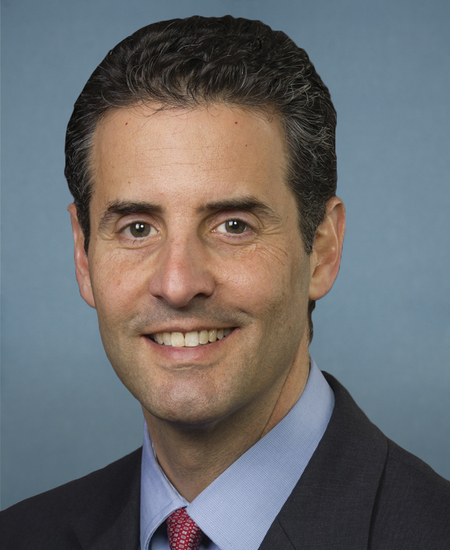
Rep. John P. Sarbanes
Sponsored bills
Maddy summaryHR 3392, the Fighter Force Preservation and Recapitalization Act of 2023, requires the Air National Guard to maintain at least 25 fighter squadrons (each with a minimum of 18 aircraft) by mandating one-for-one replacement of existing squadrons by 2034. The bill directs the Air Force Secretary to develop and submit a recapitalization plan to Congress within 120 days of enactment, including modernizing squadrons and fielding new "Next Generation Air Dominance" systems. This directly affects the Air National Guard's fighter force structure, setting specific numerical requirements for aircraft and squadrons. The law allows limited waivers for extraordinary circumstances but maintains the core 2034 deadline for full recapitalization.
Maddy summaryHR 3409, the Healthy Families Act, requires most employers to provide employees with paid sick leave. Employees earn 1 hour of paid sick time for every 30 hours worked, up to a maximum of 56 hours per year, which can be used for their own illness, caring for family members, or addressing domestic violence, sexual assault, or stalking situations. Smaller employers with fewer than 15 employees can provide unpaid sick leave instead of paid leave. The bill includes protections against retaliation for using sick leave and requires employers to inform employees about their rights under this law.
Health Center Service Expansion and Provider Shortage Reduction Act This bill provides funding through FY2028 for certain services under the Community Health Center Program, which supports outpatient health care facilities that provide comprehensive primary care to medically underserved populations. It also provides funding through FY2028 to expand the National Health Services Corps, which provides scholarships and student loan repayment awards to health care providers who agree to work in areas with health care provider shortages. In particular, the bill requires that health centers provide behavioral health, mental health, and substance use disorder services and provides funding for those services. (Currently, centers may provide those as additional services.) Furthermore, the bill provides funding for (1) expanding the operating hours of community health centers; and (2) New Access Point Grants, which assist centers to establish new delivery sites for care.
Maddy summaryThe PAST Act of 2023 amends the Horse Protection Act to ban specific devices used to cause pain (soring) in horses at shows, particularly affecting Tennessee Walking Horses, Racking Horses, and Spotted Saddle Horses. It defines prohibited "action devices" (like boots or chains causing friction) and requires licensed, conflict-free inspectors at events to enforce rules. The bill increases penalties for violations to up to $5,000 fines or 3 years in jail, and mandates longer disqualifications for repeat offenses (180 days → 1 year → 3 years). Horse show organizers, exhibitors, and participants must comply with these new inspection and penalty requirements.
Maddy summaryHR 3130 strengthens protections for election records, papers, and equipment used in federal elections. It expands the definition of protected materials to include electronic records and voting equipment, requires election officials to preserve equipment for 22 months after federal elections (while retaining all data), and mandates new federal guidance on best practices for handling these materials. The bill also creates a new court process allowing the Attorney General or candidates to seek immediate judicial enforcement if election records are mishandled. These changes directly affect election officials managing federal elections and the security of voting systems.
Maddy summaryThe Transit to Trails Act establishes a federal grant program to fund transportation projects connecting critically underserved communities - defined as areas lacking adequate park access, low-income, communities of color, or environmental justice areas - to public lands and recreational spaces. Eligible entities, including states, local governments, tribal organizations, and park districts, can apply for grants to develop transportation connectors (like bus routes) and culturally appropriate education materials, with priority for projects using low-emission vehicles and offering discounted fares for low-income riders. Grants range from $25,000 to $500,000, with federal funding covering up to 80% of costs, and recipients must report on demographics served and project outcomes. The program is funded at $40 million annually in its fifth year, aiming to improve mobility to parks and recreation in communities historically excluded from such access.
Maddy summaryHR 2757, the Puerto Rico Status Act, establishes a process for Puerto Rico to determine its political status through a plebiscite on November 2, 2025, offering three options: independence, sovereignty in free association with the United States, or statehood. If no option receives a majority in the initial vote, a runoff plebiscite would be held on March 8, 2026. The bill outlines transition processes for each option, including constitutional conventions, implementation steps, and provisions for citizenship, immigration, and economic benefits. It mandates bilingual voter education materials and requires oversight by the Elections Commission and the Attorney General to ensure fair representation of all options. This legislation directly affects Puerto Rico's residents by providing a structured process to choose their permanent political relationship with the United States.
Maddy summaryHR 3008, the Drug Shortage Prevention Act of 2023, requires manufacturers of critical essential medicines (like life-saving or emergency drugs) to notify the FDA earlier about potential supply disruptions. Specifically, manufacturers must report permanent production stops, interruptions, or unexpected demand spikes (not seasonal) at least six months in advance for production issues, or within 48 hours for sustained demand increases. The notification must include reasons, ingredient sources, alternative suppliers, and expected duration. The FDA will then share this information with healthcare providers and patient groups to help manage shortages. This law applies to drugs critical for life-sustaining care, excluding certain radio pharmaceuticals.
This resolution affirms the importance of free expression and freedom of the press around the world and condemns threats to these freedoms. The resolution calls on the President and the Department of State to (1) urge foreign governments to bring to justice those who threaten or attack journalists, and (2) leverage foreign assistance to help expand access to independent media in countries where authoritarian regimes control the internet.