

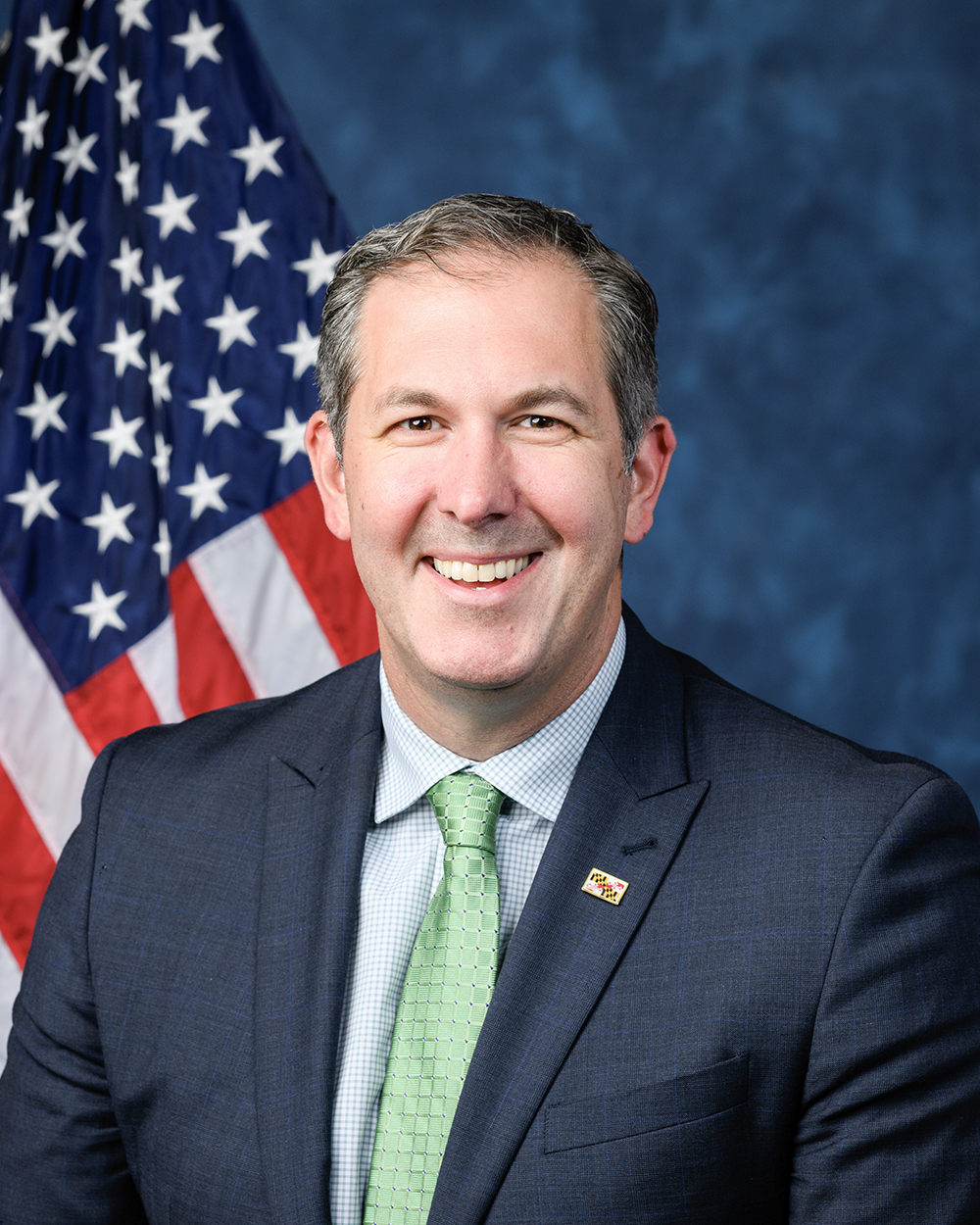
Photo of Johnny Olszewski, Jr.
D United States House · District 2 · Maryland On the 2026 ballot

Rep. Johnny Olszewski, Jr.

Compare
Total votes
669
all sessions
Attendance
100%
2 missed
Higher than 89% of chamber peers
With party
98%
of cast votes
Higher than 93% of chamber peers
Bipartisan score
1%
crosses aisle rarely
Lower than 94% of chamber peers
Sponsored
311
bills & resolutions
Near the chamber average
Committees
6
assignments
311 bills and resolutions

Sponsored bills

Total
311
Primary
18
Co-sponsor
293
This page
311
matching current filters
Co-sponsor HR 2736
In committee · United States House · Co-sponsor
Public Service Freedom to Negotiate Act of 2025

Maddy summaryThis bill establishes federal minimum standards for collective bargaining rights for public employees and supervisors. The Federal Labor Relations Authority would determine if state laws provide these rights, and if not, would establish them for affected employees. The bill guarantees public employees the right to form unions, bargain collectively, and engage in concerted activities, while requiring public employers to recognize unions and put agreements in writing. It also prohibits strikes or lockouts that would disrupt emergency services. This would apply to public employees in states that don't meet the federal standards for collective bargaining rights.

In committee Apr 8, 2025 1 co-sponsor
Co-sponsor HR 2692
In committee · United States House · Co-sponsor
No Tax Breaks for Union Busting (NTBUB) Act

Maddy summaryThe No Tax Breaks for Union Busting Act would deny tax deductions for employers who spend money to influence employees' decisions about union activities, such as union elections or collective bargaining. It defines "labor organization activities" broadly to include union elections, labor disputes, and collective actions. The bill requires employers to report such spending on tax returns and prevents them from deducting these expenses from taxable income. This would apply to employers using tactics like captive audience meetings, outside consultants, or other efforts to sway workers' union decisions. The policy aims to remove tax incentives for employers to interfere with workers' rights under labor law.

In committee Apr 7, 2025 1 co-sponsor
Co-sponsor HR 2700
In committee · United States House · Co-sponsor
UNPLUGGED Act of 2025

Maddy summaryThe UNPLUGGED Act of 2025 requires states to establish policies prohibiting students from possessing personal mobile phones or other electronic devices (like tablets) during school hours in K-12 public schools. Schools must provide secure storage options like lockers or signal-blocking containers, with limited exceptions for medical needs, disabilities (per IEPs or 504 plans), or English learners requiring devices for instruction. The bill mandates this policy take effect by the first school year after enactment and allows states to implement stricter rules. It does not restrict school-issued devices used for instruction under teacher supervision. The law aims to address documented concerns about phone use disrupting classroom focus, academic performance, and student mental health, based on cited research.

In committee Apr 7, 2025 1 co-sponsor
Co-sponsor HR 2671
In committee · United States House · Co-sponsor
Tax Fairness for Workers Act

Maddy summaryThe Tax Fairness for Workers Act (HR 2671) would allow certain employees to deduct work-related expenses directly from their gross income. Specifically, it creates an above-the-line deduction for union dues (amending IRC Section 62(a)(1)) and reinstates a deduction for other out-of-pocket work costs like uniforms or tools (amending IRC Section 67(g)), effective for 2025 tax years. This directly affects union members and workers with significant job-related expenses who previously could not deduct these costs. The bill removes the prior limitation that barred these deductions, making them available without needing to itemize. The policy change simplifies tax filing for affected workers by treating these expenses as deductible business costs.

In committee Apr 7, 2025 1 co-sponsor
Co-sponsor HR 2253
In committee · United States House · Co-sponsor
Puppy Protection Act of 2025

Maddy summaryThis bill, HR 2253 (Puppy Protection Act of 2025), sets new federal standards for commercial dog dealers who sell puppies to the public. It requires specific housing sizes based on dog size (e.g., 12-30 square feet per dog), daily exercise in safe outdoor areas, clean water and nutritious food twice daily, and annual veterinary exams including dental checks. The bill also limits breeding frequency (max 2 litters in 25 months), sets age minimums for breeding (18 months for small dogs, 2 years for large dogs), and mandates health screenings to prevent genetic diseases. These requirements apply directly to commercial dealers, with final regulations to be issued within 18 months of enactment.

In committee Apr 4, 2025 1 co-sponsor
Co-sponsor HR 2102
In committee · United States House · Co-sponsor
Major Richard Star Act

Maddy summaryThis bill, HR 2102 (Major Richard Star Act), allows veterans with combat-related disabilities to receive both full military retired pay and veterans' disability compensation simultaneously, without the previous offset that reduced retired pay. It directly affects veterans already eligible for both benefits due to combat-related injuries, removing the requirement that their retired pay be reduced by the disability compensation amount. The key provision amends Title 10 and Title 38 to eliminate the offset rule (sections 5304 and 5305 of Title 38) for these veterans. The change applies to payments starting after the bill’s enactment date, effective for all qualifying veterans. This is a policy change to increase financial support for affected veterans, not a new benefit.

In committee Apr 4, 2025 1 co-sponsor
Co-sponsor HR 2602
In committee · United States House · Co-sponsor
Defending American Diplomacy Act

Maddy summaryThis bill requires the State Department to obtain specific congressional authorization and submit a detailed reorganization plan before making any structural changes. The plan must cover impacts on diplomatic operations, consular services, workforce transitions, and risks to U.S. foreign policy interests. If the department bypasses these requirements, federal funds cannot be used for State Department efficiency activities or official travel by politically appointed officials. The bill directly affects State Department leadership and congressional committees, mandating strict oversight before any reorganization takes effect.

In committee Apr 2, 2025 1 co-sponsor
Co-sponsor HR 2559
In committee · United States House · Co-sponsor
Taiwan Allies Fund Act

Maddy summaryHR 2559, the Taiwan Allies Fund Act, authorizes $40 million annually (2026-2028) from existing foreign aid funds to support countries maintaining or strengthening unofficial ties with Taiwan, particularly those facing economic or diplomatic pressure from China. The bill directs funds to help eligible countries diversify supply chains, counter Chinese propaganda, develop health initiatives as alternatives to China's "Health Silk Road," and advance Taiwan's participation in international organizations. Countries receiving funds cannot get more than $5 million per year, and the State Department must coordinate with Taiwan and report annually on fund usage and effectiveness. This is a targeted financial assistance program, not a policy change affecting Taiwan's status or U.S. diplomatic recognition.

In committee Apr 1, 2025 1 co-sponsor
Co-sponsor HR 2548
In committee · United States House · Co-sponsor
Sanctioning Russia Act of 2025

Sanctioning Russia Act of 2025   This bill imposes penalties on certain persons (individuals and entities) if the President determines that the Russian government or a person acting at Russia's direction is involved with (1) refusing to negotiate a peace agreement with Ukraine; (2) violating a negotiated peace agreement; (3) initiating another invasion of Ukraine; or (4) overthrowing, dismantling, or seeking to subvert the Ukrainian government.   If the President makes such a determination, the bill requires certain actions including the President must impose visa- and property-blocking sanctions on specified persons such as the Russian president, certain Russian military commanders, and any foreign person that knowingly provides defense items to the Russian armed forces; the President must increase the rate of duty on all goods and services imported from Russia into the United States to at least 500% relative to the value of such goods and services; the President must increase the rate of duty on all goods and services imported into the United States from countries that knowingly engage in the exchange of Russian-origin uranium and petroleum products to at least 500% relative to the value of such goods and services; the Department of the Treasury must impose property-blocking sanctions on any financial institution organized under Russian law and owned wholly or partly by Russia, and any financial institution that engages in transactions with those entities; and the Department of Commerce must prohibit the export, reexport, or in-country transfer to or in Russia of any U.S.-produced energy or energy product.

In committee Apr 1, 2025 1 co-sponsor
Co-sponsor HR 2486
In committee · United States House · Co-sponsor
Heating and Cooling Relief Act

Maddy summaryThe Heating and Cooling Relief Act (HR 2486) expands the Low-Income Home Energy Assistance Program (LIHEAP) to help low-income households struggling with energy costs. It increases funding to cover all eligible households (those with incomes up to 250% of poverty level or 80% of State median income), sets a goal that no household should spend more than 3% of income on energy, and requires states to operate assistance programs year-round. The bill includes new protections against utility shutoffs for 2 years after assistance is received, prohibits late fees during the 6 months following assistance, and mandates weatherization and energy efficiency improvements in low-income housing. It also requires states to develop extreme heat response plans and addresses the $21 billion in residential utility arrears as of September 2024.

In committee Mar 31, 2025 1 co-sponsor
Showing 231 to 240 of 311 bills
Previous 1 … 23 24 25 … 32 Next