

Restoring Communities Left Behind Act This bill directs the Department of Housing and Urban Development to establish a grant program for local partnerships to carry out neighborhood revitalization support activities in economically distressed areas. Eligible activities include weatherization and energy efficiency improvements; housing accessibility improvements for seniors and persons with disabilities; purchasing delinquent mortgages; purchasing and developing vacant or distressed properties to create affordable rental housing and for other purposes; and improving parks, sidewalks, and street lighting.
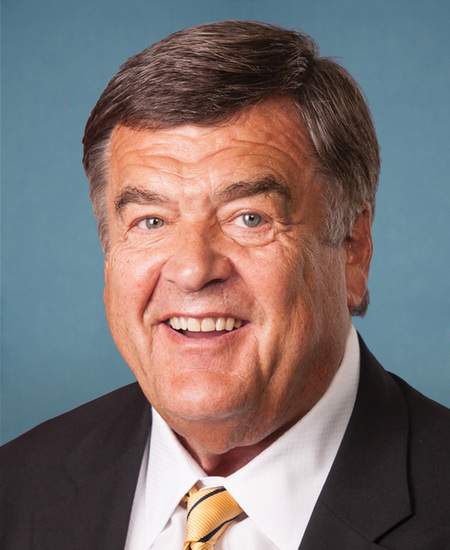
Rep. C. A. Dutch Ruppersberger
Sponsored bills
Department of Veterans Affairs Electronic Health Record Advisory Committee Act This bill requires the Department of Veterans Affairs to establish the Electronic Health Record Advisory Committee to provide guidance regarding the implementation of and transition to an electronic health record system.
Transformational Reforms and Updates to Ensure Educational Quality and Urgent Investments in Today's Youth Act of 2021 or the TRUE EQUITY Act This bill establishes various grant programs to address educational inequities in elementary and secondary schools. Specifically, the bill creates grant programs related to (1) early childhood education, (2) high-quality and diverse teachers and leaders, (3) college and career readiness pathways, and (4) additional resources for at-risk students. For each grant program, the Department of Education (ED) must award a single grant to an eligible state. To be eligible for a grant, a state must establish an independent state oversight board. The oversight board must, among other duties (1) determine whether the state and its local educational agencies (LEAs) have met state educational equity goals, and (2) hold them accountable for failing to meet those goals. ED may renew a grant if the oversight board determines the state has met its goals. In addition, for each grant program, the bill outlines the activities authorized under the program, maintenance-of-effort requirements, and matching fund requirements. Finally, the bill permits ED to enter into a local flexibility demonstration agreement, through which a state educational agency may use funds to develop and implement a school funding system based on weighted per-pupil allocations for low-income and disadvantaged students. (Currently, ED may enter into these agreements with LEAs.)
Temporary Reciprocity to Ensure Access to Treatment Act or the TREAT Act This bill temporarily authorizes the interstate provision of in-person and telehealth services. This authorization applies during, and for at least 180 days after, the COVID-19 (i.e., coronavirus disease 2019) emergency. Specifically, subject to scope of practice and other requirements, a health care professional may provide health services in any U.S. jurisdiction based on that individual's authorization to practice in any one state or territory. The bill also provides certain related powers to health care professional regulatory bodies, such as medical boards. Specifically, a regulatory body may investigate and take disciplinary actions against a professional who provides services pursuant to this bill to a patient in that body's jurisdiction.
USPS Fairness Act This bill repeals the requirement that the U.S. Postal Service annually prepay future retirement health benefits.
Anti-Racism in Public Health Act of 2021 This bill establishes within the Centers for Disease Control and Prevention (CDC) a National Center on Antiracism and Health and a law enforcement violence prevention program. Among other activities, the new center must declare racism a public health crisis, collect and analyze data, and administer research and grant programs to address racism and its impact on health and well-being. Additionally, the bill specifically directs the CDC's National Center for Injury Prevention and Control, in coordination with the Department of Justice and other relevant stakeholders, to carry out the law enforcement violence prevention program by conducting research and supporting other activities pertaining to law enforcement violence and public health.
Protecting Access to Post-COVID-19 Telehealth Act of 2021 This bill makes permanent several telehealth flexibilities that were initially authorized during the public health emergency relating to COVID-19 (i.e., coronavirus disease 2019), particularly with respect to Medicare coverage of telehealth services. For example, the bill permanently allows federally qualified health centers and rural health clinics to serve as the distant site (i.e., the location of the health care practitioner) for telehealth services under Medicare. Payment must be made in the same manner as for non-telehealth services, rather than in accordance with a separate methodology determined by the Centers for Medicare & Medicaid Services (CMS). The bill also permanently allows beneficiaries to receive Medicare telehealth services at any site, regardless of type or location, and grants the CMS general authority to waive any other requirements during any emergency period.
Insular Area Medicaid Parity Act This bill eliminates Medicaid funding limitations for U.S. territories beginning in FY2021.
Rebuilding Our Communities by Keeping aggregates Sustainable Act of 2021 or the ROCKS Act This bill directs the Department of Transportation to establish a working group of stakeholders (e.g., state, tribal, and local transportation and planning agencies) with knowledge and expertise in the production and transportation of materials used in the construction and maintenance of transportation infrastructure projects to conduct a study on access to such materials, including access to stone, sand, and gravel.
This resolution mourns the death of U.S. Capitol Police Officer Brian D. Sicknick, and it honors his lifelong commitment to service and his selfless acts of heroism on January 6, 2021.