

Maddy summaryHRES 1448 is a non-binding House resolution stating that the House believes every person has the right to emergency health care, including abortion care, during medical emergencies. It specifically addresses concerns that abortion restrictions force medical providers to choose between treating patients in life-threatening situations or risking criminal charges. The resolution highlights that such restrictions disproportionately harm Black, Indigenous, people of color, immigrants, low-income individuals, and LGBTQI+ patients. It does not change existing laws but expresses congressional support for ensuring access to emergency care without legal barriers. The resolution was introduced by multiple House members and referred to the Energy and Commerce Committee.
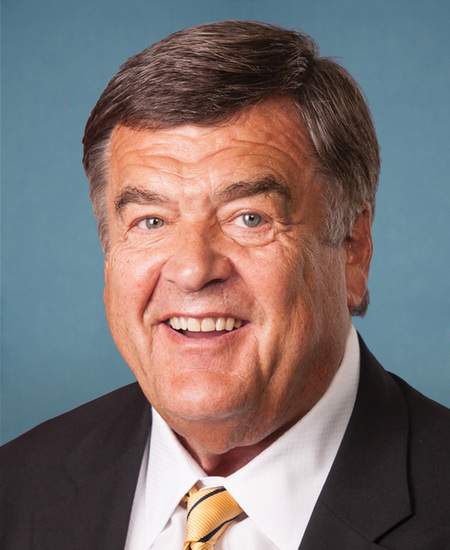
Rep. C. A. Dutch Ruppersberger
Sponsored bills
Maddy summaryHR 9274, the SHAWL Act, establishes two new Smithsonian museums: the National Museum of the American Latino and the American Women’s History Museum. It authorizes both museums to be located within the National Mall’s "Reserve" area, overriding prior restrictions, and requires federal agencies managing potential sites to transfer jurisdiction to the Smithsonian after notifying congressional committees. The bill mandates that both museums accurately represent diverse cultures, histories, and viewpoints within Latino and women’s communities through exhibits and programs, requiring input from a broad range of community experts. It also requires the Smithsonian to submit biennial reports to Congress detailing compliance with these representation requirements.
Maddy summaryH.J. Res. 193 proposes a constitutional amendment to eliminate legal immunity for federal officials, including the President, from criminal prosecution for actions taken while performing official duties. It also prohibits the President from granting a pardon to themselves. The amendment would apply to all federal officers (such as the President, Vice President, and members of Congress) except for Congress members acting in their legislative role as defined in the Constitution. If ratified by 38 states, this change would become part of the U.S. Constitution, requiring no further congressional action.
Maddy summaryHR 4581, the Maternal and Child Health Stillbirth Prevention Act of 2024, amends Title V of the Social Security Act to explicitly allow federal funds to support stillbirth prevention efforts. The bill directs states receiving Title V maternal and child health funds to use these resources for evidence-based programs and research aimed at reducing stillbirths, including tracking fetal movements, screening for growth issues, smoking cessation, and community support. It directly affects state maternal health programs by clarifying that existing funding can now cover specific stillbirth prevention activities previously not explicitly permitted. The law changes how Title V funds may be spent, adding clear provisions for research and programs targeting stillbirth reduction. This is a policy change that updates funding guidelines without creating new programs or mandates.
Maddy summaryThis bill amends the Federal Employees' Compensation Act to include physician assistants and nurse practitioners as eligible providers for injured federal workers. It defines "other eligible provider" as a nurse practitioner or physician assistant within their state-authorized scope of practice. The law updates key sections to replace "physician" with "physician or other eligible provider" for treatment, certification, and claim processes. The Secretary must finalize implementing regulations within six months of enactment.
Maddy summaryThis bill creates a federal framework for "extreme risk protection orders" (ERPOs) that temporarily remove firearms from individuals who pose a risk of harming themselves or others. Family members or law enforcement officers can petition a federal court for a temporary order (up to 14 days) based on probable cause, followed by a hearing within 72 hours to determine if a longer-term order (up to 180 days) is warranted. The bill requires clear and convincing evidence of risk at the hearing and mandates respondents to surrender firearms to law enforcement within 48 hours. It also includes provisions for reporting, training law enforcement on ERPOs, and a federal grant program to support state ERPO implementation, without preempting state laws.
Maddy summaryHR 8830, the High Court Gift Ban Act, sets strict limits on gifts federal judges may accept. It prohibits judges from receiving gifts valued over $50 from a single source in a year, unless the total from that source stays under $100 annually. Key exceptions include gifts paid for by the judge, gifts from relatives, honorary degrees from educational institutions, and public opportunities available to all federal employees. The bill also outlines enforcement mechanisms, requiring the Judicial Conference to refer violations to the Attorney General for civil or criminal penalties. This directly affects all federal judges, including Supreme Court justices and lower court judges, by restricting gifts from sources that may have business before them.
Maddy summaryHR 5012 (SHINE for Autumn Act of 2023) authorizes federal funding to improve stillbirth research and data collection. It provides $5 million annually for states to collect standardized stillbirth data (including risk factors) while protecting privacy, $1 million annually for developing public educational materials and data collection guidelines, and $3 million annually for medical fellowships training pathologists in perinatal autopsy and stillbirth research. The bill directly affects state health departments, medical professionals (like obstetricians and pathologists), and families who experience stillbirth by improving data quality for future research. It requires federal reports on guidelines and program effectiveness within five years but does not provide direct medical care or financial assistance to families.
Maddy summaryHR 537 authorizes a Congressional Gold Medal to honor 60 diplomats who saved Jewish lives during the Holocaust by issuing visas and passports against their governments' orders, risking expulsion and personal danger. The medal will be presented to the next of kin of these diplomats, alongside representatives from their home countries, and permanently displayed at the United States Holocaust Memorial Museum. The bill also permits the sale of bronze duplicates to cover production costs, with proceeds going to the U.S. Mint. This legislation recognizes the diplomats' humanitarian actions without creating new government programs or altering existing laws.
Maddy summaryThis bill establishes the Aviation Security Checkpoint Technology Fund (ASCT Fund) within the Department of Homeland Security. It directs $250 million annually from aviation security fees (for fiscal years 2025-2029) to fund TSA's procurement, deployment, and maintenance of new security checkpoint technology at airports. The TSA Administrator must provide regular reports to Congress on how these funds are used for technology deployment. The bill also repeals a previous section of aviation security law that previously governed these fees. The fund directly affects TSA operations and airport security technology upgrades.