

Maddy summaryThe Modern, Clean, and Safe Trucks Act of 2023 would remove a 12-percent federal excise tax on new heavy trucks, tractors, and trailers. This tax, in place since 1917, adds $12,000 to $22,000 to the cost of a new truck and is argued to discourage replacing older, less efficient vehicles. The bill aims to lower costs for buyers - especially for electric and alternative-fueled trucks, which face higher upfront prices - by eliminating the tax, thereby encouraging adoption of newer, cleaner models. The repeal would apply to sales occurring on or after the bill's introduction date.
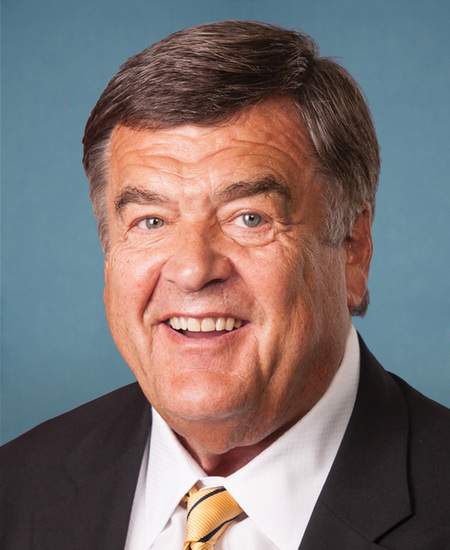
Rep. C. A. Dutch Ruppersberger
Sponsored bills
Maddy summaryThe TRUE EQUITY Act of 2023 aims to address educational inequities by providing federal grants to states that commit to educational equity goals. The bill establishes grant programs for early childhood education, teacher development, college and career readiness pathways, and student support services, requiring states to create independent State Oversight Boards to monitor progress and hold agencies accountable. States receiving funds must meet specific educational equity goals and provide matching funds (200% for most programs), with potential withholding of funds for failure to meet targets. The legislation includes significant annual funding allocations totaling over $2.7 billion across 10 fiscal years to support these initiatives. The bill directly affects states, local school districts, and students, particularly those from underrepresented racial and socioeconomic backgrounds who have experienced persistent achievement gaps.
Maddy summaryHR 1388 authorizes the minting of commemorative coins to honor the 1865 Sultana steamboat disaster, the deadliest maritime tragedy in U.S. history. It specifies three coin types ($5 gold, $1 silver, and half-dollar) with defined weights and compositions, to be sold at face value plus surcharges ($35, $10, and $5 per coin, respectively). All surcharges collected will fund the Sultana Historical Preservation Society for museum development, including exhibits, artifact preservation, and facility construction. The coins are legal tender but intended for collectors, with sales limited to a one-year period starting January 2023.
Patients' Right to Know Their Medication Act of 2023 This bill establishes requirements relating to the form, content, and distribution of patient safety labels for prescription drugs. Specifically, the Food and Drug Administration must issue regulations with requirements relating to the authorship, content, format, color, printing, and dissemination of such patient safety information. The regulations must require labels to include the drug's approved uses, known interactions with other drugs or substances, contact information for the drug's manufacturer, and other specified information relating to patient safety. The information must be in plain, neutral language and must be given in printed form with each prescription.
Maddy summaryThis bill allows asylum seekers not in detention to obtain work authorization 30 days after filing their asylum application, provided their application isn't deemed frivolous. It directly affects individuals seeking asylum in the U.S. who are awaiting a final decision on their case. The authorization remains valid until the asylum application receives a final denial, including any administrative or court appeals. This changes the prior system where many asylum seekers faced prolonged work restrictions while their cases were processed.
Maddy summaryHR 1322 expands federal retirement benefits to include specific non-traditional law enforcement roles. It adds IRS employees focused on tax collection, U.S. Postal Inspection Service staff, Department of Veterans Affairs police officers, and U.S. Customs and Border Protection seized property specialists to the definition of "law enforcement officer" under federal retirement systems. Current employees in these newly covered positions must elect to pay deposits for past service to receive full retirement credit, while their agencies must contribute additional funds for that past service. The bill also temporarily prevents mandatory separation for current law enforcement officers for three years after enactment.
Maddy summaryThe Military Spouse Hiring Act expands the Work Opportunity Tax Credit to include military spouses. Employers who hire a spouse of an active-duty military member - certified by a local agency as meeting eligibility requirements on the hiring date - can claim this tax credit. The credit reduces the employer's federal tax liability for hiring such individuals. This provision applies to new hires after the bill's enactment date.
Maddy summaryThis resolution (HRES 184) formally recognizes and celebrates Black History Month as an annual observance in February. It highlights the significance of the 2023 theme "Black Resistance," acknowledging historical and ongoing Black American efforts to overcome oppression. The resolution does not create new laws or policies but serves as a commemorative statement to raise awareness of Black achievements and resistance history. It directly affects public awareness, encouraging all Americans to recognize this history during February.
Maddy summaryThis bill establishes pay equity for federal firefighters by adjusting how their retirement benefits are calculated and setting a standard workweek. It requires retirement annuities to include overtime hours worked as part of a firefighter's regular schedule (e.g., overtime during standard shifts), rather than excluding them. The bill also mandates a maximum 60-hour regular workweek for federal firefighters, set by the Office of Personnel Management within one year of enactment. These changes directly affect federal firefighters, aiming to improve pay comparability with municipal firefighters and other federal employees while supporting recruitment and retention.
Maddy summaryHR 1247 would award a Congressional Gold Medal to the Freedom Riders collectively, honoring their pivotal role in challenging segregation in interstate travel during the Civil Rights movement. The medal, to be struck by the U.S. Mint and displayed at the Smithsonian Institution, recognizes their nonviolent protests that led to the 1961 federal ban on segregation in interstate public facilities. This is a symbolic tribute with no legal effect, as the bill does not create new policies or alter existing laws.