

Maddy summaryThis bill establishes the Chesapeake National Recreation Area as a new unit of the National Park System to preserve and promote public access to the Chesapeake Bay watershed. It defines the Recreation Area's boundaries using a specific map, creates an Advisory Commission with 19 members representing Maryland, Virginia, tribal interests, and youth, and outlines how land acquisition and management will occur through donations, purchases, or partner agreements. The legislation requires coordination with existing programs like Chesapeake Gateways and the Bay Program, while emphasizing conservation of natural, recreational, historical, and cultural resources. It directly affects communities, conservation organizations, and local governments in the Chesapeake Bay watershed by creating a formal structure for managing and expanding public access to Bay resources. The bill sets requirements for cooperative agreements with partner sites and mandates a management plan to coordinate activities with neighboring communities and existing conservation efforts.
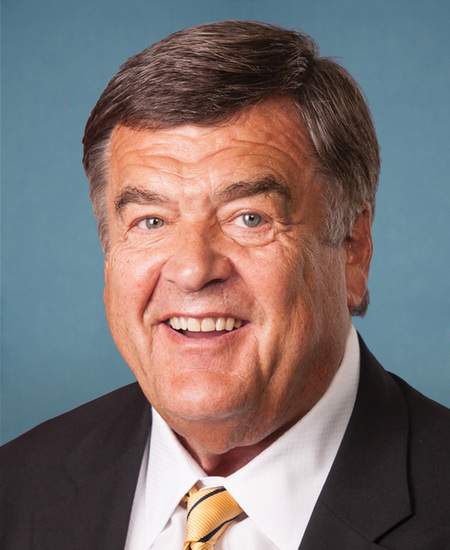
Rep. C. A. Dutch Ruppersberger
Sponsored bills
Maddy summaryHR 4987, the Democracy Restoration Act of 2023, would restore voting rights for people with felony convictions who are living in their communities (not incarcerated), directly affecting approximately 4.6 million disenfranchised Americans. The bill requires states to automatically restore voting rights upon completion of sentences, including probation or parole, without requiring payment of fines or fees. It mandates notification to individuals about their restored voting rights and prohibits states from conditioning voting rights on payment of legal financial obligations. The legislation addresses the disproportionate impact of voting restrictions on racial minorities, particularly Black and Latino communities, who face significantly higher rates of disenfranchisement. This bill would apply to all federal elections held on or after its enactment date.
Maddy summaryHR 4963, the Tax Fairness for Workers Act, would restore tax deductions for certain employee expenses. It creates an above-the-line deduction for union dues and expenses paid by wage-earning employees, and allows miscellaneous itemized deductions for other work-related expenses (like uniforms or supplies) that were previously disallowed after 2017 tax law changes. These provisions directly affect employees who pay union dues or incur qualifying job-related costs. The bill amends specific sections of the Internal Revenue Code to make these deductions available for taxable years beginning after December 31, 2022. It does not change tax rates or provide new benefits, only reinstating previously eliminated deductions for eligible workers.
Maddy summaryThe Rebuild America's Schools Act of 2023 creates a $20 billion annual federal grant program to fund long-term improvements to public school facilities across the United States. It requires states to prioritize school districts serving high-poverty students (with high percentages of students eligible for free/reduced lunch) and those with deteriorating infrastructure, while mandating that recipient schools develop 10-year facilities master plans. The bill specifies that funds must be used for construction, renovation, and modernization projects that improve energy efficiency, address environmental health hazards (including lead, asbestos, and poor air quality), and ensure school safety, while requiring the use of American-made materials for construction projects.
Maddy summaryHR 4965, the Kimberly Vaughan Firearm Safe Storage Act, requires the Attorney General to create voluntary best practices for safe firearm storage in homes, businesses, vehicles, and other locations within 180 days of enactment, with public input. Starting January 1, 2025, firearm manufacturers must include a "SAFE STORAGE SAVES LIVES" notice with each new handgun, rifle, or shotgun, directing buyers to the public website with these guidelines. The bill also establishes a $10 million annual grant program for states and tribes to fund public programs distributing safe firearm storage devices (like locked containers) and requires grantees to use at least 75% of funds for these programs. It does not mandate storage for individuals but provides resources and information to promote safer practices.
Maddy summaryHR 4942 extends and modifies the Conrad State 30 program, which allows states to sponsor foreign medical graduates to work in medically underserved areas in exchange for a commitment to practice for three years. The bill directly affects foreign medical graduates seeking to work in the U.S., states that sponsor them, and health facilities in underserved communities. Key provisions include creating mechanisms for physicians to change employers or states if they face issues with their current employment, adding requirements for employment agreements (including prohibitions on non-compete clauses), and establishing exceptions to the three-year work requirement under certain circumstances. The bill also creates a process for states to recapture waiver slots when physicians leave their employment and requires annual reporting on the program's usage. These changes aim to improve physician retention in underserved areas by providing more flexibility and protections for foreign medical graduates.
Maddy summaryThis bill expands employee ownership in S corporations by extending tax deferral for selling company stock to employee ownership plans (ESOPs), creating a Treasury Department office to provide education and technical assistance for ESOPs, and amending small business rules to maintain eligibility for government programs after ESOP ownership exceeds 49%. It establishes a new Labor Department "Advocate for Employee Ownership" to coordinate federal efforts, educate stakeholders, and recommend policy improvements. The bill directly affects S corporations using ESOPs, their employees who become owners, and small businesses that might lose government program access due to ESOP acquisitions. Key provisions include tax incentive extensions, new support offices, and updated small business classification rules.
Maddy summaryHR 1776, the End Tuberculosis Now Act of 2023, would amend U.S. foreign assistance law to strengthen global tuberculosis (TB) programs. The bill requires U.S. assistance to align with the World Health Organization's End TB Strategy, aiming to reduce TB deaths by 95% and incidence by 90% by 2035. It mandates annual reporting on TB diagnosis and treatment progress, prioritizes research for new diagnostics and treatments, and emphasizes integrating TB services into primary health care. The legislation affects U.S. government agencies, global health partners, and countries with high TB burdens, particularly focusing on low- and middle-income nations.
Maddy summaryThis bill amends the Child Nutrition Act to require school food service training programs to be scheduled during regular paid work hours whenever possible. If training must occur outside work hours, schools must compensate staff for attending, explain the necessity, and not penalize staff for missing it. Training must also be offered in-person with hands-on components when appropriate. The law directly affects school food service workers and their employers, mandating specific scheduling and compensation practices for required training.
Maddy summaryHR 4893, the Scientific Integrity Act, requires federal agencies that fund, conduct, or oversee scientific research to adopt policies preventing political interference in science. The bill mandates these agencies to prohibit suppression or distortion of research findings, establish Scientific Integrity Officers to enforce policies, and implement training and reporting systems. It directly affects scientists and engineers employed by or contracted with covered agencies (like the EPA or NIH), ensuring their work remains free from political pressure. Key mechanisms include annual public reporting on misconduct complaints, whistleblower protections, and requiring scientific conclusions to be based on evidence, not ideology.