

Halt All Lethal Trafficking of Fentanyl Act or the HALT Fentanyl Act This bill places fentanyl-related substances as a class into schedule I of the Controlled Substances Act. A schedule I controlled substance is a drug, substance, or chemical that has a high potential for abuse; has no currently accepted medical value; and is subject to regulatory controls and administrative, civil, and criminal penalties under the Controlled Substances Act. Additionally, the bill establishes a new, alternative registration process for schedule I research that is funded by the Department of Health and Human Services or the Department of Veterans Affairs or that is conducted under an investigative new drug exemption from the Food and Drug Administration. The bill also makes several other changes to registration requirements for conducting research with controlled substances, including permitting a single registration for related research sites in certain circumstances, waiving the requirement for a new inspection in certain situations, and allowing a registered researcher to perform certain manufacturing activities with small quantities of a substance without obtaining a manufacturing registration.
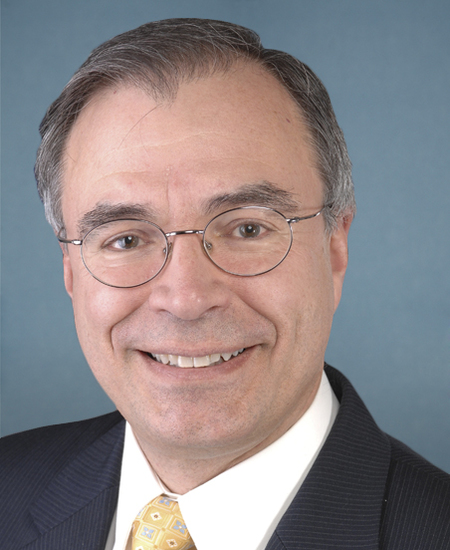
Rep. Andy Harris
Sponsored bills
Removing Waste and Protecting Medicare Act This bill makes several budgetary changes, including (1) prohibiting sequestration orders in 2022, (2) rescinding certain COVID-19 state and local relief funds, and (3) extending certain adjustments under Medicare with respect to sequestration and payments under the physician fee schedule. It also modifies requirements relating to federal programs and benefits, such as permanently requiring taxpayers to include Social Security numbers on their tax returns in order to qualify for the child tax credit.
We're Not Paying You To Break Our Laws Act This bill prohibits making federal funds available to pay for any settlement agreement in any civil action brought as a result of actions taken to enforce the April 6, 2018, Department of Justice memorandum pertaining to the prosecution of cases of improper entry into the United States.
Illegal Immigrant Payoff Prohibition Act This bill prohibits the payment of a settlement to an alien for a civil action brought against the United States in connection with the alien's inadmissibility to, or unlawful presence in, the United States.
Defending Students' Civil Rights Act of 2021 This bill prohibits the use of critical race theory or critical race pedagogy in any federally funded program or activity. Specifically, the bill includes the use of critical race theory or critical race pedagogy as a violation of Title VI of the Civil Rights Act of 1964, which prohibits discrimination based on race, color, or national origin in federally funded programs or activities. The bill defines critical race pedagogy as the separation of students or teachers, or the assignment of characteristics or assumptions, based on race, color, or national origin. The bill defines critical race theory as a curriculum that establishes specified principles relating to race or sex, including that (1) one race or sex is inherently superior to another, (2) the United States is fundamentally racist or sexist, and (3) an individual bears responsibility for the past actions of others of the same race or sex.
Teleabortion Prevention Act of 2021 This bill restricts the use of telehealth for chemical abortions (also known as medication abortions). Specifically, it requires a provider who dispenses or prescribes medication for a chemical abortion to physically examine the patient, be physically present at the location of the chemical abortion, and schedule a follow-up visit. The bill provides an exception for a chemical abortion that is necessary to save the life of a mother whose life is endangered by a physical disorder, illness, injury, or condition. The bill establishes criminal penalties—a fine, a prison term of up to two years, or both—for a provider who does not comply with the requirements. A patient who undergoes a chemical abortion may not be prosecuted.
No Frivolous Application for Short-Barreled Shotguns Act or the NFA SBS Act This bill removes certain short-barreled shotguns from the definition of firearms for purposes of the National Firearms Act. It also eliminates the prohibition on the sale or transportation of such shotguns in interstate commerce and treats persons who acquire or possess a short-barreled shotgun as meeting the registration or licensing requirements for such shotguns where such requirements are determined by reference to the National Firearms Act. The bill preempts state or local laws that impose a tax or recordkeeping requirements on short-barreled shotguns. The Department of Justice must destroy records relating to the registration of shotguns described by this bill within one year after the enactment of this bill.
Second Amendment is Essential Act of 2021 This bill directs the Department of Homeland Security to designate the business of importing, manufacturing, or dealing firearms, or importing or manufacturing ammunition, as a critical infrastructure sector. Additionally, the bill states that individuals who are employed by those entities are critical infrastructure workers. The term critical infrastructure means systems and assets, physical or virtual, so vital to the United States that the incapacity or destruction of such systems and assets would have a debilitating impact on security, national economic security, national public health and safety, or any combination of those matters.
H-2B Returning Worker Exception Act of 2021 This bill modifies the H-2B (temporary nonagricultural workers) nonimmigrant visa program, including by exempting certain workers from an annual numerical limit on such visas and requiring civil penalties for program violations. Under this bill, if a worker seeking a H-2B visa has been counted toward the 66,000 annual cap on such visas in one of the three preceding fiscal years, that worker shall not be counted against the cap again. Furthermore, the Department of Homeland Security (DHS) must impose a civil monetary penalty on an employer for (1) failing to meet requirements related to an H-2B visa petition, or (2) making a willful misrepresentation of material fact in such a petition. DHS must also ensure the establishment of an electronic platform (1) for employers to submit and request approval of an H-2B petition, and (2) to act as a single point of access for applicants and the relevant government agencies. The Department of Labor must maintain a publicly available online database of all job orders by H-2B employers. Furthermore, Labor may take certain actions to enforce program requirements, such as imposing penalties and seeking injunctions. The bill provides statutory authority for the current practice of limiting the program to workers who are nationals of countries approved by DHS. DHS may make exceptions to this limitation in individual cases if it is in the U.S. interest to do so. DHS shall select approved countries based on various factors, such as the rate of overstay by H-2B visa holders from each country.
Firearm Due Process Protection Act This bill expands the grounds for pursuing judicial remedies related to certain firearm transfers. Additionally, the bill establishes procedural rules applicable to actions for judicial remedies. Current law authorizes judicial remedies for an individual who is erroneously denied a firearm (e.g., an individual is denied a firearm but the individual is eligible to receive or possess a firearm). This bill authorizes remedies for an individual who experiences an extended delay (i.e., a delay of more than 60 days) on a firearm transfer. Additionally, the bill requires an expedited hearing on an action for judicial remedies and places the burden of proof on the respondent to show by clear and convincing evidence that the individual was ineligible to receive or possess a firearm.