

Maddy summaryHR 7845 would rename Washington Dulles International Airport in Virginia as "Donald J. Trump International Airport" upon enactment. The bill requires all federal laws, regulations, maps, and official documents to reference the airport by its new name. This is a purely procedural designation affecting the airport's official title and federal record-keeping, with no associated policy changes or funding. The bill directly impacts how the airport is identified in government communications and records.
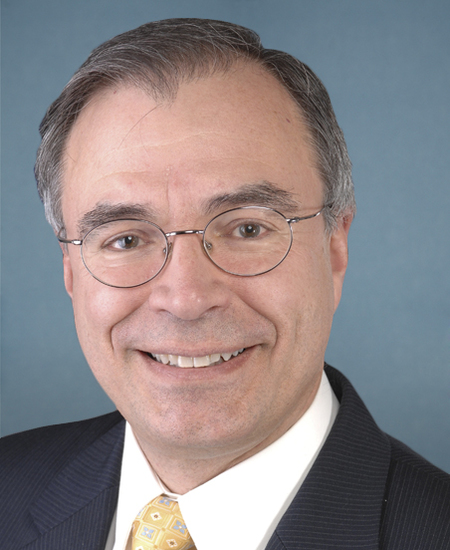
Rep. Andy Harris
Sponsored bills
Child Tax Credit Integrity Act This bill requires an individual taxpayer to provide social security account numbers to claim the child tax credit. The social security number must be that of the taxpayer and the taxpayer's spouse (for joint returns) and the child named on the tax return.
Maddy summaryThis bill establishes new eligibility rules for women's and girls' amateur sports by defining "female" and "male" based on biological sex at birth. It prohibits individuals designated as male under these definitions from participating in athletic competitions designated for females, women, or girls. The law amends existing U.S. Code provisions to add this requirement, directly affecting athletes and organizations managing female-designated teams. The key change is a clear ban on male-identified participants in female sports, replacing previous eligibility standards with biological sex criteria.
Maddy summaryThis bill amends budget scoring rules to require the Congressional Budget Office to account for long-term savings from preventive health programs when evaluating legislation. It directs the CBO to assess if a bill reduces future government costs through evidence-based preventive health services (like screenings or vaccinations) and include those savings in budget projections. The change affects how Congress scores the fiscal impact of health-related bills, requiring them to consider savings over 20 years (not just the current budget cycle). It does not create new programs but changes the budget analysis process for preventive health measures.
Maddy summaryHR 7725 would block federal funding for graduate medical schools that require students or staff to adopt specific statements about race, gender, or identity (like claiming systemic racism or collective guilt), use race-based distinctions in admissions or programs, maintain DEI offices, or mandate "diversity statements" for admission. It directly affects graduate medical schools at colleges/universities receiving federal financial aid, including student loans. The bill exempts medical education about race-related health needs, demographic data collection for reporting, and religious institutions from adhering to policies conflicting with their beliefs. Schools violating these rules would lose eligibility for federal funds, though they could still comply with anti-discrimination laws and provide general academic instruction.
Maddy summaryThis bill amends U.S. immigration law to automatically bar immigrants from entering the country and require their removal if they have been convicted of, admitted to committing, or are charged with sexual assault. It directly affects non-citizens (aliens) who have been involved in sexual assault offenses, as defined under existing law. Key provisions add new grounds for inadmissibility (preventing entry) and deportability (requiring removal) specifically for such offenses under sections 212(a)(2) and 237(a)(2) of the Immigration and Nationality Act. The bill does not change criminal penalties for sexual assault but modifies immigration consequences for those with such convictions or admissions.
Maddy summaryThe AUSTIN Act of 2024 requires cabinet-level officials, such as department heads, to notify the President and congressional leaders within 24 hours if they cannot perform their duties due to illness or absence, and to publish this notice on their agency’s website. The notice must include the reason for the inability and a timeline for when they will be unable to work and when they expect to return. The President may temporarily waive the public posting requirement for national security reasons but must explain the waiver to Congress, and congressional leaders can override such a waiver if they disagree. Failure to comply could result in the official losing federal funding for their salary and facing termination.
Maddy summaryHR 7594 codifies existing immigration enforcement policies into law, primarily by making executive actions from 2017-2019 permanent. It ends the "catch and release" practice for border apprehensions, mandates border wall construction and other security measures, enforces restrictions on "sanctuary cities," implements the "Remain in Mexico" policy, and limits entry for migrants. The bill also modifies birthright citizenship rules under the Immigration and Nationality Act, requiring at least one parent to be a U.S. citizen, national, or legal permanent resident for a child born in the U.S. to automatically gain citizenship. It directly affects immigrants seeking entry or asylum, those in border detention, and individuals applying for citizenship through birth in the U.S.
Maddy summaryThis bill, titled the Shrinkflation Reduction Act, does not address shrinkflation (product size reductions without price changes). Instead, it rescinds unobligated balances from three major federal laws: the American Rescue Plan Act of 2021, the Infrastructure Investment and Jobs Act, and the Inflation Reduction Act. The key mechanism is canceling unused budget authority remaining in these accounts, redirecting those funds to the Treasury. It directly affects federal budget management by eliminating unspent funds from these specific legislative appropriations. The bill's provisions are purely procedural and do not alter existing spending programs or impact consumers or businesses.
Let Injured Americans Be Legally Empowered Act or the LIABLE Act This bill prohibits COVID-19 vaccine manufacturers from being immune under federal law from lawsuits relating to their vaccines. Specifically, the bill prohibits any federal law from providing immunity for COVID-19 vaccine manufacturers from civil suits or liability, or limiting liability, with respect to the administration or use of their vaccines. Additionally, individuals may not be precluded from bringing a civil suit against a COVID-19 vaccine manufacturer because the individual sought or received compensation through specified federal vaccine injury compensation programs, nor does the bill preclude individuals from seeking compensation through these programs. The bill applies to vaccine administrations that occur before, on, or after the bill's date of enactment.