

Maddy summaryHR 9534, the National Constitutional Carry Act, would prohibit states and localities from banning or restricting the public carrying of legally owned firearms by eligible U.S. citizens. It directly affects all gun owners who meet federal and state possession requirements, removing the need for permits or licenses to carry in public spaces. Key provisions state that any state law restricting public carry - such as requiring permits or imposing financial barriers - would be invalidated, with exceptions for privately-owned businesses that clearly prohibit firearms or locations with security screening. The bill bases this on Supreme Court rulings affirming the constitutional right to carry firearms for self-defense outside the home.
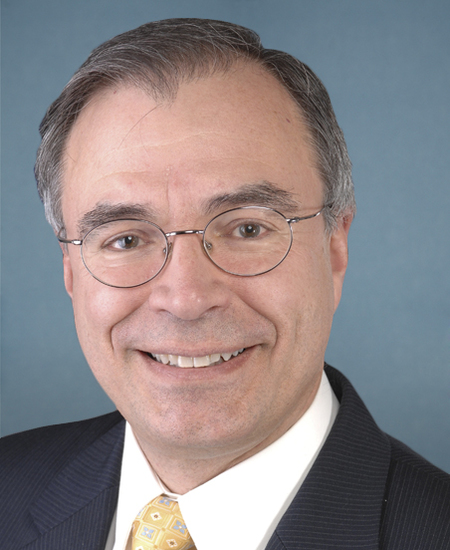
Rep. Andy Harris
Sponsored bills
Maddy summaryHRES 1425 is a non-binding resolution (not a law) passed by the House of Representatives. It states that requiring valid photo identification for voting is a "fundamental component of secure elections," citing examples where photo ID is already required for other government services (like Social Security or banking) and private activities (like buying a car or boarding a plane). The resolution does not create new voting requirements or change election laws - it only expresses the House's position. It directly affects the legislative record but has no legal impact on voter eligibility or election procedures.
Maddy summaryHR 9388, the Modern Firearm Safety Act, prohibits federal, state, and local governments from requiring certain safety features on handguns sold in interstate commerce. The bill specifically bans mandates for: loaded indicators, magazine insertion mechanisms, microstamping (microscopic markings on shell casings), or attachment points for such features. This directly affects handgun manufacturers and state/local governments that might have proposed or implemented such requirements. The law prevents new regulations requiring these features on handguns commonly used by the public, focusing on removing specific technical mandates rather than broader safety measures.
Maddy summaryThe SAFER at the Border Act prohibits the U.S. Department of Homeland Security from temporarily admitting (paroling) certain individuals at the border. It defines "known terrorists" (those arrested, charged, or convicted for terrorism), "suspected terrorists" (reasonably suspected of terrorism), and "special interest aliens" (those with potential terrorism links based on travel patterns). The bill explicitly bans parole for these individuals, even for humanitarian reasons or public benefit, and also prohibits parole for refugees. Additionally, it allows states to sue the Department of Homeland Security if they suffer financial harm exceeding $100 from the parole of such individuals.
Freedom from Unfair Gun Taxes Act of 2024 This bill prohibits states or localities from imposing a levy or collecting an excise tax on the sale of a firearm, ammunition, or any part or component thereof, by a manufacture or retailer.
Maddy summaryThis bill defines "sex," "male," and "female" in federal law based on biological characteristics present at birth, specifically referencing reproductive anatomy (e.g., sperm production for males, egg production for females). It mandates that all federal agencies, courts, and laws interpret these terms strictly according to this biological definition, excluding self-identification or gender identity. The bill directly affects how federal programs, regulations, and legal decisions interpret terms like "sex," "gender," and "gender identity" in all federal contexts. Key provisions clarify that "gender" refers only to biological sex differences and explicitly states that gender identity does not override these definitions.
Maddy summaryThis bill gives states the option to restrict Supplemental Nutrition Assistance Program (SNAP) benefits for specific items. States may ban purchases of sugary drinks, candy, ice cream, and prepared desserts like cakes or cookies using SNAP benefits. The Secretary of Agriculture will maintain a list of these restricted items, but states can implement bans without federal approval or additional reporting. This change directly affects SNAP participants in states that choose to adopt such restrictions, altering which food items can be bought with benefits.
Maddy summaryThe SAVE Act (HR 8281) requires U.S. citizens to provide documentary proof of citizenship when registering to vote in federal elections. It defines acceptable proof as documents like passports, REAL ID-compliant IDs, military IDs, or birth certificates, and mandates that states verify citizenship using information from government agencies like DHS and Social Security. States must establish processes for voters without required documentation to provide an attestation under penalty of perjury. The law also requires states to remove noncitizens from voter rolls when verified evidence shows they're not citizens. This bill directly affects all applicants registering to vote in federal elections and state election officials who must implement these requirements.
Maddy summary# Summary of the Agriculture, Rural Development, Food and Drug Administration, and Related Agencies Appropriations Act, 2025 This is the fiscal year 2025 appropriations bill for the U.S. Department of Agriculture, Rural Development programs, Food and Drug Administration, and related agencies. **Key Funding Areas:** - Rural Development Loan Fund - Rural Housing Insurance Fund - Rural Utilities Service programs (water, waste disposal, broadband) - Food and Drug Administration (including user fee funding) - Agricultural research and extension programs - Food assistance programs (Child Nutrition, WIC) **Major Restrictions and Provisions:** 1. **Funding Limitations:** - Section 714 limits funds for section 32 of the Act of August 24, 1935 to $1,427,930,000 - Section 705 allows funds for direct and guaranteed loans to remain available until expended - Section 707 extends availability of funds for Federal Crop Insurance 2. **Prohibited Activities:** - Section 744: Prohibits using funds to promote or advance Critical Race Theory - Section 755: Prohibits implementing Executive Order 13985 or related equity plans - Section 758: Prohibits discriminatory actions against persons based on religious beliefs regarding marriage - Section 762: Prohibits using funds to inspect horses under certain provisions - Section 768: Prohibits implementing certain food traceability regulations until pilot projects are completed 3. **Notable Policy Changes:** - Section 760: Amends the definition of "hemp" to exclude certain synthetic cannabinoids - Section 772: Requires inclusion of peanut-containing foods in WIC food packages - Section 773: Requires regular testing of inbound molasses for quality verification 4. **Administrative Rules:** - Section 716 establishes strict requirements for reprogramming funds - Section 710 limits first-class travel for federal employees - Section 713 prohibits blocking access to pornography on government computers - Section 719 prohibits executive branch agencies from producing prepackaged news stories 5. **Rescissions:** - Section 754 rescinds $40 million from previous appropriations - Section 765 rescinds $50 million from prior year conservation funds The Act contains numerous specific restrictions on program implementation, reporting requirements, and funding limitations across various agricultural, food safety, and rural development programs. The document is highly detailed with specific prohibitions on certain types of regulations, research, and activities, reflecting the political priorities of the Congress that passed it.
Maddy summaryHJRES 164 is a congressional resolution seeking to block a rule issued by the Department of Commerce regarding firearms license requirements. It directly targets the rule published in the Federal Register (89 Fed. Reg. 34680), which would have revised licensing procedures for firearms dealers. If passed, the resolution would prevent this rule from taking effect by invoking the congressional disapproval process under federal law. The bill does not create new regulations but aims to halt an existing rule affecting gun license applicants and dealers.