

Maddy summaryThis bill codifies qualified immunity standards for law enforcement officers under federal law. It specifies that individual officers cannot be held liable in civil suits if they demonstrate either that the constitutional right at issue was not clearly established at the time of the incident, or that a prior court ruling already confirmed the conduct was lawful. Local government agencies also cannot be held liable if the officer is found not liable under these standards and was acting within their job duties. The law applies to all federal, state, tribal, and local officers with arrest powers, including police officers. The changes would take effect 180 days after enactment.
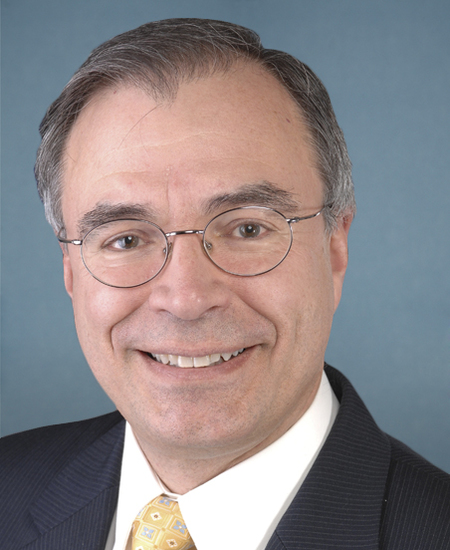
Rep. Andy Harris
Sponsored bills
Maddy summaryHR 422, the "No Subsidies for Wealthy Universities Act," limits how federal research funds can cover indirect costs (like administrative expenses) at universities with large endowments. It prohibits institutions with endowments over $5 billion from using any federal research funds for indirect costs, caps indirect costs at 8% for those with $2-5 billion in endowments, and sets a 15% cap for all other institutions. The bill requires annual collection of endowment data by the National Center for Education Statistics and mandates public reporting of how indirect costs are used. It directly affects research funding for the wealthiest universities, reducing federal support for their administrative operations. The policy applies to new federal research awards starting one year after enactment.
Maddy summaryHR 404, the "Hearing Protection Act," reclassifies firearm silencers (devices that reduce gunfire noise) as firearms for federal tax and regulatory purposes. It imposes a 10% federal tax on silencers, requires the destruction of all existing federal silencer registration records within one year, and preempts state laws that tax or regulate silencers. The bill clarifies that silencers are treated as firearms under federal law, including for licensing and marking requirements, and defines "firearm silencer" to include specific components. Note: The bill’s title is misleading - it addresses firearm silencer regulation, not hearing protection for people.
Maddy summaryHCONRES 3 is a symbolic congressional resolution expressing support for the Geneva Consensus Declaration, an international agreement signed by 39 countries that affirms women’s health, family protection, and opposes international abortion rights. It urges the U.S. to rejoin the declaration, which emphasizes that no country has an obligation to fund or facilitate abortion and that families are foundational to society. The resolution does not create new laws but reaffirms existing U.S. policies prohibiting federal funding for abortions or coercive family planning abroad. It directly affects U.S. foreign policy direction but has no binding effect on government actions.
Maddy summaryHR 369, the States’ Education Reclamation Act of 2025, would abolish the U.S. Department of Education and transfer its programs - including job training, special education, and federal student loans - to other federal departments like Labor, Health and Human Services, and the Treasury. It would provide annual federal grants to states for K-12 and higher education, requiring states to use the funds to add to, not replace, their existing education budgets. States must conduct annual audits of fund usage, submit reports to the federal government, and face penalties for misuse, while maintaining compliance with federal anti-discrimination laws. The bill shifts federal education oversight to states, ending direct federal management of education programs.
Maddy summaryHR 361, the "Make Greenland Great Again Act," authorizes the President to begin negotiations with Denmark for the U.S. acquisition of Greenland starting January 20, 2025. It requires the President to submit any resulting agreement to specific congressional committees (Foreign Affairs and Foreign Relations) within five days, followed by a 60-day congressional review period. If Congress takes no action during that period, the agreement would automatically take effect. The bill does not change Greenland’s current status as part of Denmark’s Kingdom but proposes a diplomatic process for potential transfer. Note: This appears to be a symbolic or satirical proposal, as Greenland is an autonomous territory within Denmark’s Kingdom and not subject to unilateral acquisition.
Maddy summaryHR 326, the Border Wall Waste Accountability Act, requires the Government Accountability Office (GAO) to study the cost of unused construction materials purchased for the U.S.-Mexico border wall between January 20, 2021, and January 20, 2025. The GAO must report these costs to Congress within 90 days of the bill's enactment. This procedural bill focuses solely on documenting financial details of unused materials, without making policy changes or affecting specific groups directly.
Maddy summaryHR 283 authorizes the President, with coordination from the Secretary of State, to negotiate with Panama to reacquire the Panama Canal. The bill requires the President to submit a report to Congress within 180 days of enactment, detailing negotiation progress, challenges, and expected outcomes. This procedural bill focuses solely on initiating talks and reporting requirements, without specifying repurchase terms or funding. It directly affects U.S. executive branch actions and congressional oversight, not the canal’s current operations or Panama’s government.
Maddy summaryHR 272, the Protecting Life and Taxpayers Act of 2025, prohibits federal funding (directly or indirectly) to any organization that performs or funds abortions, requiring certification from all recipients. This applies to entities receiving federal funds, including contractors and subsidiaries, with limited exceptions for pregnancies resulting from rape or incest, or when a physician certifies a life-threatening condition. The bill directly affects healthcare providers, clinics, and organizations that rely on federal grants or contracts. It changes existing funding rules by banning federal money from supporting abortion services, except in the specified medical or criminal exceptions.
Maddy summaryThis bill grants the Secretary of Homeland Security authority to temporarily suspend entry of certain individuals at U.S. borders to achieve "operational control" (defined as effective border management). It specifically applies to people seeking entry without proper documentation who would be denied entry under current law (e.g., lacking visas or asylum eligibility). The Secretary must block entry if they cannot detain or process these individuals as required by existing immigration law. States may also sue the government if they believe border security rules are violated.