

Ukraine Invasion War Crimes Deterrence and Accountability Act This bill requires the President to report to Congress on atrocities committed during Russia's invasion of Ukraine since February 24, 2022. Specifically, the report must describe in detail (1) U.S. government efforts to collect, analyze, and preserve evidence related to war crimes and other atrocities committed during the invasion; (2) media, public diplomacy, and information operations to make the Russian people, including their military and political leaders, aware of efforts to identify and prosecute those responsible for such atrocities; and (3) the process for a domestic, foreign, or international court or tribunal to obtain information from the U.S. government related to such atrocities.
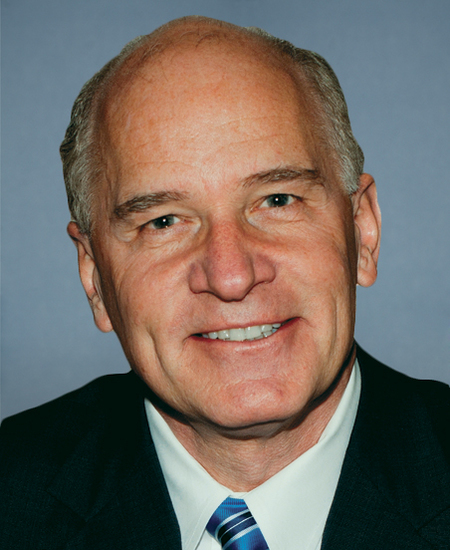
Rep. William R. Keating
Sponsored bills
Military Spouse Hiring Act This bill expands the Work Opportunity Tax Credit (WOTC) to include the hiring of a qualified military spouse. (The WOTC permits employers who hire individuals who are members of a targeted group such as qualified veterans, ex-felons, or long-term unemployment recipients to claim a tax credit equal to a portion of the wages paid to those individuals.) A qualified military spouse is any individual who is certified by the designated local agency as being (as of the hiring date) a spouse of a member of the Armed Forces.
Getting Over Lengthy Delays in Care As Required by Doctors Act of 2022 or the GOLD CARD Act of 2022 This bill exempts physicians from prior authorization requirements under Medicare Advantage plans with respect to specific items and services if at least 90% of the physician's requests for such items and services were approved during the previous plan year.
Ruthie and Connie LGBTQ Elder Americans Act of 2022 This bill addresses matters related to lesbian, gay, bisexual, transgender, and queer (LGBTQ) individuals in certain federal programs serving older Americans, particularly by including an individual's LGBTQ status within the scope of the greatest social needs served by such programs.
Protecting Our Kids Act This bill makes various changes to federal firearms laws, including to establish new criminal offenses and to expand the types of weapons and devices that are subject to regulation. Among the changes, the bill generally prohibits the sale or transfer of certain semiautomatic firearms to individuals who are under 21 years of age; establishes new federal criminal offenses for gun trafficking and related conduct; establishes a federal statutory framework to regulate ghost guns (i.e., guns without serial numbers); establishes a framework to regulate the storage of firearms on residential premises at the federal, state, and tribal levels; subjects bump stocks to regulation under federal firearms laws; generally prohibits the import, sale, manufacture, transfer, and possession of large capacity ammunition feeding devices; and requires the Department of Justice to report on the demographic data of persons who are determined to be ineligible to purchase a firearm based on a background check performed by the national instant criminal background check system.
Keeping Russia's Energy and Military Liable for Invading its Neighbors Act or the KREMLIN Act This bill temporarily prohibits federal agencies from contracting with persons that have business operations with the government of Russia or with fossil fuel companies that operate there, with exceptions where necessary to provide humanitarian assistance or disaster relief or where vital to U.S. national security interests. The bill terminates the prohibition when the President submits to specified congressional committees a written certification determining that Russia has reached an agreement relating to the withdrawal of Russian forces and cessation of military hostilities that is accepted by the Ukrainian government, poses no immediate military threat of aggression to any North Atlantic Treaty Organization member, and recognizes the right of the people of Ukraine to independently and freely choose their own government.
Military Family Leave Act of 2022 This bill entitles an employed family member of a member of the Armed Forces who receives notification of a call or order to active duty in support of a contingency operation, or who is deployed in connection with a contingency operation, to two workweeks of leave per year for each family member who is so called or deployed. Such leave may (1) be taken intermittently or on a reduced leave schedule; and (2) consist of paid or unpaid leave, as the employer considers appropriate. Additionally, the bill (1) allows an employer to require certification of entitlement to such leave within a leave request, (2) provides employment and benefits protection for employees upon their return from such leave, and (3) prohibits an employer from interfering with or otherwise denying the exercise of such leave rights.
Keep Infant Formula Safe and On the Shelves Act of 2022 This bill requires the Food and Drug Administration (FDA) to periodically inspect infant formula manufacturing facilities and addresses related issues. The FDA must periodically conduct inspections, including unannounced inspections, of infant formula manufacturer facilities. If the FDA makes a notable regulatory finding at such a facility, the manufacturer must undergo a comprehensive food safety audit that includes a root cause analysis, enhanced testing, and comprehensive environmental samples. A manufacturer of infant formula or essential medical food must notify the FDA no later than five business days after becoming aware of circumstances that could lead to a shortage of the relevant product in the United States. Further, the FDA must create and annually update a list of U.S. manufacturing facilities that could be converted to manufacture infant formula during a shortage. In the event of a shortage, the FDA may require infant formula manufacturers to provide certain information, such as the quantity of formula in a manufacturer's inventory. The bill also establishes under statute that food, including infant formula, is a critical material essential to the national defense and therefore subject to authorities under the Defense Production Act of 1950. (Such authorities authorize the President to take various actions, such as requiring businesses to prioritize certain government contracts and incentivizing the domestic industrial base to expand the production of critical materials.) The Occupational Safety and Health Administration must issue a fact sheet and provide technical assistance to infant formula manufacturers to promote compliance with occupational health and safety standards.
This joint resolution directs the President to remove U.S. Armed Forces from hostilities against the Houthis in Yemen within 30 days of the enactment of this joint resolution unless Congress authorizes a later withdrawal date, issues a declaration of war, or specifically authorizes the use of the Armed Forces. Prohibited activities include sharing intelligence or providing logistical support to enable offensive strikes by the coalition led by Saudi Arabia. This joint resolution shall not affect any military operations directed at Al Qaeda or associated forces.
This resolution recognizes 100 years of continuous diplomatic relations between the United States and Estonia, Latvia, and Lithuania (the Baltic States). The resolution also commits to providing continued support for the Baltic States through economic and security cooperation, including through the Baltic Security Initiative.