

Maddy summaryHRES 381 is a non-binding House resolution supporting National Fentanyl Awareness Day in 2023. It aims to increase public awareness about the dangers of counterfeit fentanyl pills - fake pills that mimic prescription medications and are linked to over 70,000 overdose deaths in 2021, including 80% of deaths among youth aged 14-23. The resolution encourages existing law enforcement efforts to combat counterfeit pills and acknowledges that only 48% of youth are aware fentanyl is used in these fake pills. It does not create new laws or programs but formally recognizes the need for greater awareness, particularly for young people vulnerable to these deadly substances.
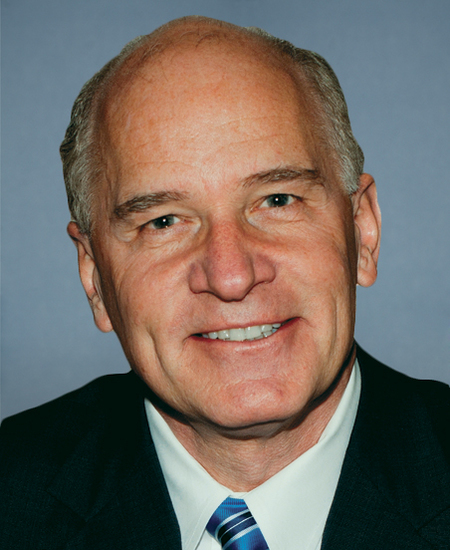
Rep. William R. Keating
Sponsored bills
Health Center Service Expansion and Provider Shortage Reduction Act This bill provides funding through FY2028 for certain services under the Community Health Center Program, which supports outpatient health care facilities that provide comprehensive primary care to medically underserved populations. It also provides funding through FY2028 to expand the National Health Services Corps, which provides scholarships and student loan repayment awards to health care providers who agree to work in areas with health care provider shortages. In particular, the bill requires that health centers provide behavioral health, mental health, and substance use disorder services and provides funding for those services. (Currently, centers may provide those as additional services.) Furthermore, the bill provides funding for (1) expanding the operating hours of community health centers; and (2) New Access Point Grants, which assist centers to establish new delivery sites for care.
Maddy summaryThe PAST Act of 2023 amends the Horse Protection Act to ban specific devices used to cause pain (soring) in horses at shows, particularly affecting Tennessee Walking Horses, Racking Horses, and Spotted Saddle Horses. It defines prohibited "action devices" (like boots or chains causing friction) and requires licensed, conflict-free inspectors at events to enforce rules. The bill increases penalties for violations to up to $5,000 fines or 3 years in jail, and mandates longer disqualifications for repeat offenses (180 days → 1 year → 3 years). Horse show organizers, exhibitors, and participants must comply with these new inspection and penalty requirements.
Maddy summaryThis bill amends the Additional Ukraine Supplemental Appropriations Act of 2022 to allow Ukrainian nationals with protected status (like those under humanitarian parole) to obtain driver's licenses or state ID cards under the REAL ID Act of 2005, bypassing a standard restriction that would normally deny eligibility. It directly affects Ukrainian nationals in the U.S. who hold temporary protected status under current immigration programs. The key provision adds a new eligibility category to existing law, removing a specific barrier to accessing driver's license services. This is a technical adjustment to immigration-related identification rules, not a new benefit or funding measure. The change applies only to REAL ID-compliant licenses, which are required for federal purposes like boarding domestic flights.
Maddy summaryThe HELPER Act of 2023 creates a new FHA mortgage insurance program specifically for first responders and K-12 teachers. It allows eligible first-time homebuyers in these professions to secure mortgages with 100% financing (no down payment required) for purchasing or repairing a primary residence. To qualify, applicants must be employed as law enforcement, firefighters, paramedics, or K-12 teachers, have completed housing counseling, and meet specific employment history requirements (e.g., 4 years in the role or disability-related release). The program authorizes $660,000 for fiscal year 2024 and $160,000 annually through 2030, with authority expiring after 5 years.
Maddy summaryHR 676, the Coastal Communities Ocean Acidification Act of 2023, amends the 2009 Federal Ocean Acidification Research and Monitoring Act to improve collaboration on ocean acidification efforts. It requires the federal Advisory Board to establish ongoing input mechanisms with coastal stakeholders, fishery councils, indigenous knowledge groups, and non-Federal experts, and mandates two Indian Tribe representatives on the Board. The bill also updates definitions to specifically include "Indian Tribe" and strengthens coordination with Tribal organizations for vulnerability assessments and research planning. These changes directly affect coastal communities, fisheries, Tribal nations, and local governments managing ocean acidification impacts. The law focuses on integrating diverse stakeholder input into federal research and monitoring activities.
Maddy summaryHRES 362 is a symbolic House resolution recognizing elementary and secondary school teachers' contributions to U.S. civic, cultural, and economic well-being. It specifically thanks teachers and encourages students, parents, school leaders, and officials to acknowledge National Teacher Appreciation Week (May 8-12, 2023). The resolution has no binding effect or policy changes - it solely promotes public appreciation for the teaching profession through a formal expression of gratitude. It directly affects teachers by affirming their societal value but does not alter laws, funding, or educational standards.
Maddy summaryThe Words Matter Act of 2023 replaces the outdated term "mental retardation" with "intellectual disability" across numerous federal laws and regulations. It amends over 20 provisions in the U.S. Code, Social Security Act, and other statutes - including healthcare, disability programs, and legal definitions - to update terminology used in areas like nursing home care, criminal justice, and federal grants. The bill explicitly states this is a purely linguistic change, not a policy shift, and does not alter eligibility, benefits, or program requirements for individuals with intellectual disabilities. It affects all federal programs and legal references that previously used the terms "mental retardation," "mentally retarded," or "developmentally disabled."
Maddy summaryHR 3121, the Journalist Protection Act, makes it a federal crime to intentionally assault journalists during newsgathering activities. It defines "journalist" broadly to include employees, contractors, or agents of news organizations (like newspapers, websites, TV, or radio) who regularly gather news about public interest matters. The bill criminalizes causing bodily injury to a journalist with knowledge of their status (up to 3 years in prison) or serious bodily injury (up to 6 years in prison), whether during newsgathering or to intimidate reporting. This directly affects journalists across all media platforms and those who assault them, creating specific federal penalties for attacks targeting news-gathering.
Maddy summaryThis bill creates federal grants for school districts to provide emergency opioid overdose treatment (like naloxone) in public and private elementary and secondary schools. It requires schools to have trained staff (such as nurses or designated personnel), maintain accessible supplies of the medication, and confirm their state has liability protections for staff using it during an emergency. The law directly affects K-12 schools by mandating specific emergency protocols for opioid overdoses. It does not change state laws but requires schools to verify existing state protections before receiving funds.