

Maddy summaryHRES 599 is a non-binding resolution urging the European Union to fully designate Hizballah (Hezbollah) as a terrorist organization, rather than just its military wing as the EU did in 2013. It recommends the EU implement sanctions, freeze assets, issue arrest warrants, and prohibit fundraising for Hizballah, aligning with actions taken by the U.S. and other nations. The resolution cites Hizballah’s history of attacks, its criminal activities in Europe (including drug trafficking and money laundering), and its ties to Iran as justification. It directly addresses EU decision-makers, calling for coordinated action to disrupt Hizballah’s operations across the continent. The resolution follows prior House efforts, including H.Res. 359 (2017) and H.Res. 558 (2022), which made similar requests.
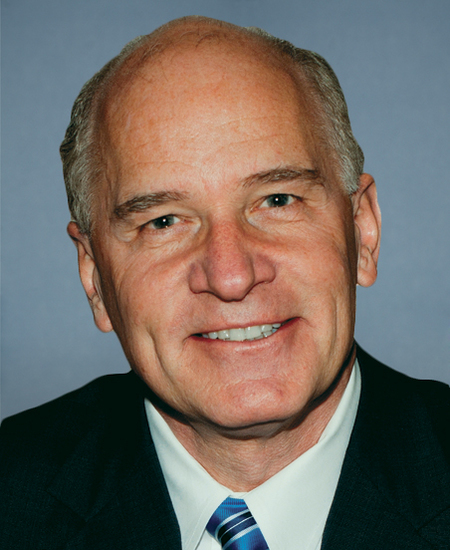
Rep. William R. Keating
Sponsored bills
Maddy summaryThis bill updates legal terminology in District of Columbia court codes to replace outdated and potentially stigmatizing terms. It specifically replaces "substantially retarded persons" and similar phrases with "persons with moderate intellectual disabilities" in three sections covering U.S. District Court, Superior Court, and Family Court jurisdiction. The change directly affects how DC courts formally reference individuals in legal contexts, aligning terminology with current standards. It is a purely procedural update to court codes with no new policy or funding provisions. The bill does not alter eligibility, rights, or court procedures - only the language used in the legal text.
Maddy summaryHRES 778 is a House resolution demanding Senator Tommy Tuberville end his hold on military promotions affecting personnel critical to U.S. support for Israel. It specifically references blocked nominations for key Middle East roles, including Admiral Lisa Franchetti (Chief of Naval Operations), General David Allvin (Chief of Staff, Air Force), and Rear Admiral George Wikoff (5th Fleet commander). The resolution states these delays hinder the U.S. military’s ability to provide security, intelligence, and humanitarian support to Israel and stranded American citizens following the October 7 Hamas attacks. It urges Tuberville to lift the holds to ensure readiness for ongoing operations in the region. The resolution does not create new law but formally requests action on pending military confirmations.
Maddy summaryHRES 771 is a non-binding resolution expressing the U.S. House of Representatives' support for Israel following Hamas' October 7, 2023, attack. It condemns Hamas' actions, affirms Israel's right to self-defense, and calls for the immediate release of hostages. The resolution also urges enforcement of existing laws restricting aid to terrorists and sanctions against Iran for supporting Hamas. It does not create new policies or allocate funds, as it is a symbolic statement of congressional support.
Maddy summaryHRES 768 is a symbolic House Resolution expressing congressional support for Israel following Hamas' October 7, 2023 attacks. It condemns Hamas' actions, reaffirms Israel's right to self-defense, and calls for the immediate release of hostages. The resolution references the U.S. commitment to Israel's security through existing military aid programs, including the 2016 U.S.-Israel Memorandum of Understanding, and emphasizes enforcement of laws like the Taylor Force Act to prevent U.S. aid from reaching terrorist groups. As a symbolic resolution, it does not create new policy but serves as a statement of congressional support for Israel.
Maddy summaryThis bill authorizes a one-time $40,000 payment to former Air America employees who served at least five years during 1950-1976, or to their survivors (widows/widowers, dependents, or children). Additional $8,000 payments are provided for each full year of service beyond five years. The total funding is capped at $60 million, with claims due within two years of regulations being finalized. It does not create ongoing benefits or change Air America’s legal status, and payments are issued as a single lump sum.
Maddy summaryThe Safe Schools Improvement Act (HR 6031) requires public elementary and secondary schools to implement comprehensive anti-bullying policies that specifically prohibit harassment based on protected characteristics like race, gender identity, disability, religion, and sexual orientation. It mandates schools to collect and publicly report annual data on bullying incidents while establishing clear grievance procedures for students and parents. The bill also requires states to submit biennial reports on school compliance and supports evidence-based interventions, such as restorative practices, to reduce exclusionary discipline. This legislation directly affects all public K-12 schools and students in the U.S., aiming to create safer learning environments through standardized policy requirements and data transparency.
Maddy summaryThis bill removes a previous exclusion that prevented temporary federal employees (including U.S. Postal Service staff and Members of Congress) from counting service after January 1, 1988, toward their retirement benefits. It allows these workers to have their post-1988 temporary service counted toward retirement eligibility if they pay a deposit to the retirement system. The change applies to anyone employed by the federal government on or after the bill's enactment date. The Office of Personnel Management must notify affected employees and create rules to implement this change.
Keeping Drugs Out of Schools Act of 2023 This bill allows the Office of National Drug Control Policy to award grants for eligible entities to implement school-community partnerships for preventing and reducing substance use and misuse among youth. Eligible entity refers to a coalition that (1) is a Drug-Free Communities funded coalition on or before the date on which the coalition submits a grant application, and (2) has a memorandum of understanding in effect with not less than one local school to establish a school-community partnership.
Maddy summaryHR 5908, the "Strengthening Communities through Summer Employment Act," authorizes $200 million to $240 million annually (2024-2028) for the Department of Labor to fund summer youth employment programs. It requires grantees to provide subsidized summer jobs (minimum 4 weeks at minimum wage) for youth under 25, including mandatory mentoring, job training, and post-program support to improve graduation rates, college enrollment, employment, and reduce crime. Programs must prioritize communities with high youth unemployment and violent crime, and serve historically underserved youth in rural or suburban areas. The bill also mandates independent evaluations to measure long-term impacts on participants’ education, employment, and criminal justice outcomes.