

Maddy summaryHR 808, the Veterans Patient Advocacy Act, requires the Department of Veterans Affairs (VA) to provide patient advocates at VA medical facilities. Starting one year after the bill's enactment, the VA must ensure at least one patient advocate serves every 13,500 enrolled veterans, with specific efforts to ensure rural veterans can access these advocates, including through rural clinics. The bill also mandates a Government Accountability Office (GAO) report within two years to evaluate how well the VA implements this requirement. This legislation directly affects veterans receiving care through the VA system and VA medical facilities.
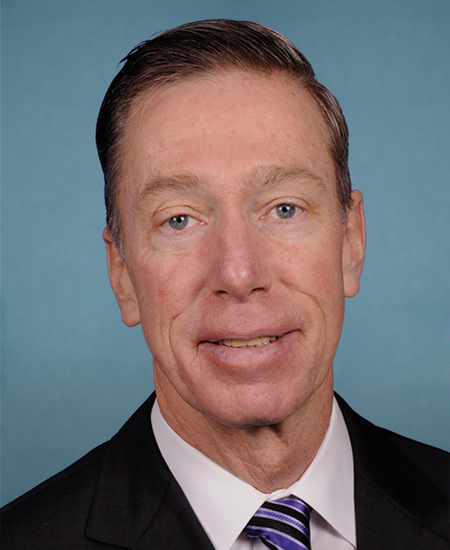
Rep. Stephen F. Lynch
Sponsored bills
Maddy summaryThis bill allows the Department of Veterans Affairs (VA) to use existing funds more flexibly to assist homeless veterans and veterans in HUD housing programs. It authorizes the VA to provide immediate needs like food, shelter, transportation for appointments, and communication devices (e.g., phones, tablets) to support veterans' stability and health. The law expands how VA funds can be applied beyond traditional housing assistance, focusing on urgent, practical support. It directly affects homeless veterans and those in HUD's housing assistance program by enabling faster, more adaptable aid. The bill amends existing VA law to improve responsiveness to veterans' immediate survival and health needs.
Maddy summaryThe Family Violence Prevention and Services Improvement Act of 2023 amends the Family Violence Prevention and Services Act to improve services for victims of domestic violence, dating violence, and family violence. The bill authorizes $270 million annually for fiscal years 2024-2028, with specific allocations including 12.5% for Tribal grantees, 2.5% for culturally specific services, and funds for national hotlines and resource centers. It establishes a national domestic violence hotline, a National Indian Domestic Violence Hotline, and resource centers for Alaska Native and Native Hawaiian populations, requiring all services to be trauma-informed, culturally relevant, and accessible to underserved populations including racial and ethnic minorities, people with disabilities, and Tribal communities. The bill also mandates a study on financial stability support for survivors of domestic violence.
Maddy summaryHR 2630, the Safe Step Act, requires group health plans and health insurance issuers to establish a clear, transparent process for patients or their doctors to request exceptions to medication step therapy protocols. These protocols typically force patients to try cheaper drugs first before covering more expensive alternatives. The bill mandates that plans must approve exceptions when prior treatments failed, delay would cause serious harm, a treatment is unsafe, or a patient is stable on a previously approved drug, with strict 72-hour (or 24-hour in emergencies) decision timelines. It also requires plans to publish the exception process online and limit documentation requests to only necessary medical information. This law directly affects health insurers, employers offering health plans, and patients using step therapy for prescription drugs.
This bill directs the Federal Aviation Administration (FAA) to establish an Impacted Communities Advisory Committee. The committee must provide advice and recommendations to the FAA on community needs, plans, and strategies with respect to areas that include noise policy; community engagement; noise, pollution, and health mitigation for communities close to airports and communities away from airports; and integration of new or emerging technologies.
Noise Data Collection Act This bill requires the Federal Aviation Administration (FAA) to annually report to Congress the estimated number of individuals in the United States who are exposed to certain levels of aviation noise. Specifically, the report must include estimates for the number of individuals exposed to aviation noise at each of the following day-night average sound levels (DNLs): 65 dBA, 55 dBA, and 46 dBA. In addition, the FAA's initial report must include an estimate of the number of individuals exposed to aviation noise at these levels for each year during the period beginning on January 1, 2010, and ending on the last day of the year preceding the year for which the first report is submitted. The DNL noise metric reflects a person's cumulative exposure to sound over a 24-hour period, expressed as the noise level for the average day of the year on the basis of annual aircraft operations.
Aircraft Ownership Transparency Act of 2023 This bill requires the Federal Aviation Administration (FAA) to obtain the identity of all beneficial owners of a covered entity prior to approving an aircraft certificate of registration. A covered entity refers to a person, trust, association, copartnership, corporation, or other public or private entity. A beneficial owner refers to a natural person who directly or indirectly (1) exercises control over the covered entity, or (2) has an interest in or receives substantial economic benefits from the covered entity's assets. Specifically, the FAA must require a covered entity seeking an aircraft certificate of registration to identify each beneficial owner by providing the owner's name and current street address; a unique identifying number from a U.S. passport or a driver's license issued by a state (or a copy of a passport issued by a foreign country if those documents are unavailable); the owner's nationality; and the make, model, and serial number of the aircraft to be registered. The covered entity must also disclose any beneficial owner of the covered entity who is a foreign person. A foreign person is an individual who is not (1) a U.S. citizen, or a (2) non-U.S. national ( alien under federal law) lawfully admitted for permanent residence into the United States.
Peer-Reviewed Report on Measuring Metrics and Thresholds This bill requires the Department of Transportation to enter into an agreement with the National Academies of Sciences, Engineering, and Medicine to produce a report that identifies and recommends a system of measuring aviation noise. This measurement system must, with a highly reliable relationship, categorize noise levels to determine compatibility for residential areas and high annoyance areas based on appropriate metrics. In addition, it must (1) have a highly reliable relationship between projected noise exposure and surveyed reactions of individuals, and (2) be applied uniformly in measuring noise at airports and the surrounding area.
Air Traffic Noise and Pollution Expert Consensus Act of 2023 This bill requires the Federal Aviation Administration to enter into an arrangement with the National Academies of Sciences, Engineering, and Medicine to examine and report on the various health impacts of air traffic noise and pollution.
Maddy summaryHJRES 54 proposes a constitutional amendment stating that only natural persons (human beings) have rights protected by the U.S. Constitution, explicitly denying constitutional rights to corporations, limited liability companies, and other artificial entities. It would require governments to regulate or restrict corporate political contributions and spending to ensure equal access to elections, mandate public disclosure of all political spending, and clarify that campaign finance rules do not violate the First Amendment. This amendment directly affects corporations and other artificial entities by removing their constitutional standing in legal challenges and subjecting their political activities to stricter government oversight. If passed, it would fundamentally change how corporations interact with election laws and constitutional protections, though it preserves press freedom under Section 3. The bill is a proposed amendment requiring ratification by 3/4 of state legislatures to become part of the Constitution.