

Maddy summaryThis bill requires U.S. public schools to include Asian Pacific American history in all K-12 American history and civics education. It amends the Elementary and Secondary Education Act to mandate that curriculum standards, teacher training, and national assessments explicitly cover this history as part of American history. The policy directly affects students and teachers nationwide by changing how history is taught in public schools. The key mechanism is requiring specific curriculum updates to address gaps in current Eurocentric teaching, ensuring students learn about APA contributions, experiences, and challenges as integral to U.S. history.
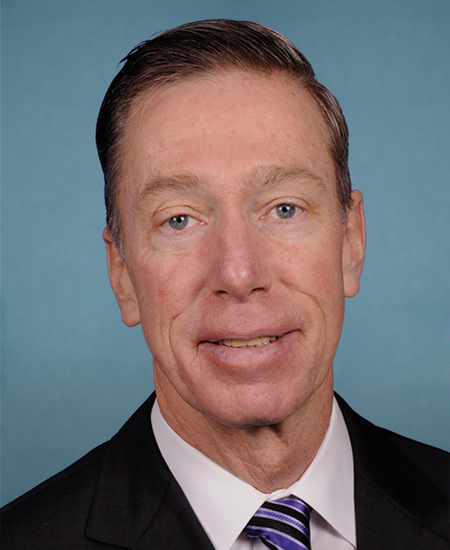
Rep. Stephen F. Lynch
Sponsored bills
Maddy summaryThe Transit to Trails Act establishes a federal grant program to fund transportation projects connecting critically underserved communities - defined as areas lacking adequate park access, low-income, communities of color, or environmental justice areas - to public lands and recreational spaces. Eligible entities, including states, local governments, tribal organizations, and park districts, can apply for grants to develop transportation connectors (like bus routes) and culturally appropriate education materials, with priority for projects using low-emission vehicles and offering discounted fares for low-income riders. Grants range from $25,000 to $500,000, with federal funding covering up to 80% of costs, and recipients must report on demographics served and project outcomes. The program is funded at $40 million annually in its fifth year, aiming to improve mobility to parks and recreation in communities historically excluded from such access.
Maddy summaryHR 2757, the Puerto Rico Status Act, establishes a process for Puerto Rico to determine its political status through a plebiscite on November 2, 2025, offering three options: independence, sovereignty in free association with the United States, or statehood. If no option receives a majority in the initial vote, a runoff plebiscite would be held on March 8, 2026. The bill outlines transition processes for each option, including constitutional conventions, implementation steps, and provisions for citizenship, immigration, and economic benefits. It mandates bilingual voter education materials and requires oversight by the Elections Commission and the Attorney General to ensure fair representation of all options. This legislation directly affects Puerto Rico's residents by providing a structured process to choose their permanent political relationship with the United States.
Maddy summaryHCONRES 37 is a non-binding congressional resolution expressing that Congress views climate change as an emergency requiring a massive national mobilization. It states that human-caused climate change severely impacts U.S. economic well-being, health, safety, and national security, and urges the President to use existing authorities to accelerate climate action. The resolution does not create new laws or funding but emphasizes the need for urgent, equitable efforts to reduce emissions, address environmental injustice, and support vulnerable communities disproportionately affected by climate impacts. It cites rising global temperatures, extreme weather costs ($165 billion in U.S. disasters in 2022), and the Inflation Reduction Act as context, while clarifying it does not declare an actual national emergency.
Maddy summaryHR 3106, the Preventing Deepfakes of Intimate Images Act, creates a legal right for individuals whose realistic digital manipulations of intimate images (such as uncovered genitals, bodily fluids, or sexually explicit conduct) are disclosed without consent. It allows victims to sue for civil damages, including up to $150,000 in liquidated damages, actual harm, or punitive penalties, and seek court orders to stop further disclosure. The bill specifically protects identifiable individuals (not just public figures) and covers images created or altered using digital manipulation, excluding cases involving law enforcement, public interest, or good-faith disclosures. Criminal penalties up to 10 years may apply for malicious disclosure with intent to harass or cause harm. This directly affects anyone whose intimate images are deepfaked without permission, providing new legal recourse against perpetrators.
Defending the Human Rights of Palestinian Children and Families Living Under Israeli Military Occupation Act This bill limits U.S. assistance to Israel and establishes reporting requirements related to Israel's activities in the West Bank and its expenditures for offshore procurement. (Offshore procurement involves spending U.S. security assistance from the Foreign Military Financing program on Israeli-origin rather than U.S.-origin defense articles.) Specifically, the bill prohibits the use of any funds that are made available for assistance to Israel to support (1) military detention, interrogation, abuse, or ill treatment of Palestinian children; (2) seizure, appropriation, or destruction of Palestinian property and forcible transfer of civilians in the Israeli-controlled West Bank; or (3) certain activities to facilitate unilateral annexation by Israel of West Bank territory. The Department of State must report on the nature and extent of such activities carried out by Israel. Further, the Government Accountability Office must submit to Congress a report on related topics, such as (1) identifying specific programs and items to which funds for offshore procurement in Israel have been allocated, (2) identifying all end-use monitoring to which Israel is subject with respect to U.S.-origin defense articles, and (3) assessing the extent to which offshore procurement funds have supported illegal Israeli settlement activity in the occupied West Bank.
Maddy summaryHR 3008, the Drug Shortage Prevention Act of 2023, requires manufacturers of critical essential medicines (like life-saving or emergency drugs) to notify the FDA earlier about potential supply disruptions. Specifically, manufacturers must report permanent production stops, interruptions, or unexpected demand spikes (not seasonal) at least six months in advance for production issues, or within 48 hours for sustained demand increases. The notification must include reasons, ingredient sources, alternative suppliers, and expected duration. The FDA will then share this information with healthcare providers and patient groups to help manage shortages. This law applies to drugs critical for life-sustaining care, excluding certain radio pharmaceuticals.
Maddy summaryThe Postal Police Reform Act of 2023 updates federal law to explicitly include "Postal Service police officers" alongside Postal Inspectors as authorized personnel for enforcing regulations on U.S. Postal Service property. It clarifies that the Postmaster General can establish and post rules for protecting postal property, with violations punishable by fines or up to 30 days in jail. This change directly affects USPS police officers (by formalizing their role), the Postmaster General (by expanding regulatory authority), and anyone on postal property who must follow posted rules. The bill makes existing enforcement procedures more explicit without altering penalties or creating new requirements.
Maddy summaryThis bill protects living organ donors from insurance discrimination by prohibiting life, disability, and long-term care insurers from denying coverage, raising premiums, or altering policy terms solely because someone donated an organ while alive. It also updates the Family and Medical Leave Act to include recovery from organ donation surgery as a qualifying health condition, allowing donors to take protected leave for this purpose. Additionally, the bill requires the Health and Human Services Secretary to update public educational materials about living donation benefits, risks, and insurance protections within six months of enactment. These changes directly affect living organ donors, insurers, employers, and healthcare systems by ensuring fair access to insurance and workplace leave.
Maddy summaryHRES 334 is a symbolic resolution recognizing "Community College Month" to celebrate over 1,000 community colleges across the United States. It highlights how these institutions support accessible higher education, workforce training, and economic prosperity - serving 10.2 million students annually while charging affordable tuition (averaging $3,860 for in-district students). The resolution does not create new laws or requirements but formally acknowledges community colleges' role in strengthening local communities and the national economy. This acknowledgment applies broadly to all community colleges and their students, without imposing any obligations.