

Maddy summaryHR 3541, the Accounting STEM Pursuit Act of 2023, amends the Elementary and Secondary Education Act to include accounting education in school curricula. It requires schools to offer accounting career awareness and programs, particularly to students from groups underrepresented in accounting careers. The bill positions accounting as a STEM field and aims to expand student exposure to accounting through grade 12 courses. This change directly affects K-12 students and schools by integrating accounting into educational opportunities to diversify the future accounting workforce.
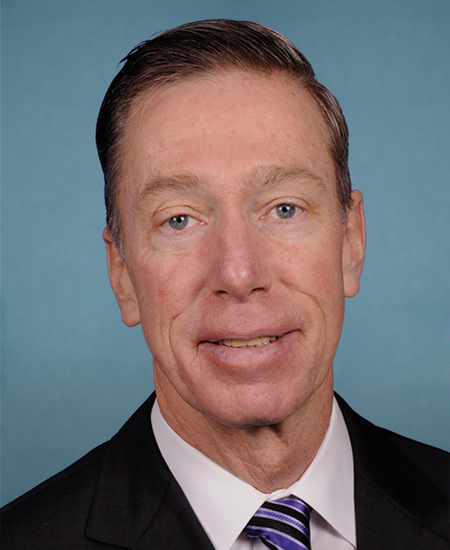
Rep. Stephen F. Lynch
Sponsored bills
Maddy summaryHR 3537 authorizes the minting of commemorative coins to mark the 100th anniversary of the U.S. Foreign Service, established by the 1924 Rogers Act. The bill specifies three coin types ($5 gold, $1 silver, and half-dollar clad) with limited mintage (50,000 gold, 400,000 silver, 750,000 half-dollars) to be issued in 2025, featuring designs honoring diplomatic history. A surcharge on each coin sale ($35 for gold, $10 for silver, $5 for half-dollars) will fund the Association for Diplomatic Studies and Training (ADST) to support its oral history program and diplomatic preservation efforts. The coins will be legal tender, sold at cost-plus-surcharge, with all revenue directed to ADST per the bill's provisions.
Maddy summaryThis bill directs the Department of Homeland Security to create a threat assessment on how terrorists and foreign actors use cyber harassment - including doxing - to threaten individuals. The assessment must detail tactics, notable incidents, and risk indicators for law enforcement, while coordinating with privacy offices. It requires DHS to share the report with Congress within 180 days and publish it online, with state/local law enforcement receiving it via fusion centers. The bill does not create new laws or penalties but focuses on information gathering about existing threats. (Procedural bill; summary limited to key action and scope.)
This resolution condemns the great replacement theory, which it describes as a white supremacist conspiracy theory that has been used to falsely justify racially motivated, violent acts of terrorism domestically and internationally.
Maddy summaryHR 3409, the Healthy Families Act, requires most employers to provide employees with paid sick leave. Employees earn 1 hour of paid sick time for every 30 hours worked, up to a maximum of 56 hours per year, which can be used for their own illness, caring for family members, or addressing domestic violence, sexual assault, or stalking situations. Smaller employers with fewer than 15 employees can provide unpaid sick leave instead of paid leave. The bill includes protections against retaliation for using sick leave and requires employers to inform employees about their rights under this law.
Maddy summaryThis bill requires public schools (K-12) to integrate Asian American, Native Hawaiian, and Pacific Islander (AANHPI) history into their American history and civics curricula. It amends the Elementary and Secondary Education Act to mandate that all required history content "shall include" AANHPI history, updating existing standards for teachers, textbooks, and national assessments. The law directs the Smithsonian Institution’s Asian Pacific American Center to provide educational resources for schools implementing this change. It directly affects school districts, educators, and curriculum developers by requiring concrete revisions to history instruction. The bill does not fund new programs but modifies existing federal education law to ensure AANHPI contributions and experiences are included in required teaching.
Maddy summaryThe Strength in Diversity Act of 2023 creates a federal grant program to help school districts address racial and socioeconomic isolation in public schools (K-12). Eligible school districts, states, or consortia with significant segregation gaps can apply for planning or implementation grants to develop strategies like equitable school assignments, transportation plans, or teacher recruitment programs. Grants require community engagement, data tracking on academic outcomes and diversity metrics, and plans to sustain efforts after funding ends. The program aims to increase student diversity and improve outcomes for students of color and low-income students in segregated schools.
Maddy summaryHRES 81 is a non-binding resolution passed by the U.S. House of Representatives urging the President to support creating an international Special Tribunal to prosecute Russia’s leaders for the crime of aggression against Ukraine. It specifically references Russia’s 2022 full-scale invasion as a violation of UN Charter principles and General Assembly Resolution 3314, which defines aggression as unlawful military force against a sovereign state. The resolution calls for the President to take all available measures to advance this tribunal, emphasizing Ukraine’s sovereignty and the need to hold Russian officials accountable for war crimes. It does not create the tribunal itself but seeks U.S. diplomatic support for its establishment.
Maddy summaryHRES 319 is a symbolic resolution passed by the U.S. House of Representatives on April 24, 2023, recognizing the federal government's duty to develop a Green New Deal. It states the House believes the government should create a comprehensive plan to address climate change and economic inequality through a 10-year national mobilization. The resolution outlines goals like achieving net-zero emissions by 2050, creating high-wage union jobs, upgrading infrastructure, and prioritizing frontline communities, but it does not establish binding policy or funding mechanisms. As a non-binding resolution, it serves as a statement of legislative intent rather than a law.
Maddy summaryHR 3331, the Improving Mental Health and Wellness in Schools Act, requires public schools participating in federal school meal programs to integrate mental health into their wellness policies. The bill mandates schools to form teams including mental health professionals to develop and update these policies, and to promote mental health assessments, encourage mental health support, and build resilient school environments. It amends the National School Lunch Act to add mental health promotion alongside physical activity and eating disorder prevention, and extends a policy review deadline from 2014 to 2026. This directly affects all K-12 schools receiving federal nutrition funding.