

Maddy summaryThe Senior Legal Hotline Act of 2023 creates a federal grant program to fund statewide legal assistance hotlines for older adults. It authorizes $10 million annually (2024-2028) for competitive grants to nonprofit organizations or partnerships that establish free legal hotlines providing telephone-based counseling, referrals, and advocacy to seniors. These hotlines must prioritize older individuals with the greatest economic and social need, coordinate with state agencies and other legal aid providers, and ensure trained staff/volunteers serve all areas of the state. The bill directly affects seniors across all 50 states through expanded access to no-cost legal help for civil issues like housing, benefits, and elder abuse.
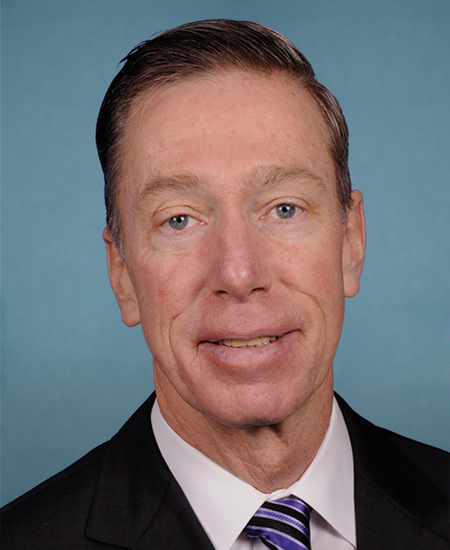
Rep. Stephen F. Lynch
Sponsored bills
Maddy summaryHR 4172, the Hate Crimes Commission Act of 2023, establishes a 12-member United States Commission on Hate Crimes to investigate trends and improve responses to hate crimes. The commission, appointed by Senate and House leaders plus the Attorney General and Secretary of Health and Human Services, will examine hate crime increases since 2015, factors driving them, and strategies to reduce underreporting to the FBI’s National Incident-Based Reporting System. It will also assess successful bias prevention efforts and online hate crime prevalence. Within one year of its formation, the commission must submit a report to Congress and the President with recommendations for federal agencies and community-based prevention programs. This bill directly affects local law enforcement agencies through reporting requirements and federal agencies through proposed policy changes.
Maddy summaryHR 4184 repeals legal protections for gun manufacturers and sellers under the Protection of Lawful Commerce in Arms Act. It allows victims of gun violence to use gun trace data from the ATF's Firearms Trace System in civil court cases. This data, previously protected from discovery, can now be subpoenaed, admitted as evidence, and relied upon in lawsuits against gun sellers or manufacturers. The bill directly affects victims seeking legal recourse and gun industry defendants in civil litigation.
Maddy summaryHR 4166, the Support UNFPA Funding Act, authorizes annual U.S. funding for the United Nations Population Fund (UNFPA) over five years. It directly supports UNFPA’s global programs serving women and girls in over 150 countries, particularly focusing on reducing preventable maternal deaths, expanding access to contraception, ending gender-based violence, and addressing harmful practices like female genital mutilation and child marriage. The bill specifically directs funding toward UNFPA’s core work in developing nations, humanitarian crises (such as in Ukraine and Yemen), and rebuilding health systems post-pandemic, without altering UNFPA’s existing operations or policies.
Maddy summaryHJRES 72 proposes a constitutional amendment to remove the exception in the Thirteenth Amendment that allows slavery and involuntary servitude as punishment for a crime. If ratified, this amendment would ban the use of forced labor in prisons as a criminal penalty, directly affecting how the U.S. criminal justice system handles sentencing. The resolution clarifies it does not interfere with voluntary work programs in correctional facilities, existing employment protections for incarcerated people, or community service alternatives. This change aims to eliminate a historical loophole that has disproportionately impacted Black Americans since the 1860s.
Maddy summaryHR 4122, the Henrietta Lacks Congressional Gold Medal Act, authorizes a posthumous Congressional Gold Medal to honor Henrietta Lacks for her contribution to medical science through the HeLa cell line. The bill directs the Treasury to strike the medal recognizing how her cells enabled major medical advances, including the polio vaccine and cancer treatments, without altering any laws or policies. The medal will be displayed at the Smithsonian Institution to commemorate her legacy in scientific research and bioethics. This is a purely commemorative measure with no direct effect on current legislation or affected individuals.
Maddy summaryHR 3962 establishes an Advisory Council to support victims of gun violence, directly affecting individuals impacted by gun violence (including survivors, witnesses, and relatives of victims) and the professionals who assist them. The council, composed of federal agency heads, victims, and victim assistance professionals, will assess needs, review existing programs, and compile accessible resources covering medical, financial, mental health, legal, and housing support. It must publish a public report within 180 days of enactment detailing best practices and gaps, with a follow-up report after two years. The council’s work will be shared online and distributed to congressional offices, state agencies, schools, and local prosecutors, with no new federal funding authorized for implementation.
Maddy summaryThis bill increases per diem payments for homeless veterans receiving VA services. It raises the daily payment rate from $115 to $200 for certain housing-related services, including emergency responses. The change directly affects homeless veterans who qualify for these VA-funded housing supports. The key provision adjusts the payment rate in Section 2012(a)(2)(B) of the U.S. Code to provide higher funding for services assisting homeless veterans.
Maddy summaryHR 4074, the 3D Printed Gun Safety Act of 2023, prohibits distributing online digital instructions (like 3D printer files) that can automatically create firearms or firearm parts. It directly affects individuals or entities sharing such digital files over the internet. The bill adds a new federal law making it unlawful to intentionally distribute these files, aiming to prevent untraceable firearms from being made without serial numbers, which law enforcement cannot track in criminal investigations. This addresses concerns that 3D-printed guns evade detection and undermine firearm tracing systems.
Maddy summaryHR 4021, the Fair and Open Skies Act, amends U.S. aviation law to require that the Department of Transportation consider labor standards when reviewing international air transport agreements. Specifically, it adds "preventing the undermining of labor standards" as a mandatory factor in the public interest test for approving such agreements under 49 U.S.C. § 40101. This change directly affects international airlines seeking to operate flights to or from the U.S. and the DOT, which must now evaluate whether proposed agreements could weaken U.S. labor protections. The bill updates existing provisions by replacing outdated language about "agreements with the United States Government" and explicitly including labor standards in the evaluation criteria.