

Maddy summaryH.J.Res. 25 would remove the 1979 deadline for states to ratify the Equal Rights Amendment (ERA), which was originally proposed in 1972. This bill directly affects states that ratified the ERA after the deadline (such as Nevada, Illinois, and Virginia in 2017-2018) by making their ratifications legally valid. The key provision states that the ERA is valid as part of the Constitution if ratified by three-fourths of states, regardless of the original deadline. The bill does not create new rights but aims to finalize the constitutional amendment process by eliminating the time limit.
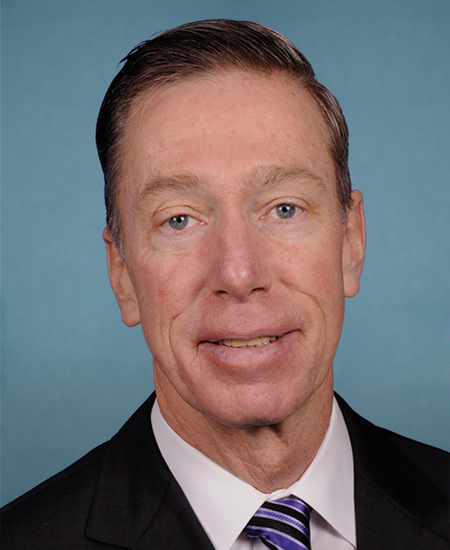
Rep. Stephen F. Lynch
Sponsored bills
Maddy summaryThis bill, HR 1282 (Major Richard Star Act), expands benefits for certain military retirees by allowing them to receive both veterans' disability compensation and military retirement pay simultaneously. It specifically affects combat-related disabled retirees under Chapter 61 of the military retirement system who have fewer than 20 years of service. The key change removes the automatic reduction of military retirement pay when these retirees also receive disability compensation, as amended in Section 1413a(b)(3) of Title 10. Technical updates to the law’s structure and effective date (starting after enactment) complete the provisions.
Maddy summaryHCONRES 56 is a non-binding congressional resolution recognizing that climate change disproportionately harms children's health, economic opportunities, and rights. It expresses Congress's view that U.S. leadership is urgently needed to address the climate crisis and calls for a national climate recovery plan. The resolution specifically demands a science-based plan to phase out fossil fuels, protect natural carbon sinks, and reduce atmospheric CO2 to below 350 parts per million by 2100. This resolution does not create new laws or allocate funds but formally states congressional support for a comprehensive climate strategy prioritizing children's well-being.
Maddy summaryHRES 580 is a symbolic resolution expressing the House's support for designating "Journeyman Lineworkers Recognition Day." It honors lineworkers who work in hazardous conditions (such as at heights near live wires) and respond to disasters like hurricanes and wildfires, while recognizing their contributions and the legacy of Henry Miller, an early electrical worker who died on the job. The resolution has no legal effect - it solely encourages public recognition and reflection on these workers' service.
Maddy summaryThis bill increases the annual cap for H-1B visas from 65,000 to 130,000 and removes a limit on exemptions for certain workers. It also adjusts thresholds for employers considered "H-1B-dependent," raising the employee counts that trigger additional requirements (e.g., from 25 employees to 50). Additionally, it authorizes $25 million annually (2024-2028) for grants to states to strengthen K-12 STEM education, retain STEM teachers, and support higher education programs in science, math, engineering, and technology. The bill directly affects U.S. employers seeking high-skilled foreign workers, H-1B visa holders, and educational institutions receiving the grant funding.
Maddy summaryThis bill authorizes $30 million annually (2024-2028) for the National Institutes of Health to expand research on uterine fibroids, including studies on racial disparities (noting Black women are 80% likely to develop fibroids by menopause versus 70% of White women). It also requires the creation of a Medicaid database to track treatment services for fibroids and mandates a congressional report on related costs and coverage. The bill directs the Department of Health and Human Services to develop public education materials about fibroid symptoms, treatment options (including non-hysterectomy care), and racial prevalence differences. It directly affects women with fibroids - particularly those from racial minority groups - and aims to improve data collection and awareness around a condition causing significant health burdens and healthcare costs.
Maddy summaryThe Choice in Affordable Housing Act of 2023 (HR 4606) aims to increase landlord participation in the Housing Choice Voucher program, particularly in high-opportunity neighborhoods (census tracts with poverty rates below 20%), by providing new financial incentives. Key provisions include one-time payments to landlords (up to 200% of monthly rent) for leasing to voucher holders in low-poverty areas, security deposit assistance for tenants, and bonuses for public housing agencies employing dedicated landlord liaisons. The bill establishes a $100 million annual fund (Herschel Lashkowitz Housing Partnership Fund) to support these initiatives and requires annual reports tracking landlord participation and unit distribution in high-opportunity areas. These changes directly affect low-income renters seeking housing in quality neighborhoods and landlords in underserved areas.
Maddy summaryJaime’s Law requires federal background checks for ammunition purchases by expanding existing firearm background check rules to include ammunition. It mandates that unlicensed buyers must transfer ammunition through a licensed dealer (e.g., a gun store), who conducts the background check before completing the sale. The law includes exemptions for transfers between family members, law enforcement, transfers due to death, immediate self-defense situations, and legitimate shooting or hunting activities (with specific conditions). It explicitly states the law does not create a national ammunition registry and does not override state laws on ammunition.
Maddy summaryThe LIFT Homebuyers Act of 2023 establishes a new program to help low-income first-time homebuyers purchase single-family homes. It creates "LIFT HOME Funds" within HUD and USDA to support mortgage loans with monthly payments capped at 100-110% of standard 30-year loan payments, waiving certain insurance fee requirements for eligible borrowers. The program targets individuals with household incomes at or below 120% (140% in high-cost areas) of local median income who are both first-time homebuyers and first-generation homebuyers (with no family home ownership history). Eligibility relies on borrower attestations, and the program requires mortgage loans to have case numbers issued by December 31, 2025.
Legacies of War Recognition and Unexploded Ordnance Removal Act This bill authorizes humanitarian assistance to Vietnam, Laos, and Cambodia to clear landmines and other explosive remnants of war. Under the bill, the President may, from FY2024 through FY2029, provide humanitarian assistance to (1) develop national surveys of landmines and other explosive remnants of war; (2) clear such explosive remnants of war; (3) manage stockpiles of small arms, light weapons, and ammunition; (4) build capacity and improve physical security related to such explosive remnants of war; and (5) support survivors of incidents involving such explosive remnants of war, including by providing related medical assistance and prosthetic devices. The bill also requires the President to report to Congress about any assistance provided.