

Maddy summaryHR 4963, the Tax Fairness for Workers Act, would restore tax deductions for certain employee expenses. It creates an above-the-line deduction for union dues and expenses paid by wage-earning employees, and allows miscellaneous itemized deductions for other work-related expenses (like uniforms or supplies) that were previously disallowed after 2017 tax law changes. These provisions directly affect employees who pay union dues or incur qualifying job-related costs. The bill amends specific sections of the Internal Revenue Code to make these deductions available for taxable years beginning after December 31, 2022. It does not change tax rates or provide new benefits, only reinstating previously eliminated deductions for eligible workers.
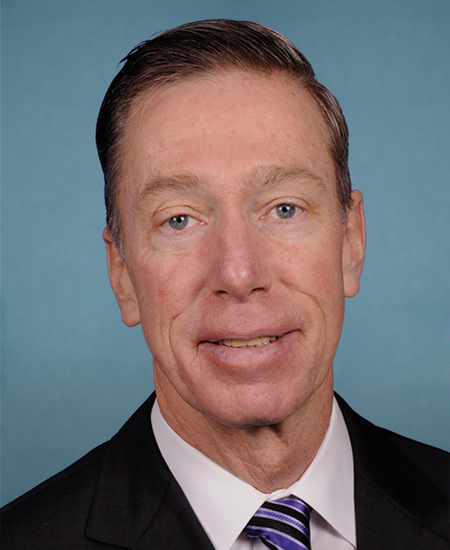
Rep. Stephen F. Lynch
Sponsored bills
Maddy summaryThis bill requires banks to make deposited funds available immediately - anytime, including weekends and holidays - instead of waiting for the next business day. It directly affects consumers who use check deposits (especially those living paycheck to paycheck) and financial institutions handling these transactions. Key provisions update definitions to clarify "real-time" includes all days, mandate funds be available in real-time after deposit, and require two reports: one on payment delays' impact on disadvantaged communities and another on the FedNow instant payment system's progress. The law aims to reduce overdraft fees and high-cost financial service use by ensuring faster access to deposited funds.
Maddy summaryThis bill regulates "ghost guns" (unserialized firearms assembled from kits or parts) by requiring all firearms to have unique serial numbers for traceability. It makes it unlawful for unlicensed individuals to manufacture, sell, transfer, or possess ghost guns in interstate commerce, with limited exceptions for licensed dealers during a one-year transition period. The law defines ghost guns as firearms lacking a serial number from a licensed manufacturer and prohibits unlicensed people from engraving serial numbers or using machines to manufacture firearms. It directly affects individuals building or possessing untraceable firearms, including those using 3D-printed parts or unfinished frames. The bill aims to improve law enforcement's ability to track firearms used in crimes, referencing that 27.4% of traced firearms in 2021 were recovered across state lines.
Maddy summaryHR 4965, the Kimberly Vaughan Firearm Safe Storage Act, requires the Attorney General to create voluntary best practices for safe firearm storage in homes, businesses, vehicles, and other locations within 180 days of enactment, with public input. Starting January 1, 2025, firearm manufacturers must include a "SAFE STORAGE SAVES LIVES" notice with each new handgun, rifle, or shotgun, directing buyers to the public website with these guidelines. The bill also establishes a $10 million annual grant program for states and tribes to fund public programs distributing safe firearm storage devices (like locked containers) and requires grantees to use at least 75% of funds for these programs. It does not mandate storage for individuals but provides resources and information to promote safer practices.
Maddy summaryThis bill establishes new federal requirements for employers to prevent heat-related illness and injury among workers. It mandates that employers provide safe work environments by implementing specific measures, including access to cool water, scheduled rest breaks in shaded areas, employer-paid cooling equipment, and training for employees and supervisors on recognizing heat illness symptoms. The Secretary of Labor must create these standards within one year, requiring employers in high-heat occupations (like construction, agriculture, and outdoor labor) to adopt engineering controls, administrative schedules, and health protocols. Key provisions include ensuring hydration, rest, and language-accessible training, while preserving existing safety protections and allowing for updates as scientific evidence evolves.
Maddy summaryHR 1776, the End Tuberculosis Now Act of 2023, would amend U.S. foreign assistance law to strengthen global tuberculosis (TB) programs. The bill requires U.S. assistance to align with the World Health Organization's End TB Strategy, aiming to reduce TB deaths by 95% and incidence by 90% by 2035. It mandates annual reporting on TB diagnosis and treatment progress, prioritizes research for new diagnostics and treatments, and emphasizes integrating TB services into primary health care. The legislation affects U.S. government agencies, global health partners, and countries with high TB burdens, particularly focusing on low- and middle-income nations.
Maddy summaryThis bill directs the U.S. Treasury to mint commemorative coins marking the Marine Corps' 250th anniversary in 2025. It authorizes three coin types: $5 gold coins (max 50,000), $1 silver coins (max 400,000), and half-dollar coins (max 750,000), with surcharges of $35, $10, and $5 respectively. The surcharge proceeds will fund the Marine Corps Heritage Center's educational programs, with no net cost to taxpayers as the Treasury must recover all minting costs through the surcharges. The coins can only be issued during 2025, and the Treasury must ensure all costs are covered before distributing funds to the Heritage Foundation.
Maddy summaryHR 4893, the Scientific Integrity Act, requires federal agencies that fund, conduct, or oversee scientific research to adopt policies preventing political interference in science. The bill mandates these agencies to prohibit suppression or distortion of research findings, establish Scientific Integrity Officers to enforce policies, and implement training and reporting systems. It directly affects scientists and engineers employed by or contracted with covered agencies (like the EPA or NIH), ensuring their work remains free from political pressure. Key mechanisms include annual public reporting on misconduct complaints, whistleblower protections, and requiring scientific conclusions to be based on evidence, not ideology.
Maddy summaryThis bill expands eligibility for business loans at credit unions to include veterans. It amends the Federal Credit Union Act to define "member business loan" as including loans made to veterans, using the standard definition of "veteran" from Title 38 of U.S. Code. Credit unions offering these loans will now be able to serve veteran business owners under the same terms as other qualifying borrowers. The policy change directly affects veterans seeking business financing and credit unions providing such loans.
Maddy summaryHR 4889, the Raise the Wage Act of 2023, would gradually increase the federal minimum wage for most workers to $15.50 per hour by 2027, with specific annual targets: $9.50 starting in 2023, rising to $11.00 after one year, $12.50 after two years, and $15.50 after four years. It would also phase out the separate lower minimum wage for tipped employees (starting at $6.00/hour) by aligning their pay with the regular minimum wage by 2028, while requiring employers to let workers keep all tips. The bill includes similar phased increases for workers under 20 and transitions toward fairer wages for workers with disabilities under special certificates, which would sunset after 2028. Future annual increases after 2028 would tie the minimum wage to the median hourly wage of all workers.