

Maddy summaryThis bill creates a new grant program to fund partnerships between Hispanic-serving institutions (HSIs) and local school districts with high Hispanic/Latino enrollment (at least 25% Hispanic/Latino students and 50% poverty rate). It authorizes $150 million for fiscal year 2024 to support specific activities like aligning high school coursework with college requirements, providing college application assistance, addressing non-academic barriers (such as housing and food insecurity), and developing teacher pipeline programs. The grants require eligible partnerships to report on outcomes, disaggregating data by student demographics to measure impact on Hispanic/Latino students' college enrollment, persistence, and completion rates. The program directly affects HSIs, qualifying school districts, and the Hispanic/Latino students they serve, aiming to close educational gaps through targeted collaboration.
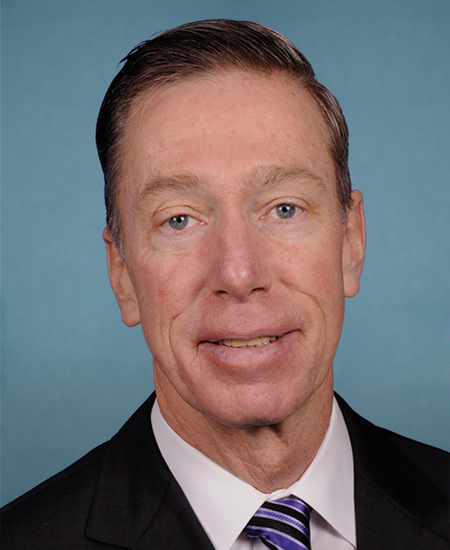
Rep. Stephen F. Lynch
Sponsored bills
Maddy summaryHR 5433, the Child Care Stabilization Act, provides $16 billion annually from 2024 to 2028 to stabilize the child care sector through grants administered by the Health and Human Services Secretary. It directly affects licensed child care providers by offering stable funding to cover operating costs, while supporting higher wages for early educators without raising family fees. Key provisions include expanding access to high-quality, affordable care - especially for infants/toddlers, rural communities, and children with disabilities - and addressing shortages in underserved areas. The funding builds on existing American Rescue Plan resources, aiming to strengthen the child care workforce and increase available options for working families.
Maddy summaryHR 5428, the No Tax Breaks for Union Busting (NTBUB) Act, prevents employers from deducting certain expenses related to influencing workers' decisions about union representation. It targets spending on tactics like anti-union meetings, workplace surveillance, or consultants during organizing campaigns, making these costs non-deductible for tax purposes. Employers must report such expenses on their tax returns, including details about the activities and amounts spent. The bill aims to remove tax incentives for employer interference in union elections, aligning with federal labor law protections for workers' collective bargaining rights.
Electronic Currency And Secure Hardware Act or the ECASH Act This bill requires the Department of the Treasury to support the development of an electronic dollar. The electronic dollar must be payable to the bearer; considered legal tender; an obligation of the United States; placed into circulation by Treasury; able to be directly used by the public; and capable of instantaneous, offline transactions using hardware devices not involving a third-party intermediary. The bill also provides for privacy requirements applicable to any hardware device used for electronic dollar transactions. Merchants who accept physical currency and the federal government must accept electronic dollars as a form of payment. The bill also establishes the Electronic Currency Innovation Program to direct the development and implementation of electronic currency, the Digital Dollar Council to coordinate Treasury's activities with other government entities, and the Monetary Privacy Board to review and evaluate the electronic dollar program. Finally, the bill provides for the establishment of a Treasury Electronic Currency Innovation Fund Account to carry out related programs.
Maddy summaryHR 5351, the Nationwide Right to Unionize Act, repeals a federal law (Section 14(b) of the National Labor Relations Act) that currently allows states to enact "right-to-work" laws. This would prevent states from banning agreements requiring workers to pay union dues as a condition of employment, directly affecting workers in states with such laws. The bill's key mechanism is overriding state right-to-work statutes with federal law, ensuring union security agreements remain enforceable nationwide.
Maddy summaryHR 4277, the Saving America’s Pollinators Act of 2023, would immediately cancel all registrations for neonicotinoid pesticides (including imidacloprid and clothianidin) and ban their sale, use, and future registration. This directly affects farmers and crop producers who currently use these pesticides on over 150 million acres of crops like corn and soybeans, where seed coatings are widely applied. The bill also ends exemptions for seed-treated pesticides and requires the Environmental Protection Agency to revoke tolerances for pesticide residues in food within six months. Additionally, it mandates the U.S. Fish and Wildlife Service’s newly established Center for Pollinator Conservation to monitor native bee populations and coordinate federal actions to reverse pollinator declines.
Maddy summaryHRES 645 is a non-binding House resolution recognizing August as "Chicano Heritage Month" to celebrate the contributions of Mexican Americans to U.S. history. It highlights historical figures like labor leaders Cesar Chavez and Dolores Huerta, landmark court cases (e.g., *Mendez v. Westminster* ending school segregation), and cultural impacts such as Selena's influence on music. The resolution does not create new laws or policies but serves as a symbolic acknowledgment by the House to honor this heritage. It encourages the public and institutions to observe the month with events celebrating Mexican American contributions.
Maddy summaryThis bill authorizes $700 million in federal grants to fund cancer prevention programs for firefighters, including multi-cancer early detection testing with a $1,750 per-test spending limit. It creates a voluntary program allowing firefighters to share anonymized test results with the CDC and FEMA to identify cancer trends in the profession, while protecting personal privacy. The legislation amends existing law to establish these prevention and research mechanisms, directly supporting firefighters exposed to cancer risks through early detection and data analysis.
Maddy summaryHRES 653 is a symbolic resolution expressing the U.S. House of Representatives' support for recognizing August 13-19, 2023, as "Warehouse Worker Recognition Week." It directly honors workers in the logistics industry, who handle critical supply chain tasks like packing, processing, and moving goods. The resolution highlights their contributions to the economy (over 9 million workers), acknowledges challenging conditions like extreme heat in warehouses, and commits to reducing workplace injuries. It does not create new laws but aims to raise awareness of warehouse workers' essential role as frontline employees.
Maddy summaryHRES 644 is a House resolution calling on the Judicial Conference of the United States to authorize public broadcasting of Donald Trump's upcoming trial. The trial relates to alleged crimes connected to efforts to overturn the 2020 election results and his role in the January 6, 2021, Capitol insurrection. This resolution requests but does not require the Judicial Conference to make the trial proceedings publicly accessible. It is a procedural measure, not a law altering any legal process.