

Maddy summaryHR 6754, the School Violence Prevention Act, establishes a federal grant program to fund evidence-based violence prevention programs in schools located in communities with high rates of youth gun violence. The bill authorizes $25 million annually for 5-year grants to partnerships between state/local education agencies (meeting specific homicide or violent crime thresholds) and community nonprofits serving youth. Grantees must implement trauma-informed, culturally competent programs for K-12 students, focusing on skills like conflict resolution, mental health support, and community engagement, while collecting data on outcomes like graduation rates. The program requires annual reporting to the Secretary of Education and CDC, with evaluations to assess impacts on reducing youth violence risks.
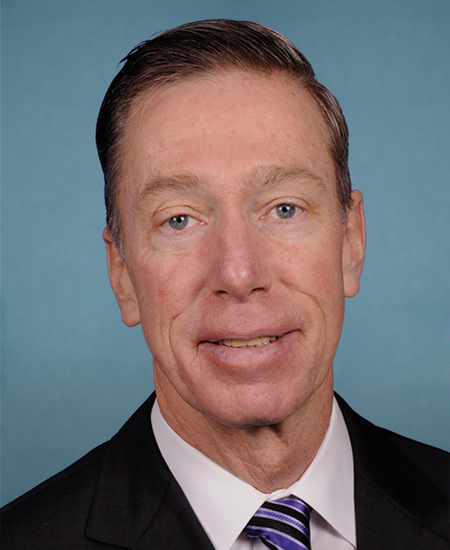
Rep. Stephen F. Lynch
Sponsored bills
Maddy summaryThe Restore Honor to Service Members Act of 2023 establishes a Department of Defense "Tiger Team" to improve outreach to veterans with certain discharge statuses (specifically those discharged under "former section 654" before 2011, often related to policies like the "Don't Ask, Don't Tell" era). The team will collaborate with the VA, veterans' groups, and other stakeholders to identify eligible veterans, share contact information, and guide them through the existing review process under Section 527 of the 2020 National Defense Authorization Act. The bill requires the team to submit regular progress reports to Congress and a final report within three years, tracking how many veterans successfully changed their discharge status to "honorable" through the review process. This focuses on streamlining access to an existing review mechanism, not creating new benefits or altering discharge standards.
Maddy summaryThis resolution urges the Biden administration to facilitate the safe, timely, and sufficient delivery of humanitarian aid to civilians in Gaza. It specifically calls for expanding aid convoys, opening additional border crossings, providing fuel to aid organizations, establishing safe shelters, and renewing humanitarian pauses to address the severe crisis. The resolution directly affects civilians in Gaza, where infrastructure damage, contaminated water, and shortages of medical supplies have created a dire humanitarian situation. It does not create new laws but expresses Congress's position on improving aid access.
Maddy summaryThe Reengage the Workforce Act provides $5.52 million annually (2024-2034) to fund grants for programs helping secondary school dropouts aged 16+ reenter education or earn high school equivalency credentials. It requires grantees to offer flexible credit recovery, career workshops (including job training and resume help), and supportive services like childcare or transportation. The bill prioritizes projects in low-income communities or using evidence-based methods and mandates detailed annual reports tracking participation, completion rates, and employment outcomes, disaggregated by race, gender, age, and disability. This directly affects dropouts who are not enrolled in school or equivalency programs, aiming to improve their educational pathways and workforce readiness.
Maddy summaryThe Brittany Clardy Missing and Murdered Black Women and Girls Act establishes a new Office within the Department of Justice to address the disproportionate rates of missing and murdered Black women and girls in the U.S. The Office will collect and analyze data on these cases - including case resolution times, Amber Alert usage, and trafficking links - and create a public dashboard for tracking. It also creates a grant program for community organizations to provide culturally appropriate prevention services, law enforcement training, and victim support. The Office must submit biennial reports to Congress with findings and recommendations to improve the criminal justice response to these cases. This bill directly affects Black women and girls facing violence, law enforcement agencies, and community organizations providing related services.
Maddy summaryHR 6416, the "Russian War Crimes in Ukraine Tax Act," imposes a 100% tax on interest and dividends earned from frozen Russian and Belarusian sovereign assets held abroad. This tax revenue is directed into a new Ukraine Reconstruction Trust Fund, which must be used for Ukraine's reconstruction, humanitarian aid, economic development, and transparent governance. The bill requires U.S. financial institutions to withhold this tax from qualifying income and overrides international treaty obligations to ensure implementation. It also mandates annual reports on fund usage to Congress, specifying that all revenues from the tax must support Ukraine's recovery efforts as defined in the legislation.
Maddy summaryThe Advancing Gun Safety Technology Act (HR 6697) creates a federal pilot program to fund small businesses developing gun safety technology. It directly affects small businesses (under 500 employees) that create devices like smart guns, childproof features, or personalized locking systems designed to prevent accidental or unauthorized use of firearms. The program allocates $10 million for fiscal year 2024 to award 3-5 grants, requiring grantees to report progress on building prototypes, testing reliability, planning production, and preparing for commercialization. The bill focuses on supporting the development and market readiness of safety technology, without mandating its use or altering gun ownership laws.
Maddy summaryThe Eviction Prevention Act of 2023 provides $125 million annually to states and local governments to fund legal counsel for eligible individuals (those with income below 125% of the federal poverty level) facing eviction. It establishes a national database requiring courts to collect detailed data on eviction cases, including tenant demographics, reasons for eviction, representation status, and case outcomes. The database will track court-ordered evictions, administrative evictions, and illegal evictions, with specific requirements for reporting by courts and law enforcement. This legislation authorizes $100 million annually for the database's operation through fiscal year 2028, aiming to improve understanding of eviction patterns and outcomes. The bill creates concrete mechanisms for increasing legal representation access and gathering comprehensive eviction data to inform policy decisions.
Maddy summaryHR 6677, the Seawall Expansion Act, updates federal definitions related to coastal infrastructure under the National Levee Safety Act of 2007. It expands the definition of "levee" to explicitly include seawalls, revetments, bulkheads, and soft infrastructure like beaches and dunes, replacing narrower existing terms. This change affects federal agencies managing coastal projects (such as FEMA or the Army Corps of Engineers) by clarifying which structures qualify for federal oversight and funding under current laws. The bill makes no new funding or construction requirements, only adjusting terminology for administrative consistency.
Maddy summary# Summary of the Gun Violence Prevention and Community Safety Act of 2023 This comprehensive legislation introduces sweeping reforms to U.S. gun control laws, with several key provisions: ## Major Restrictions - **Semiautomatic assault weapons**: Requires registration of "grandfathered" weapons, mandates background checks for transfers, and imposes strict storage requirements - **Ghost guns**: Prohibits manufacturing, selling, or possessing untraceable firearms (those without serial numbers) with limited exceptions - **Undetectable firearms**: Bans weapons made of materials that can't be detected by airport security scanners - **Firearm accessories**: Bans trigger cranks, bump-fire devices, and other accessories that accelerate firing rate - **Silencers/mufflers**: Prohibits possession and sale of silencers/mufflers except for law enforcement and military use ## Dealer Reforms - Requires secure storage (locked cabinets, safes, security systems) at all gun dealers - Mandates annual inspections of high-risk dealers and triennial inspections for others - Requires background checks for all dealer employees before they can handle firearms - Requires dealers to maintain detailed records of all firearm sales and transfers - Establishes civil penalties for security violations (up to $20,000 per violation) ## New Funding Mechanisms - Increases excise taxes on firearms (30% on pistols, revolvers, and other firearms; 50% on ammunition) - Dedicates 39% of ammunition tax revenue to a Community Violence Intervention Fund - Allocates $60 million annually to DOJ and HHS for gun violence prevention research ## Community Programs - Creates a $120 million annual grant program for community violence intervention programs - Funds hospital-based violence intervention programs and street outreach initiatives - Requires evidence-based approaches to reducing homicides and group-related violence ## Implementation Timeline - Most provisions take effect 90 days after enactment - Some provisions (like ghost gun restrictions) have 1-2 year transition periods - Requires dealers to submit security plans within 1 year of enactment The legislation aims to reduce gun violence through both regulatory restrictions and investment in community-based prevention programs, with significant emphasis on closing loopholes that allow untraceable firearms to enter circulation.