

Maddy summaryThis bill clarifies that drug manufacturers must offer 340B discounted pricing for covered outpatient drugs regardless of where or how the drugs are dispensed - specifically including arrangements where covered entities (like community health centers, clinics, and hospitals) contract with pharmacies to dispense 340B drugs to patients. It explicitly prohibits manufacturers from imposing conditions on these arrangements, such as restricting delivery locations or requiring additional data. The bill also establishes civil penalties of up to $2 million per day for manufacturers violating these rules, with penalties assessed by the Secretary of Health and Human Services. This directly affects covered entities that rely on contract pharmacies to access specialty drugs for patients with conditions like cancer or multiple sclerosis, ensuring they can stretch scarce resources to provide comprehensive care.
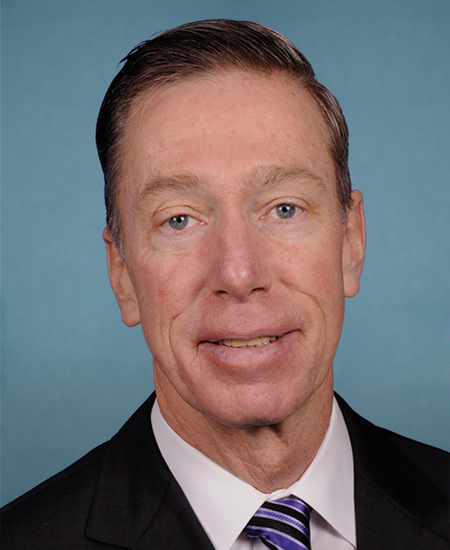
Rep. Stephen F. Lynch
Sponsored bills
Maddy summaryHR 7634, the Plastic Pellet Free Waters Act, prohibits plastic pellets and pre-production plastic materials from being discharged into water through wastewater, spills, or runoff from specific facilities. It directly affects plastic polymer production facilities, plastic molding and forming facilities, and any point source (like packaging or transport operations) handling plastic pellets. The bill requires the EPA to issue a final rule within 60 days of enactment banning these discharges and updating all relevant wastewater, stormwater, and performance standards in permits and regulations. This creates a legal requirement for facilities to prevent plastic pellet pollution in waterways, targeting a major source of ocean plastic pollution.
Maddy summaryThis concurrent resolution (HCONRES 97) recognizes the gender wage gap, noting that women working full-time earn 84 cents for every dollar earned by men. It highlights racial disparities (e.g., Latinas earn 57 cents, Black women 69 cents) and the economic impact of the gap, including $965 billion in annual lost wages for women. As a symbolic resolution, it does not create new laws or policies but formally acknowledges the issue and reaffirms Congress’s commitment to addressing wage inequality.
Maddy summaryHRES 1074 is a symbolic House resolution reaffirming congressional support for a two-state solution to the Israel-Palestine conflict. It explicitly states the House supports Israel's right to exist as a Jewish, democratic state and recognizes Palestinians' right to sovereignty through a separate state. The resolution identifies a two-state solution as the best path to lasting peace and condemns efforts opposing this approach. As a non-binding resolution, it does not create new law or policy but formally expresses the House's position on this issue. It was introduced by multiple House members on March 12, 2024.
Maddy summaryHR 7629, the Protect Our Letter Carriers Act of 2024, allocates $1.4 billion annually (2025-2029) to the U.S. Postal Service for high-security collection boxes and replacing physical universal mailbox keys with electronic versions, directly affecting USPS operations and letter carriers. It requires the Attorney General to appoint specialized prosecutors in each district to coordinate investigations and prosecutions of postal-related crimes, such as assaults on carriers or mail theft. The bill also mandates the U.S. Sentencing Commission to adjust guidelines so that assaults or robberies against postal employees are treated with the same severity as assaults against law enforcement officers. These provisions aim to enhance safety through infrastructure upgrades, improved prosecution, and stricter sentencing for crimes targeting postal workers.
Maddy summaryThe Increasing Access to Mental Health in Schools Act creates a federal grant program to increase mental health staff in low-income schools. It provides funding for partnerships between low-income schools (where at least 20% of students are from families below the poverty line) and graduate programs in school counseling, psychology, and social work. Grant funds can cover training costs, salary support for new mental health providers, recruitment of underrepresented students, and student loan repayment for mental health staff working in qualifying schools. The bill sets target ratios for staff-to-student ratios (like 1 counselor per 250 students) and requires annual reporting on program outcomes. The program is authorized for $200 million annually to address mental health staffing shortages in schools serving high-poverty communities.
Maddy summaryThe Peace Corps and AmeriCorps Student Loan Forgiveness Act amends federal student loan rules to count months of deferment or forbearance during service as Peace Corps volunteers or AmeriCorps members toward Public Service Loan Forgiveness. It applies to borrowers with eligible federal student loans who were in deferment or forbearance after October 1, 2007, while serving in approved Peace Corps or AmeriCorps roles. This change treats each qualifying service month as a "qualifying payment," reducing the time needed to reach the 120 required payments for loan forgiveness. The bill directly benefits current and former Peace Corps volunteers and AmeriCorps members with federal student loans.
Maddy summaryThis symbolic resolution (HRES 1026) recognizes Black History Month and honors the 94 African-American recipients of the Congressional Medal of Honor for their military bravery, heroism, and valor. It does not create new laws or policies but formally acknowledges their contributions, referencing historical context like Sergeant William Harvey Carney’s 1863 actions and the 1993 study revealing racial discrimination in Medal of Honor awards during WWII. The resolution specifically calls for the House to recognize Black History Month and honor these 94 service members. It is a non-binding expression of support with no concrete policy changes.
Maddy summaryHR 7378, the Frederick Douglass Congressional Gold Medal Act, authorizes Congress to posthumously award a gold medal to honor Frederick Douglass's legacy as a pivotal abolitionist, writer, and advocate for civil rights. The medal, designed by the Treasury Secretary, will be presented to the National Museum of African American History and Culture for display, with bronze duplicates available for sale to cover costs. This ceremonial bill does not create new laws or affect current policies - it solely commemorates Douglass's historical contributions to ending slavery and advancing equality.
Maddy summaryThe FAAN Act (HR 7266) authorizes $1 billion in federal grants to schools of nursing in underserved areas to address nursing workforce shortages. It directly affects nursing schools in medically underserved communities, rural regions, and areas with health professional shortages, prioritizing institutions serving underrepresented racial/ethnic groups, rural populations, and low-income students. Key provisions include funding for faculty hiring (especially from underrepresented groups), modernizing classrooms with technology like simulation labs, expanding student support programs, and creating clinical partnerships with healthcare facilities. Schools receiving grants must report annually on student demographics, faculty diversity, and program outcomes, with a comprehensive report to Congress after five years. The bill aims to strengthen nursing education capacity and improve national readiness for public health emergencies.