

Maddy summaryHR 2585, the Armenian Genocide Education Act, establishes a federal program through the Library of Congress to develop educational resources about the 1915-1923 Armenian Genocide for K-12 schools. It requires the Librarian to create and distribute accurate teaching materials, provide teacher training workshops, and maintain an online resource hub focused on the genocide's history, lessons, and prevention of hate. The program directly supports local educational agencies, independent schools, and educators by offering professional development and curriculum resources. It defines key terms like "denial" and "distortion" to guide the educational content, aiming to improve understanding of this historical event and its relevance to preventing modern-day hate crimes.
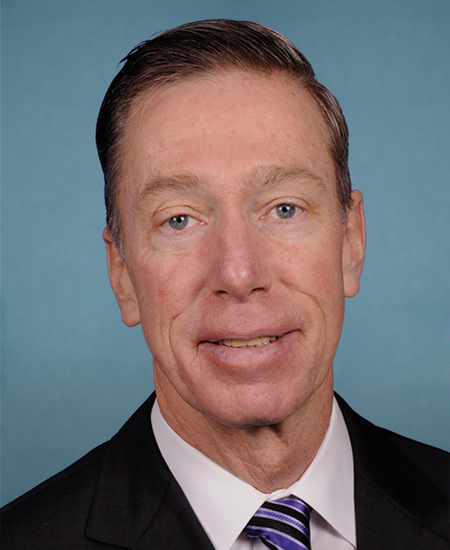
Rep. Stephen F. Lynch
Sponsored bills
Maddy summaryHR 2586, the Reentry Act of 2025, amends Medicaid rules to allow incarcerated individuals to receive Medicaid coverage during the 30 days immediately before their release from prison or jail. This directly affects people leaving correctional facilities, ensuring they can access health care as they transition back into communities. The bill requires a report within 18 months analyzing current health care standards in prisons, the number of people who would gain coverage, and current discharge practices to improve Medicaid enrollment for newly released individuals. The report will also assess how to better connect people with community health services and addiction treatment after release.
Sanctioning Russia Act of 2025 This bill imposes penalties on certain persons (individuals and entities) if the President determines that the Russian government or a person acting at Russia's direction is involved with (1) refusing to negotiate a peace agreement with Ukraine; (2) violating a negotiated peace agreement; (3) initiating another invasion of Ukraine; or (4) overthrowing, dismantling, or seeking to subvert the Ukrainian government. If the President makes such a determination, the bill requires certain actions including the President must impose visa- and property-blocking sanctions on specified persons such as the Russian president, certain Russian military commanders, and any foreign person that knowingly provides defense items to the Russian armed forces; the President must increase the rate of duty on all goods and services imported from Russia into the United States to at least 500% relative to the value of such goods and services; the President must increase the rate of duty on all goods and services imported into the United States from countries that knowingly engage in the exchange of Russian-origin uranium and petroleum products to at least 500% relative to the value of such goods and services; the Department of the Treasury must impose property-blocking sanctions on any financial institution organized under Russian law and owned wholly or partly by Russia, and any financial institution that engages in transactions with those entities; and the Department of Commerce must prohibit the export, reexport, or in-country transfer to or in Russia of any U.S.-produced energy or energy product.
Maddy summaryThis symbolic resolution (HCONRES 23) expresses Congress's support for International Transgender Day of Visibility, observed annually on March 31. It encourages Americans to recognize and celebrate transgender community achievements while acknowledging ongoing challenges like discrimination in employment, healthcare, and public accommodations. The resolution does not create new laws or policies but formally endorses the day's purpose through non-binding statements of support and recognition. It directly affects the broader public by promoting awareness and respect for transgender individuals' rights and contributions.
Maddy summaryThe Nutrition CARE Act of 2025 requires Medicare to cover medical nutrition therapy services for beneficiaries with eating disorders starting January 1, 2026. It directly affects Medicare beneficiaries with eating disorders, including an estimated 1.6 million people on Medicare Part B, with specific focus on underserved groups like 420,500-560,700 Black, Indigenous, and People of Color beneficiaries. The bill mandates coverage through registered dietitians or nutrition professionals, requiring at least 13 hours of services in the first year (including initial assessment) and 4 hours annually thereafter, with referrals from physicians or psychologists. This addresses a current gap where Medicare does not cover medical nutrition therapy for eating disorders at any treatment level. The policy change aims to improve access to a critical treatment pillar for a condition with high mortality rates and significant healthcare costs.
Maddy summaryHR 2487, the Transgender Health Care Access Act, aims to improve access to gender-affirming care for transgender individuals by funding training and education for healthcare providers. The bill provides $10 million annually for medical schools to develop curricula on gender-affirming care and culturally competent treatment, and $15 million annually for grants to train medical residents, nurse practitioners, and community health centers serving transgender patients. It specifically targets rural providers through $5 million annually for collaborative networks to expand care in underserved areas. The legislation requires a report to Congress within two years detailing progress in improving health equity for transgender populations.
Save America's Forgotten Equines Act of 2025 or the SAFE Act of 2025 This bill permanently prohibits the slaughter of equines (e.g., horses and mules) for human consumption. (Current law prohibits the slaughter of dogs and cats for human consumption. This bill extends the prohibition to equines.) Specifically, this bill prohibits a person from knowingly (1) slaughtering an equine for human consumption; or (2) shipping, transporting, possessing, purchasing, selling, or donating an equine to be slaughtered for human consumption or equine parts for human consumption. The bill subjects a violator to a fine. The bill applies to conduct in or affecting interstate or foreign commerce or within the special maritime and territorial jurisdiction of the United States. However, it does not apply to an activity carried out by an Indian for a religious ceremony. As background, in recent years, the appropriations acts have prohibited the Department of Agriculture (USDA) from using federal funds to inspect horses before they are slaughtered for human consumption. Therefore, there are currently no USDA-inspected horse slaughter facilities in the United States.
Maddy summaryHRES 261 is a symbolic resolution recognizing the heritage, culture, and contributions of Latinas in the United States. It celebrates Latinas' historical and ongoing roles in fields like business, military service, science, arts, and public office, while acknowledging persistent challenges like wage gaps and systemic barriers. The resolution specifically highlights that Latinas make up approximately 1 in 6 U.S. women (31 million people) and emphasizes their economic impact (contributing $1.3 billion to GDP in 2021) and cultural achievements. It does not create new policies or allocate funds but formally honors these contributions and calls for continued efforts to address inequities. This resolution directly affects Latinas as a recognized demographic group within U.S. society.
Maddy summaryHR 2477, the Portable Ultrasound Reimbursement Equity Act of 2025, would amend Medicare rules to require equal reimbursement for portable ultrasound transportation and setup services as is currently provided for portable X-ray services. This change directly affects Medicare beneficiaries needing portable ultrasound exams and healthcare providers (like mobile clinics) who offer these services. The bill mandates that Medicare pay separately for portable ultrasound transportation and setup in the same way and to the same extent as portable X-ray services, using similar supplier requirements as existing regulations. The policy change would take effect for services provided on or after January 1, 2027.
Maddy summaryThe COST of Relocations Act (HR 2470) requires federal agencies to conduct a detailed benefit-cost analysis before relocating more than 5% or 100 employees (whichever is smaller) outside their current commuting area. Agencies must submit an unredacted report to their Inspector General, covering expected outcomes, stakeholder impacts, risk assessments, and how the move affects the agency's mission. The Inspector General then reviews the report and submits findings to Congress within 90 days, including an assessment of whether the relocation complies with existing OMB guidance. This law applies specifically to significant relocations of federal operations, ensuring transparency without overriding other legal requirements for such moves.