

Maddy summaryThe Equality Act (HR 15) amends federal civil rights laws to explicitly prohibit discrimination based on sexual orientation and gender identity in employment, housing, public accommodations, credit, and jury service. It expands existing protections under the Civil Rights Act of 1964 by adding sexual orientation and gender identity as protected characteristics under sex discrimination prohibitions. The bill clarifies that discrimination against LGBTQ people is a form of sex discrimination, consistent with the Supreme Court's Bostock decision, and adds specific definitions for gender identity and sexual orientation. This legislation directly affects businesses, employers, housing providers, financial institutions, and government entities that serve the public. The bill creates a more comprehensive legal framework to address discrimination that LGBTQ people face in multiple aspects of daily life.
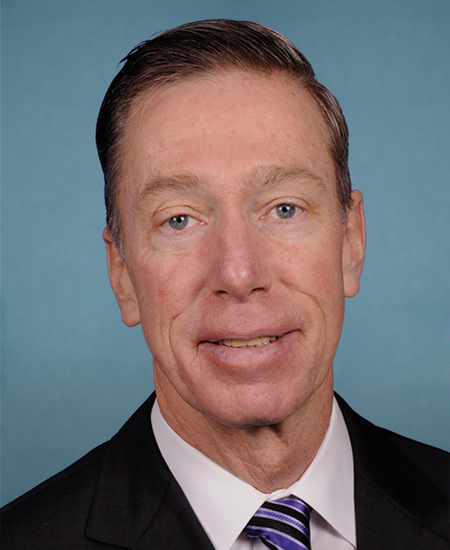
Rep. Stephen F. Lynch
Sponsored bills
Maddy summaryThis bill requires most private health insurance plans to cover diagnostic and supplemental breast exams with no out-of-pocket costs (like deductibles or copays) for enrolled patients. It specifically covers exams used to evaluate abnormalities found in screenings (diagnostic) or for high-risk screening without abnormalities (supplemental), based on medical guidelines. Plans can still require prior authorization for these exams, and state laws offering stronger protections remain in effect. The rule takes effect for plan years starting January 1, 2026.
Maddy summaryThe Tenants' Right to Organize Act gives tenants receiving housing assistance the right to form and operate tenant organizations without fear of retaliation. It requires public housing agencies and property owners to recognize these organizations, provide meeting spaces, and seriously consider tenant concerns. The bill prohibits adverse actions like lease termination, rent increases, or service reductions for participating in organizing activities. It applies to tenants in housing choice voucher programs and low-income housing tax credit properties, with enforcement through administrative complaints and potential legal action.
Maddy summaryHR 3045, the West Bank Violence Prevention Act of 2025, imposes U.S. sanctions on foreign individuals and entities responsible for violence, displacement, or property destruction in the West Bank. It targets those directly involved in attacks on civilians, forced displacement, or property seizures, including settler leaders or officials of groups engaged in such activities. Key provisions require freezing assets of sanctioned individuals within U.S. jurisdiction and blocking their entry into the United States via visa restrictions. The law applies to foreign nationals meeting specific criteria outlined in the bill, not U.S. citizens or entities.
Maddy summaryThe Victims of Agent Orange Act of 2025 provides U.S. government assistance to Vietnamese residents affected by Agent Orange exposure during the Vietnam War (1961-1975), their children, and Vietnamese Americans with exposure-related health issues. It directs USAID to fund medical care, caregiver support, home repairs, and environmental cleanup of contaminated sites in Vietnam, prioritizing military bases and heavily sprayed areas. The Department of Health and Human Services must also conduct health assessments and establish treatment centers for Vietnamese Americans in the U.S. affected by Agent Orange. The bill requires implementation within 18 months of enactment and mandates quarterly progress reports to Congress.
Maddy summaryHRES 351 is a symbolic House resolution supporting the designation of April as National Arab American Heritage Month (NAAHM) to celebrate the cultural contributions of Arab Americans. It recognizes Arab Americans' historical and ongoing impacts on U.S. society, including their roles in economy, science, arts, and social justice movements. The resolution highlights that 48 states and numerous cities already observe April as NAAHM, building on the White House's 2023 proclamation. It urges the public to engage in activities celebrating Arab American heritage, without creating new laws or altering existing policies.
Hot Foods Act of 2025 This bill expands the Supplemental Nutrition Assistance Program (SNAP) to permit the use of SNAP benefits to purchase hot foods or hot food products ready for immediate consumption.
Frederick Douglass Trafficking Victims Prevention and Protection Reauthorization Act of 2025 This bill reauthorizes certain programs and activities that promote awareness of human trafficking and support victims. The bill also establishes a new program to support victims of trafficking. Specifically, this bill reauthorizes through FY2029 programs and activities at the Department of Health and Human Services (HHS) to promote awareness of trafficking and strengthen services for victims, including the National Human Trafficking Hotline and cybersecurity and public education campaigns; Department of Justice grants to support trafficking victims inside the United States, including amounts for housing assistance grants; and International Megan’s Law, which requires sex offenders to provide certain information about their intended travel outside of the United States, among other provisions. The bill also authorizes HHS to carry out a new program—the Human Trafficking Survivors Employment and Education Program—to help victims of trafficking integrate or reintegrate into society.
Maddy summaryThe SEER Act of 2025 strengthens ethics oversight for special government employees (SGEs) - non-career federal staff serving on advisory committees or in non-advisory roles - who previously faced fewer disclosure requirements than full-time employees. It requires SGEs serving more than 60 days in a year (reducing the current 130-day limit) to follow the same ethics rules as regular employees, including mandatory financial disclosures and public posting of conflict-of-interest waivers. The bill also mandates a searchable online database listing each SGE's service duration and appointment reason, prohibits SGEs from communicating with agencies about companies they own or lead (if not on an advisory committee), and extends disclosure requirements to SGEs not serving in low-level roles. These changes directly affect SGEs in significant decision-making roles, enhancing transparency for the public and Congress.
Maddy summaryHR 2837 establishes an Advisory Council under the Department of Health and Human Services to improve access to existing resources for victims of gun violence. The council, composed of federal agency heads and appointed victims/support professionals, will assess needs, identify effective programs, and compile a public resource hub with contact information for medical, financial, mental health, legal, and government support services. It requires a detailed report within 180 days of enactment and a follow-up report within two years, focusing on gaps in current assistance and coordination. The bill directly affects individuals defined as victims of gun violence (including those wounded, threatened, witnessing incidents, or related to victims) and aims to connect them to existing federal, state, and nonprofit resources without authorizing new funding. The council will sunset after five years.