

Berta Caceres Human Rights in Honduras Act This bill prohibits U.S. assistance to the police or military of Honduras. The Department of the Treasury shall instruct U.S. representatives of multilateral development banks to vote against providing loans to the Honduran police or military. The prohibition shall be lifted if the Department of State certifies to Congress that various conditions have been met, including that the Honduran government has (1) pursued all legal avenues to reach verdicts in specified crimes, such as the killings of indigenous land-rights activist Berta Caceres and of 100 small-farmer activists in the Aguan Valley; (2) investigated and prosecuted members of the military and police who have violated human rights; and (3) taken effective steps to establish the rule of law.
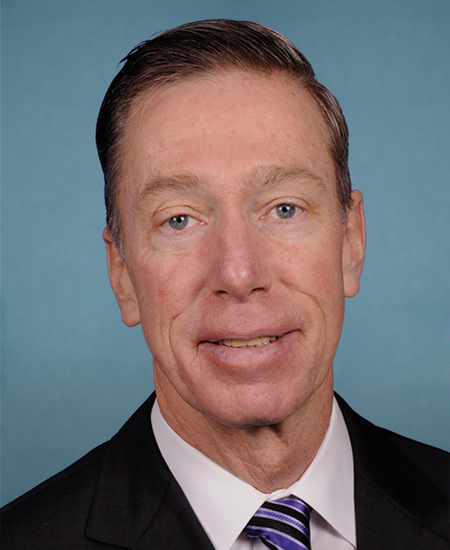
Rep. Stephen F. Lynch
Sponsored bills
Research Investment to Spark the Economy Act of 2021 or the RISE Act of 2021 This bill authorizes the Departments of Agriculture, Commerce, Defense, Education, Energy, the Interior, Health and Human Services, and Transportation, National Aeronautics and Space Administration (NASA), National Science Foundation, and Environmental Protection Agency to provide support for research regarding COVID-19 (i.e., coronavirus disease 2019) or research disrupted by the COVID-19 pandemic. Support may be used to provide supplemental funding to extend the duration of a grant to a research institution, national laboratory, or individual that was awarded prior to the enactment of this bill, or to expand the purposes of such a grant as specified; issue awards to research the effects of the current pandemic and potential future pandemics; and provide flexibility on awards to account for facility closures or other limitations during the COVID-19 public health emergency. Agencies must provide the support as rapidly as possible. Provided funds shall remain available through FY2021.
Civil Aviation Security and Safety Act of 2021 This bill revises and sets forth new requirements for the registration of civilian aircraft. For example, the Federal Aviation Administration (FAA) must conduct a comprehensive review of the process under which it reviews and approves aircraft registration applications and dealer certificates. The bill revises application requirements for aircraft registration to include name, address, date of birth, driver's license or pilot's license (or both if applicable), and applicant photos in the submission of an application. Additionally, the FAA must review Office of Foreign Assets Control sanctions data on applicants; ensure that all eligibility and registration information in an application is true and correct before issuing a registration or dealer certificate; increase the fees for registration to a level sufficient to cover the costs to collect and verify applicant data and the costs of inflation; provide to the Drug Enforcement Administration declarations of its international operations to maximize the ability of federal national security and law enforcement agencies in preventing use of the Civil Aviation Registry for illicit purposes and detecting trade-based money laundering and other cross-border schemes; implement an enforcement mechanism for suspending and revoking dealer certificates; and establish an Aircraft Registry Task Force to examine national security, law enforcement, and public safety issues related to civil aircraft registration and develop solutions to mitigate security and safety risks and increase interagency cooperation.
Ensuring Health Safety in the Skies Act of 2021 This bill requires the Department of Transportation (DOT), the Department of Homeland Security, and the Department of Health and Human Services to form a joint task force on air travel during and after the COVID-19 (i.e., coronavirus disease 2019) public health emergency. The task force must develop recommended requirements, plans, and guidelines to address the health, safety, security, and logistical issues relating to the continuation of air travel during the COVID-19 public health emergency, as well as the resumption of full operations at airports and increased passenger air travel after the COVID-19 public health emergency ends. DOT must establish a joint federal advisory committee to advise the task force to include developing and submitting policy recommendations to the task force regarding the recommended requirements, plans, and guidelines that the task force must develop. Additionally, DOT must publish the policy recommendations on a publicly accessible website.
Alzheimer's Caregiver Support Act This bill authorizes grants to expand training and support services for families and caregivers of individuals living with Alzheimer's disease or a related dementia. The Department of Health and Human Services may award these grants to community organizations and health care and social service providers.
This resolution expresses support for the designation of COVID-19 Victims and Survivors Memorial Day to memorialize the lives lost to COVID-19 (i.e., coronavirus disease 2019).
White House Ethics Transparency Act of 2021 This bill creates transparency requirements for ethics waivers (i.e., waivers from the requirement to sign an ethics pledge) issued to executive branch appointees. Specifically, such ethics waivers must be transmitted to the Office of Government Ethics and made publicly available online.
This bill requires the Joint Committee on the Library to obtain, and the Architect of the Capitol to permanently install in the U.S. Capitol or on the U.S. Capitol Grounds, a monument honoring Associate Justice of the Supreme Court Ruth Bader Ginsburg.
Gun Trafficking Prohibition Act This bill establishes stand-alone criminal offenses for trafficking in firearms and straw purchasing of firearms. The bill expands the categories of prohibited persons (i.e., persons barred from receiving or possessing a firearm or ammunition) to include persons who intend (1) to sell or transfer a firearm or ammunition to a prohibited person, (2) to sell or transfer a firearm to further a crime of violence or drug trafficking offense, or (3) to unlawfully export. It increases the maximum prison term for the (1) sale or transfer of a firearm to a prohibited person, or (2) receipt or possession of a firearm by a prohibited person. The bill revises the existing prohibition on transferring a firearm knowing that it will be used to commit a crime of violence or drug trafficking offense. Specifically, it broadens the scope of unlawful conduct covered by the prohibition and increases the maximum prison term for a violator. Similarly, the bill revises the existing prohibition on smuggling a firearm into the United States with the intent to unlawfully import or to promote a crime of violence or drug trafficking offense. It broadens the scope of unlawful conduct and increases the maximum prison term for a violator. Finally, the bill makes it a crime to smuggle a firearm or ammunition out of the United States, or conspire or attempt to do so, with the intent to unlawfully export or to promote a crime of violence or drug trafficking offense.
Telehealth Modernization Act This bill modifies requirements relating to coverage of telehealth services under Medicare. Specifically, the bill extends certain flexibilities that were initially authorized during the public health emergency relating to COVID-19 (i.e., coronavirus disease 2019). Among other things, the bill allows (1) rural health clinics and federally qualified health centers to serve as the distant site (i.e., the location of the health care practitioner); (2) the home of a beneficiary to serve as the originating site (i.e., the location of the beneficiary) for all services (rather than for only certain services); and (3) all types of practitioners to furnish telehealth services, as determined by the Centers for Medicare & Medicaid Services.