

Military Hunger Prevention Act This bill requires the Department of Defense (DOD) to pay a basic needs allowance to certain low-income members of the Armed Forces. Specifically, those eligible for the basic needs allowance are members who (1) have completed initial entry training, (2) have a gross household income that did not exceed an amount equal to 130% of the federal poverty guidelines of the Department of Health and Human Services (HHS), and (3) do not elect to decline the allowance. In situations where a household contains two or more eligible members, the bill specifies that only one allowance may be paid per year to one member they jointly elect. The amount of the allowance must be the aggregate amount equal to 130% of the HHS federal poverty guidelines minus the gross household income of the covered member during the preceding year divided by 12. The Defense Finance and Accounting Service (DFAS) of DOD must notify, in writing, individuals determined to be eligible for the allowance. The notice must include information regarding financial management and assistance programs administered by DOD for which the individuals are also eligible. Individuals who seek to receive the allowance must submit specified information to DFAS.
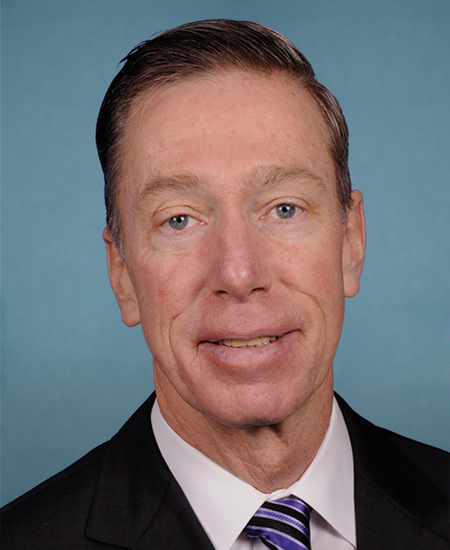
Rep. Stephen F. Lynch
Sponsored bills
This concurrent resolution supports the goals and ideals of the International Transgender Day of Visibility. It celebrates the accomplishments and leadership of transgender, nonbinary, and gender nonconforming people.
Physician Assistant Higher Education Modernization Act of 2021 This bill assists qualified individuals in receiving the education and training needed to become a physician assistant. Graduate students enrolled in physician assistant education programs are eligible for (1) Direct Subsidized Stafford Loans, and (2) loan forgiveness programs for those who serve in areas of national need upon graduation. The bill also requires the Department of Education to provide historically Black colleges and universities and predominantly Black institutions with grants to fund physician assistant studies at the masters level, prioritize the awarding of grants for physician assistant education programs at the postbaccalaureate level that will benefit Hispanic and low-income students, and allow certain grants to be used to support student matriculation and establish physician assistant education programs at rural-serving institutions of higher education.
Fracturing Responsibility and Awareness of Chemicals Act of 2021 This bill revises drinking water requirements concerning hydraulic fracturing (fracking) operations. Hydraulic fracturing, or fracking, is a process to extract underground resources such as oil or gas from a geologic formation by injecting water, a propping agent (e.g., sand), and chemical additives into a well under enough pressure to fracture the geologic formation. The bill gives the Environmental Protection Agency (EPA) the authority to protect groundwater sources (e.g., wells) from certain pollution risks posed by fracking operations. The bill also establishes requirements for disclosing the chemicals intended for use in fracking operations as well as the chemicals actually used in the operations. If the proprietary chemical formulas of chemicals used in fracking operations are necessary for treatment in medical emergencies, then the operations must disclose the formulas or the specific chemical identities of trade secret chemicals to the state, the EPA, or the treating physicians or nurses upon request, regardless of whether written statements of need or confidentiality agreements have been provided.
Resident Physician Shortage Reduction Act of 2021 This bill increases the number of residency positions eligible for graduate medical education payments under Medicare for qualifying hospitals, including hospitals in rural areas and health professional shortage areas. Current law provides for an increase of up to 200 positions per fiscal year beginning in FY2023, with a total increase of 1,000 positions; each hospital may receive up to 25 additional positions. The bill provides for an additional increase of 2,000 positions per fiscal year from FY2023-FY2029; during this period, each hospital may receive up to 75 additional positions in total under the bill and current law. Additionally, one-third of the positions that are made available under the bill must be allocated to hospitals that are already operating above applicable resident limits. The bill also requires the Government Accountability Office to report on strategies to increase the diversity of the health professional workforce, including with respect to representation from rural, low-income, and minority communities.
Willie O'Ree Congressional Gold Medal Act This bill provides for the award of a Congressional Gold Medal to Willie O'Ree or, if unavailable, to a member of his family, in recognition of his contributions and commitment to hockey, inclusion, and recreational opportunity.
This bill requires the Joint Committee on the Library to enter into an agreement to obtain a statue of Shirley Chisholm, the first African American woman elected to Congress. The committee shall place the statue in a permanent public location in the U.S. Capitol.
Our Homes, Our Votes Act This bill facilitates voter registration for residents of certain federally assisted housing for the purpose of federal elections. Specifically, the bill requires each lease and annual income recertification for such housing that is administered by a public housing agency (PHA) to include a voter registration application. A PHA must send any completed application to state election officials. The bill also treats owners of federally assisted housing as voter registration agencies.
Emmett Till and Mamie Till-Mobley Congressional Gold Medal Act of 2021 This bill provides for the posthumous presentation of a Congressional Gold Medal in commemoration of Emmett Till and Mamie Till-Mobley. After the award the medal shall be given to the National Museum of African American History and Culture.
Expanded Telehealth Access Act This bill permanently allows audiologists, physical therapists, occupational therapists, speech-language pathologists, and other providers designated by the Centers for Medicare & Medicaid Services (CMS) to provide telehealth services under Medicare. Currently, the CMS is authorized to waive requirements for Medicare telehealth services during the public health emergency relating to COVID-19, and it has done so to allow all providers that are otherwise eligible to furnish in-person services under Medicare to also furnish telehealth services.