

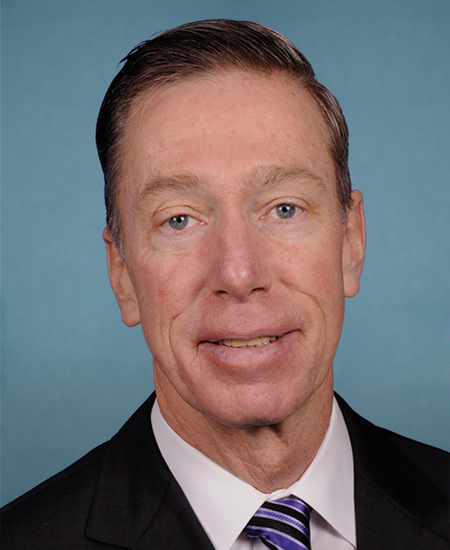
Photo of Stephen F. Lynch
D United States House · District 8 · Massachusetts On the 2026 ballot

Rep. Stephen F. Lynch

Compare
Total votes
2,837
all sessions
Attendance
98%
68 missed
Lower than 81% of chamber peers
With party
97%
of cast votes
Near the chamber average
Bipartisan score
2%
crosses aisle rarely
Near the chamber average
Sponsored
1,646
bills & resolutions
Higher than 84% of chamber peers
Committees
7
assignments
1,646 bills and resolutions

Sponsored bills

Total
1,646
Primary
61
Co-sponsor
1,585
This page
1,646
matching current filters
Co-sponsor HR 721
Passed · United States House · Co-sponsor
Mental Health Services for Students Act of 2021

Mental Health Services for Students Act of 2021 This bill provides specific statutory authority for the Project AWARE (Advancing Wellness and Resiliency in Education) State Educational Agency Grant Program that is administered by the Substance Abuse and Mental Health Services Administration. The program supports school-based mental health services, including screening, treatment, and outreach programs.

Passed May 13, 2021 1 co-sponsor
Primary HR 3156
In committee · United States House · Lead sponsor
Wartime Contracting Commission Reauthorization Act of 2021

Wartime Contracting Commission Reauthorization Act of 2021 This bill reestablishes the Commission on Wartime Contracting. The commission was established in 2008 to study U.S. wartime contracting in Iraq and Afghanistan. The bill replaces the commission's general duties to direct it to study (1) contracting funded by overseas contingency operations funds, and (2) contracting for the logistical support of coalition forces operating under the authority of the 2001 or 2002 Authorization for the Use of Military Force or for the performance of security functions in countries where coalition forces operate under that authority.

In committee May 12, 2021 0 co-sponsors
Co-sponsor HR 3089
In committee · United States House · Co-sponsor
Accelerating Kids’ Access to Care Act

Accelerating Kids' Access to Care Act This bill requires state Medicaid programs to establish a process through which qualifying out-of-state providers may enroll as participating providers without undergoing additional screening requirements. Among other things, a qualifying provider must (1) serve minors, or adults whose condition began as a minor; and (2) have previously been screened for Medicare participation or for participation in the Medicaid program of the state in which the provider is located.

In committee May 12, 2021 1 co-sponsor
Co-sponsor HR 3085
In committee · United States House · Co-sponsor
ENACT Act of 2021

Equity in Neuroscience and Alzheimer's Clinical Trials Act of 2021 or the ENACT Act of 2021 This bill sets out activities and requirements to increase the participation of underrepresented populations in research and clinical trials for Alzheimer's disease and related dementias. Specifically, the National Institute on Aging (NIA) must establish and provide technical assistance to Alzheimer's research centers located in areas with higher concentrations of minority groups. These centers must establish diagnostic and treatment clinics designed to serve minority, rural, and other underserved populations; operate clinical trials; and carry out public outreach to encourage members of minority populations to participate in clinical trials and research. Additionally, the NIA must disseminate information to members of minority populations about participating in clinical trials and take other actions to enhance diversity with respect to the Alzheimer's research that it conducts or supports. The bill also directs the NIA to increase diversity among Alzheimer's researchers by encouraging the participation of individuals who are from groups that are underrepresented in clinical, behavioral, and social sciences.

In committee May 12, 2021 1 co-sponsor
Co-sponsor HR 3122
In committee · United States House · Co-sponsor
Servicemember Parental Leave Equity Act

Servicemember Parental Leave Equity Act This bill modifies Department of Defense parental leave provisions for members of the Armed Forces. Specifically, the bill increases parental leave for primary caregivers to 18 weeks (currently 12) following the birth of a child and to 12 weeks (currently 6) following the adoption of a child. The bill increases parental leave for a secondary caregiver from 21 days to 12 weeks in connection with the birth or adoption of a child. Primary or secondary caregivers of a long-term foster child are authorized to take up to 12 weeks of leave in connection with such placement. Parental leave for a primary or secondary caregiver for a birth, adoption, or foster child placement may be taken in more than one increment. For primary caregivers, the leave must be utilized within one year of the event. The bill authorizes up to 12 weeks of leave to certain service members who would have been secondary caregivers but for a miscarriage, stillbirth, or infant death. The following activities required of an active-duty member within a 12-month postpartum period must have the approval of a health care provider and be at the election of the member or in the interest of national security: (1) an order of temporary duty overnight travel or to participate in physically demanding field training exercises, (2) meeting of body composition standards, or (3) passing a physical fitness test. The bill also reduces the service commitment required for participation in the Career Intermission Program.

In committee May 11, 2021 1 co-sponsor
Co-sponsor HR 2972
In committee · United States House · Co-sponsor
HELLPP Act

Helping Ensure Life- and Limb-Saving Access to Podiatric Physicians Act or the HELLPP Act This bill adds podiatrists as covered physicians under the Medicaid program. Additionally, the bill revises certain documentation requirements related to Medicare coverage of therapeutic shoes for individuals with diabetes. Finally, the bill subjects payments made to a Medicaid provider or supplier to a continuing levy for federal taxes owed by the provider or supplier.

In committee May 5, 2021 1 co-sponsor
Co-sponsor HR 2991
In committee · United States House · Co-sponsor
Connecting America’s Active Transportation System Act

Connecting America's Active Transportation System Act This bill directs the Department of Transportation (DOT) to carry out an active transportation investment program to provide competitive grants to state, local, and regional government entities, and Indian tribes to construct projects that connect walking and bicycling infrastructure within and between communities, metropolitan regions, or states. The bill sets forth various limitations on the use of funds by DOT, including that it must obligate at least 30% of funds to projects that connect people with public transportation, businesses, workplaces, schools, residences, recreation areas, and other community activity centers; set aside at least $3 million to provide planning grants for eligible entities; and set aside at least $2 million to cover the costs of administration, research, technical assistance, communications, and training activities under the program. The federal share of grants must not exceed 80% of the total project cost. However, DOT may increase the federal share to 100% for disadvantaged communities with a poverty rate of over 40%.

In committee May 5, 2021 1 co-sponsor
Co-sponsor HR 2940
In committee · United States House · Co-sponsor
Advancing International and Foreign Language Education Act

Advancing International and Foreign Language Education Act This bill reauthorizes through FY2027 and otherwise revises international education programs. These programs provide grants to institutions of higher education and related entities to (1) enhance instruction in international and foreign language studies, and (2) promote international business skills and education. First, the bill reauthorizes programs related to international and foreign language studies. Specifically, it extends (1) the Graduate and Undergraduate Language and Area Centers and Programs, which include the National Resource Centers program; (2) the Language Resource Centers; (3) the Undergraduate International Studies and Foreign Language Programs; and (4) the American Overseas Research Centers. Next, the bill revises the Foreign Language and Area Studies Fellowships program to permit graduate students to receive a stipend for the beginning, intermediate, or advanced study of a foreign language related to the student's area of specialization. Further, the bill replaces the existing Technological Innovation and Cooperation for Foreign Information Access program with an international research and innovation program. Additionally, the bill reauthorizes programs related to international business skills and education. Specifically, it reauthorizes the Centers for International Business Education program. It also reauthorizes the Education and Training program and otherwise makes changes to the program, including by (1) renaming the program; and (2) mandating certain program activities, such as the incorporation of specified programs and studies into professional education and technical training curricula. Finally, the bill permits the Department of Education to prioritize grant applications from minority-serving institutions.

In committee Apr 30, 2021 1 co-sponsor
Co-sponsor HR 2903
In committee · United States House · Co-sponsor
Creating Opportunities Now for Necessary and Effective Care Technologies (CONNECT) for Health Act of 2021

Creating Opportunities Now for Necessary and Effective Care Technologies (CONNECT) for Health Act of 2021 or the CONNECT for Health Act of 2021 This bill expands coverage of telehealth services under Medicare. Among other provisions, the bill allows the Centers for Medicare & Medicaid Services (CMS) to waive certain restrictions, such as restrictions on the types of technology that may be used; permanently removes geographic restrictions on originating sites (i.e., the location of the beneficiary) and allows the home of the beneficiary to serve as the originating site for all services; permanently allows federally qualified health centers and rural health clinics to serve as the distant site (i.e., the location of the health care practitioner); and allows the CMS to generally waive coverage restrictions during any public health emergency. Additionally, the CMS must report on the effects of expanded telehealth services during the COVID-19 public health emergency, including with respect to the utilization, quality, and outcomes of services. The Center for Medicare and Medicaid Innovation may also test alternative payment models relating to expanded telehealth services.

In committee Apr 29, 2021 1 co-sponsor
Showing 1,461 to 1,470 of 1,646 bills