

Candidates Afforded Dignity, Equality and Training (CADET) Act of 2021 This bill requires the Departments of Defense, Homeland Security, and Transportation to prescribe regulations ensuring that the parental guardianship rights of cadets and midshipmen attending military service academies are protected consistent with individual and academic responsibilities. Cadets and midshipmen with dependents must establish a family care plan with appropriate academy leadership. Pregnant cadets and midshipmen must be provided with, at minimum, the options to (1) take leave from the military service academy for up to one year, (2) fully release from the military service academy and any related obligations, and (3) enlist in active-duty service. Males fathering a child while enrolled at a military service academy must not be required to give up parental rights and must not acquire any benefits or leave considerations as a result of fathering a child, with certain exceptions (e.g., leave to attend the birth).
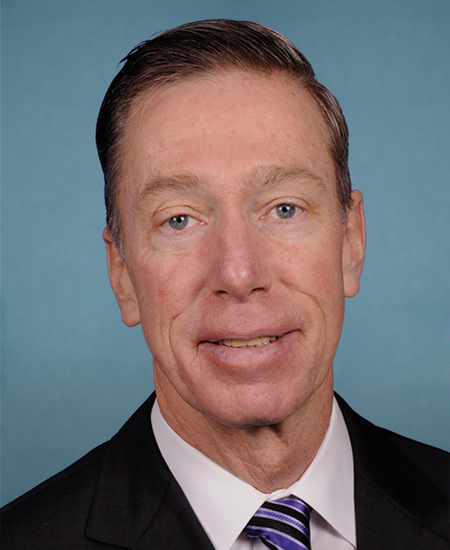
Rep. Stephen F. Lynch
Sponsored bills
Medical Device Nonvisual Accessibility Act of 2021 This bill requires certain medical devices with a digital interface to meet nonvisual accessibility standards established by the Food and Drug Administration (FDA). Specifically, the FDA must establish regulations to require a Class II or Class III medical device with a digital interface to provide a blind or low-vision user access to the same services and information, and generally the same ease of use, as provided to a user who is not low-vision or blind. (The FDA classifies medical devices in three classes. Class I devices are low-risk, Class II devices are moderate-risk, and Class III devices are high-risk.) A Class II or Class III medical device that does not meet the nonvisual accessibility standards established under this bill may not be sold.
Domestic Workers Bill of Rights Act This bill provides rights and protections for domestic workers (e.g., housekeepers, nannies, caretakers, personal assistants, and chauffeurs), including pay and leave rights, and health and safety protections. Specifically, the bill repeals the exemption of domestic live-in employees from certain minimum wage and maximum hour requirements. Employers must provide written notice of termination and provide at least 30 days of lodging and two weeks of severance pay to terminated live-in employees. Live-in employees also must be provided with reasonable access to telephone and internet service during their employment. The bill requires employers to provide domestic workers with a written agreement covering wages, sick leave, benefits, and other matters. Further, domestic workers may request and be granted changes to work schedules due to personal events. The bill also provides domestic workers with certain privacy rights, extends to domestic workers protections against discrimination in employment, and increases the federal medical assistance percentage (FMAP) for certain Medicaid-funded medical services provided by domestic workers. The Department of Labor must (1) award grants for a domestic worker national hotline for reporting emergencies, training on hazards facing domestic workers, and workforce investment activities for domestic workers; and (2) establish a Domestic Worker Wage and Standards Board to investigate standards in the domestic workers industry. Labor must publish online a document that describes the rights and protections for domestic workers under this bill.
Protecting Renters from Evictions Act of 2021 This bill extends through December 31, 2021, the order issued by the Centers for Disease Control and Prevention titled Temporary Halt in Residential Evictions To Prevent the Further Spread of COVID–19 and published on September 4, 2020.
This resolution condemns acts of violence against Afghan women and girls and any effort to limit the ability of women and girls to participate in the civic affairs of Afghanistan. It also urges the President to ensure that Afghan women, youth, and other marginalized groups are meaningfully participating and engaging in all peace talks.
Diversity and Inclusion at the Department of State Act This bill establishes a new position and requires other activities to promote diversity and inclusion in the Department of State. The bill creates the presidentially-appointed position of Chief Diversity and Inclusion Officer in the Office of the Deputy Secretary of State to, among other activities, develop a strategic plan to guide implementation of diversity and inclusion efforts and support State Department personnel from traditionally underrepresented groups. The officer reports directly to the Secretary of State. Additionally, the State Department must establish a Diversity and Inclusion Leadership Council to coordinate applicable strategic plans, initiatives, and policies. The bill also modifies merit selection processes for promotions, performance pay, and related matters to promote diversity and inclusion in the Foreign Service. Specifically, it adds factors (e.g., testimony from peers and subordinates or demonstrated support for diversity and inclusion) that may be considered in recommendations and rankings related to a Foreign Service officer's performance. The State Department must also establish a mentorship program for entry- and mid-level members of the Foreign Service and periodically offer a Senior Executive Service development program to members of the civil service in the top two pay grades. Senior Executive Service members serve as high-level managers within federal agencies. The bill requires the State Department to report on its diversity and inclusion efforts, as well as demographic information about members of boards that make personnel decisions and candidates for the Senior Executive Service.
Performing Artist Tax Parity Act of 2021 This bill modifies the tax deduction for the expenses of performing artists (including commissions paid to managers or agents) to provide for a phaseout of such deduction for taxpayers whose adjusted gross income exceeds $100,000 ($200,000 for joint return filers). The $100,000 phaseout threshold is adjusted for inflation annually for taxable years beginning after 2021.
Cargo Flight Deck Security Act of 202 1 This bill requires all-cargo aircraft to be equipped with intrusion-resistant cockpit doors that remain locked while such aircraft is in flight. The requirement takes effect on January 1, 2023, regardless of whether the Federal Aviation Administration has issued regulations to implement such requirement.
Consumer Protection and Recovery Act This bill authorizes the Federal Trade Commission (FTC) to seek monetary relief in federal court from businesses that engage in unlawful commercial practices such as false advertising, consumer fraud, and anticompetitive conduct. Specifically, the FTC may seek restitution in these cases for losses, rescission or reformation of contracts, refund of money, return of property, or disgorgement of unjust enrichment. On April 22, 2021, the Supreme Court held in AMG Capital Management, LLC v. Federal Trade Commission that the Federal Trade Commission Act does not authorize the FTC to seek, or a court to award, such relief.
Federally Funded Research and Technology Development Protection Act This bill addresses issues of transparency and accountability in federal grant-making to safeguard federally funded research and technology development. Specifically, the Office of Management and Budget must (1) require that any agency that makes a federal grant maintains compliance operations to guard against malign foreign talent recruitment programs, and (2) prescribe standardized disclosure and accountability measures to support such operations. Malign foreign talent recruitment is defined as an effort organized, managed, or funded by a foreign government to recruit any individual or public or private entity engaged in research funded by a federal agency to share information with, or otherwise act on behalf of, such government.