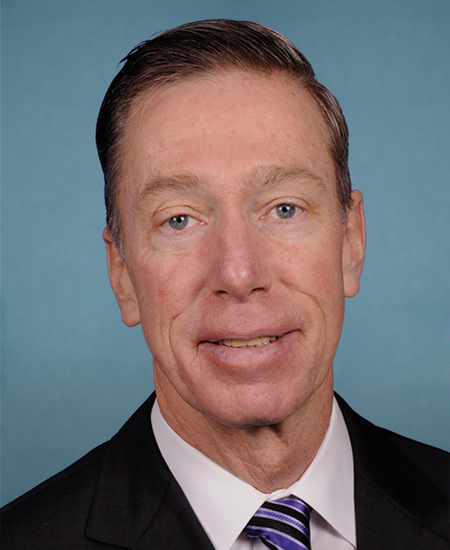
Photo of Stephen F. Lynch
D United States House · District 8 · Massachusetts On the 2026 ballot

Rep. Stephen F. Lynch

Compare
Total votes
2,837
all sessions
Attendance
98%
68 missed
Lower than 81% of chamber peers
With party
97%
of cast votes
Near the chamber average
Bipartisan score
2%
crosses aisle rarely
Near the chamber average
Sponsored
1,653
bills & resolutions
Higher than 85% of chamber peers
Committees
7
assignments
1,653 bills and resolutions

Sponsored bills

Total
1,653
Primary
61
Co-sponsor
1,592
This page
1,653
matching current filters
Co-sponsor HR 1307
In committee · United States House · Co-sponsor
Vote by Mail Tracking Act

Vote by Mail Tracking Act This bill requires mail-in ballots to (1) contain a U.S. Postal Service (USPS) barcode that enables tracking of each individual ballot, (2) satisfy USPS requirements for ballot envelope design and machinable letters, and (3) include the official election mail logo. The federal government must reimburse each state (including the District of Columbia and any U.S. territory or possession) for the cost of using the barcode service.

In committee Nov 17, 2022 1 co-sponsor
Co-sponsor HR 9302
In committee · United States House · Co-sponsor
Resilient Transit Act of 2022

Maddy summaryHR 9302, the Resilient Transit Act of 2022, creates a new federal grant program to help state and local transit authorities fund projects that make public transportation systems more resilient to climate impacts like flooding, wildfires, and extreme weather. The grants cover specific activities such as installing flood barriers, upgrading drainage systems, adding backup power, monitoring temperature extremes, and assessing vulnerabilities to future climate events. The bill authorizes $300 million annually from 2023 through 2026 specifically for these resilience improvements, with 97.15% of funds distributed based on need and 2.85% for other purposes. This directly affects public transit agencies in communities facing climate-related infrastructure risks, providing targeted funding to protect critical transportation services.

In committee Nov 16, 2022 1 co-sponsor
Co-sponsor HR 2872
In committee · United States House · Co-sponsor
SAFE Act

Safeguarding America's Future and Environment Act or the SAFE Act The bill requires the development of an integrated national approach to help fish, wildlife, and plants adapt to extreme weather changes and climate change. Specifically, the bill requires the President to establish an interagency National Fish, Wildlife, and Plants Climate Adaptation Strategy Joint Implementation Working Group. The working group must adopt the 2013 National Fish, Wildlife, and Plants Climate Adaptation Strategy, which addresses the effects of extreme weather and climate change on fish, wildlife, and plants. After the Committee on Earth and Environmental Sciences releases a periodic scientific assessment required under the U.S. Global Change Research Program, the working group must use sound science to review and revise the strategy to incorporate new information and advances in the development of strategies to help fish, wildlife, and plants adapt. Each federal agency must integrate the strategy into agency plans, environmental reviews, and programs. The Department of the Interior must establish a National Climate Change and Wildlife Science Center to assess and develop scientific information, tools, strategies, and techniques to support the working group and other interested parties in addressing the effects of extreme weather and climate change. Interior must establish an Advisory Committee on Climate Change and Natural Resource Sciences to advise the working group.


In committee Nov 16, 2022 1 co-sponsor
Co-sponsor HR 5441
Passed · United States House · Co-sponsor
PAST Act of 2021

Prevent All Soring Tactics Act of 2022 or the PAST Act of 2022 This bill addresses the practice of soring horses. The soring of horses includes various actions taken on horses' limbs to produce higher gaits that may cause pain, distress, inflammation, or lameness. Specifically, the bill expands soring regulation and enforcement at horse shows, exhibitions, sales, and auctions, including by establishing a new system for inspecting horses for soring. In addition, the bill increases penalties for violations.

Passed Nov 15, 2022 1 co-sponsor
Co-sponsor HR 8450
In committee · United States House · Co-sponsor
Healthy Meals, Healthy Kids Act

Healthy Meals, Healthy Kids Act This bill reauthorizes and expands (1) child nutrition programs, including the National School Lunch Program (NSLP) and other institutional food service programs; and (2) the Special Supplemental Nutrition Program for Women, Infants, and Children (WIC).

In committee Nov 7, 2022 1 co-sponsor
Co-sponsor HR 2193
In committee · United States House · Co-sponsor
Asunción Valdivia Heat Illness and Fatality Prevention Act of 2022

Asunción Valdivia Heat Illness and Fatality Prevention Act of 2022 This bill directs the Occupational Safety and Health Administration to promulgate a standard that requires employers to implement certain measures for protecting workers from heat stress and related illnesses or injuries. Heat stress refers to the load of heat that a person experiences due to sources of heat or heat retention (including metabolic heat, environmental factors, and clothing or personal protective equipment) or the presence of heat in a work setting. Further, if an employer cannot reduce exposure to heat stress below hazardous levels through engineering controls (e.g., heat shields and insulation) or personal protective equipment (e.g., heat reflective clothing), the employer must implement a program that mitigates such exposure through access to appropriate hydration and cool-down spaces, acclimatization policies, and periodic paid rest breaks. Additionally, the bill establishes requirements concerning judicial review, implementation, enforcement, recordkeeping, and whistle-blower protections related to the standard. The bill also requires the Department of Labor to include questions about heat-related illness and injury in the National Agricultural Workers Survey (an employment-based, random-sample survey of U.S. crop workers that collects demographic, employment, and health information).

In committee Nov 7, 2022 1 co-sponsor
Co-sponsor HJRES 80
In committee · United States House · Co-sponsor
Proposing an amendment to the Constitution of the United States relating to the authority of Congress and the States to regulate contributions and expenditures in political campaigns and to enact public financing systems for such campaigns.

This joint resolution proposes a constitutional amendment to prohibit the Constitution from being construed to forbid Congress or the states from (1) imposing reasonable viewpoint-neutral limitations on private campaign contributions or independent election expenditures; or (2) enacting systems of public campaign financing, including those designed to restrict the influence of private wealth by offsetting campaign spending or independent expenditures with increased public funding.

In committee Nov 1, 2022 1 co-sponsor
Co-sponsor HJRES 53
In committee · United States House · Co-sponsor
Proposing an amendment to the Constitution of the United States to prohibit the use of slavery and involuntary servitude as a punishment for a crime.

Maddy summaryHJRES 53 proposes a constitutional amendment to ban slavery and involuntary servitude as a criminal punishment. Currently, the 13th Amendment to the U.S. Constitution permits such punishments for crimes, creating a legal loophole. If ratified by 3/4 of state legislatures, this amendment would eliminate that exception nationwide, making it unconstitutional to impose forced labor or slavery as part of criminal sentences. The change would directly affect all states' criminal justice systems, particularly prison labor practices, by prohibiting these punishments for any offense.

In committee Nov 1, 2022 1 co-sponsor
Co-sponsor HJRES 48
In committee · United States House · Co-sponsor
Proposing an amendment to the Constitution of the United States providing that the rights extended by the Constitution are the rights of natural persons only.

This joint resolution proposes a constitutional amendment providing that the rights protected by the Constitution are the rights of natural persons only. Artificial entities, such as corporations, shall have no rights under the Constitution and are subject to regulation. The amendment requires federal, state, and local government to (1) regulate, limit, or prohibit election contributions and expenditures, including a candidate's own contributions and expenditures; and (2) require that any permissible contributions and expenditures be publicly disclosed. The judiciary is prohibited from construing the spending of money to influence elections to be speech under the First Amendment, and the amendment shall not be construed to abridge the freedom of the press.

In committee Nov 1, 2022 1 co-sponsor
Showing 1,091 to 1,100 of 1,653 bills