

Wildfire Recovery Act This bill makes changes with respect to the federal cost share for Fire Management Assistance Grants and provides that the federal share shall be not less than 75% of the eligible cost. Specifically, the bill directs the Federal Emergency Management Agency (FEMA) to conduct and complete a rulemaking to provide criteria for the circumstances under which FEMA may recommend that the President increase the federal cost share. Such criteria shall include a threshold metric that assesses the financial impact to a state or local government from responding to a fire for which fire management assistance is being provided.
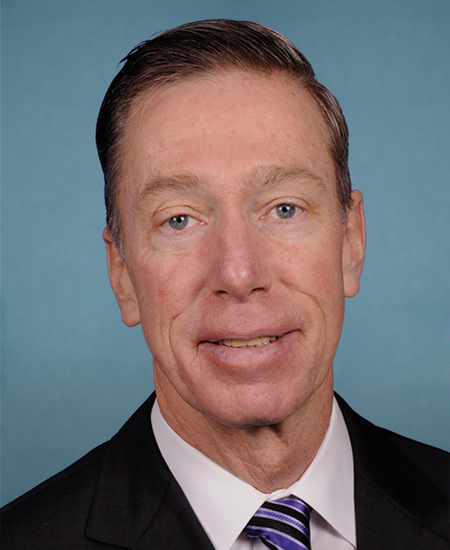
Rep. Stephen F. Lynch
Sponsored bills
Maddy summaryHRES 77 is a non-binding House resolution expressing support for the Treaty on the Prohibition of Nuclear Weapons. It calls on the President to make nuclear disarmament central to U.S. national security policy and urges specific actions: pursuing new arms control talks with Russia and China, renouncing first-use of nuclear weapons, ending the president’s sole authority to launch nukes, removing weapons from hair-trigger alert, and canceling plans to modernize the U.S. nuclear arsenal. The resolution directly addresses the President, Secretary of State, Secretary of Defense, and other federal leaders, urging them to lead global efforts to reduce nuclear risks. It does not create new laws or policies but formally endorses the treaty’s goals and outlines concrete steps for U.S. nuclear policy reform.
Maddy summaryHR 660, "Ethan's Law," requires gun owners in homes where minors (under 18) or individuals prohibited from owning firearms under federal/state law reside to store firearms securely. It makes unsecured storage unlawful if a minor or prohibited person could access the firearm, with fines of $500 per violation and enhanced penalties (up to 5 years in prison) if injury or death occurs. The bill also establishes a federal grant program to help states implement similar secure storage laws and provides funding incentives for states that already have such laws in place.
Maddy summaryThis bill prohibits the possession, sale, or transfer of most large-capacity ammunition magazines (holding more than 15 rounds) for the general public, while exempting law enforcement officers (including campus security officers), retired officers, and certain licensed entities like nuclear facility security. It requires new magazines manufactured after enactment to have serial numbers and manufacturing dates, and allows federal grant funds to support buy-back programs for these devices. Existing owners of such magazines lawfully possessed before the law's enactment are exempt from the prohibition. The law applies to devices not already covered under current exemptions for law enforcement, nuclear security, and retired officers.
Maddy summaryHRES 68 is a symbolic resolution supporting National Catholic Schools Week, which recognizes Catholic schools' educational and community contributions. It does not create new policies or funding but formally endorses the week's goals - highlighting Catholic schools' academic achievements, diverse student enrollment, and role in fostering moral development. The resolution was introduced by multiple House members and passed without opposition, focusing on acknowledgment rather than legislative action. It directly affects Catholic schools by affirming their nationwide impact, though it has no binding effect on federal programs or resources.
Maddy summaryThis bill amends the U.S. Code to expand appeal rights for certain postal employees. It allows non-unionized postal workers in supervisory, professional, technical, clerical, administrative, or managerial roles (covered under the Executive and Administrative Schedule) to directly appeal personnel decisions to the Merit Systems Protection Board (MSPB). Previously, these employees may have lacked this specific appeal path. The change clarifies their eligibility under Section 1005(a)(4)(A)(ii)(I) of Title 39, U.S. Code, ensuring they can seek MSPB review for employment-related disputes.
Maddy summaryThis bill requires the U.S. Postal Service to provide written proposals to supervisors' organizations 60 days before pay/benefit decisions expire or after new collective bargaining agreements are reached. It directly affects postal supervisors and managers covered by collective bargaining agreements regarding their pay policies, schedules, and fringe benefits. The key mechanism establishes clear timelines for negotiations and mandates that any dispute resolution panel must issue a binding final decision within 15 days of receiving input from both parties. This aims to streamline the process for resolving pay and benefits disputes between the Postal Service and supervisory staff organizations.
Maddy summaryThe HEAL Act (HR 603) requires the U.S. Holocaust Memorial Museum Director to study how public elementary and secondary schools teach about the Holocaust and related antisemitism. The study will examine curriculum requirements, teaching methods (like project-based learning), instructional materials, and assessment approaches across states and school districts. It specifically analyzes whether Holocaust education is mandatory, optional, or integrated across subjects, and how schools address antisemitism and genocide prevention. The resulting report, due within 180 days of the study or three years after enactment, will inform Congress but does not change current school policies. This is a data-gathering measure, not a policy mandate.
Maddy summaryThis bill requires all ammunition sales to occur in person with identity verification, banning online or mail-order purchases for unlicensed individuals. It adds new licensing requirements for ammunition dealers and modifies existing firearm laws to explicitly include ammunition in sales, shipping, and recordkeeping rules. Licensees must report bulk sales of over 1,000 rounds to unlicensed buyers within one business day. The law directly affects ammunition sellers (both licensed and unlicensed) and buyers, making online ammunition transactions impossible without in-person verification.
Maddy summaryThis bill adjusts federal employee pay rates for 2024. It increases basic pay for all federal workers under statutory pay systems and prevailing rate systems by 4.7%, and raises locality pay adjustments by 4.0%. These changes directly affect all federal employees covered by the specified pay systems, including those in wage areas and under sections 5348/5349 of Title 5. The bill implements these raises without altering existing pay system structures or requirements.