

PrEP Access and Coverage Act This bill requires private health insurance plans to cover prescription drugs that prevent HIV, including related screenings, diagnostic procedures, administrative fees, and clinical follow-ups, without any cost-sharing obligation for the plan holder. Further, insurance plans must not impose any preauthorization requirement for this coverage. These coverage requirements also apply to public health insurance programs, including Medicare, Medicaid, and the Children's Health Insurance Program. Additionally, the bill prohibits denying, limiting, or qualifying coverage or increasing premiums for disability insurance, long-term care insurance, or life insurance policies based on an individual taking medication for HIV prevention. The bill further requires the Department of Health and Human Services to award grants to states, or directly to eligible local organizations, to provide uninsured individuals and underinsured individuals access to prescription drugs and related services that prevent HIV. The Centers for Disease Control and Prevention also must develop a public awareness campaign that focuses efforts in communities with a high need for HIV prevention treatment.
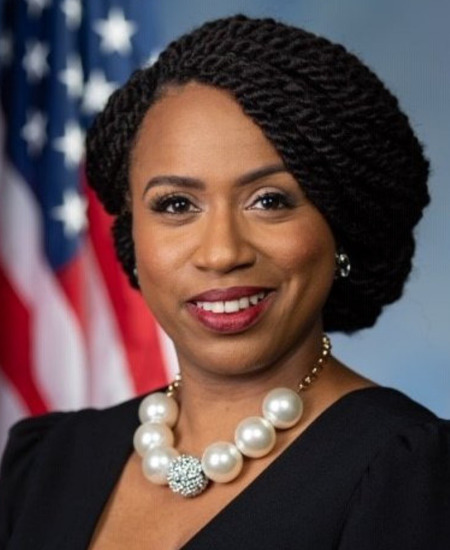
Rep. Ayanna Pressley
Sponsored bills
College Student Hunger Act of 20 21 This bill modifies the eligibility requirements for the Supplemental Nutrition Assistance Program (SNAP) to make additional students at institutions of higher education eligible for benefits.
Accelerating Access to Critical Therapies for ALS Act This bill establishes grant programs to address neurodegenerative diseases, such as amyotrophic lateral sclerosis (also known as ALS or Lou Gehrig's disease), and contains other related provisions. The Department of Health and Human Services (HHS) shall award grants to eligible entities for scientific research utilizing data from expanded access to investigational ALS treatments for individuals who are not otherwise eligible for clinical trials. The Food and Drug Administration (FDA) shall award grants to public and private entities to cover the costs of research and development of drugs that diagnose or treat ALS and other rare neurodegenerative diseases. HHS shall also establish the Public-Private Partnership for Neurodegenerative Diseases between the National Institutes of Health, the FDA, and at least one eligible entity (generally, an institution of higher education or a nonprofit organization). The partnership shall support the development and regulatory review of drugs that address ALS and other rare neurodegenerative diseases. The FDA shall publish on its website a five-year action plan for fostering the development of drugs that improve or extend the lives of people living with rare neurodegenerative diseases. The Government Accountability Office must report to Congress about the grants provided under this bill, including an analysis of the impact of such grants on research and development of treatments for ALS.
Future Generations Protection Act This bill prohibits (1) the emission of any greenhouse gas in any quantity from a new electric utility steam generating unit (i.e., certain power plants); (2) hydraulic fracturing on all onshore and offshore land in the United States; and (3) exports of domestically produced crude oil and natural gas, with specified exceptions.
Combating International Islamophobia Act This bill establishes within the Department of State the Office to Monitor and Combat Islamophobia and addresses related issues. The office shall monitor and combat acts of Islamophobia and Islamophobic incitement in foreign countries. The bill establishes the position of Special Envoy for Monitoring and Combating Islamophobia, who shall head the office. The bill also requires certain existing annual reports to Congress about human rights and religious freedom in foreign countries to include information about Islamophobia, such as information about (1) acts of physical violence or harassment of Muslim people, (2) instances of propaganda in government and nongovernment media that attempt to justify or promote hatred or incite violence against Muslim people, and (3) actions taken by a country's government to respond to such acts. The office shall coordinate and assist in preparing these portions of the reports. No funds made available pursuant to the bill may be used to promote or endorse a boycott, divestment, and sanctions movement ideology (i.e., economic measures against Israel or Israel-related individuals or organizations) or used to promote or endorse a Muslim ban.
African American History Act This bill authorizes the National Museum of African American History and Culture to carry out educational programs and related activities. Such activities include developing and making available accurate, relevant, and accessible resources to promote the understanding of African American history; and expanding the collection acquisition and collection access processes, including conservation and digitization. The museum may also develop and maintain on its website content designated for educators, students, and families to improve their awareness and understanding of African American history.
Protecting Community Television Act This bill revises the definition of a franchise fee that is paid by a cable operator or cable subscriber to encompass only a tax, fee, or other monetary assessment that is imposed by a franchising authority or other governmental entity.
Mental Health in International Development and Humanitarian Settings Act or the MINDS Act This bill directs the U.S. Agency for International Development (USAID) and the Department of State to integrate mental health and psychosocial support activities across all U.S. foreign assistance programs, with a particular focus on children and other vulnerable populations. To facilitate this integration, the bill makes organizational changes at the USAID. It authorizes the USAID to appoint a coordinator to oversee and direct mental health and psychosocial support activities. The coordinator must ensure that these activities focus on children, adult caretakers and families, displaced populations, and other vulnerable groups. In addition, the bill establishes a working group comprised of representatives from every USAID bureau and the Department of State to coordinate interagency efforts related to, promote best practices for, and ensure sustainability and continuity of mental health and psychosocial support activities. The USAID and the State Department must brief Congress about the amount of foreign assistance spending on mental health and psychosocial support activities and related matters.
Combating International Islamophobia Act This bill establishes within the Department of State the Office to Monitor and Combat Islamophobia and addresses related issues. The office shall monitor and combat acts of Islamophobia and Islamophobic incitement in foreign countries. The bill establishes the position of Special Envoy for Monitoring and Combating Islamophobia, who shall head the office. The bill also requires certain existing annual reports to Congress about human rights and religious freedom in foreign countries to include information about Islamophobia, such as information about (1) acts of physical violence or harassment of Muslim people, (2) instances of propaganda in government and nongovernment media that attempt to justify or promote hatred or incite violence against Muslim people, and (3) actions taken by a country's government to respond to such acts. The office shall coordinate and assist in preparing these portions of the reports.
Maddy summaryHRES 845 is a procedural resolution passed by the U.S. House of Representatives to remove Representative Lauren Boebert (Colorado) from two standing committees: the Committee on the Budget and the Committee on Natural Resources. The resolution directly affects Boebert's committee assignments, which are part of her official duties as a House member. It does not change laws or policies but alters her participation in specific legislative committees. This action was taken under House rules requiring members to "reflect creditably on the House," though the resolution itself only addresses committee membership. The resolution was submitted by multiple House members and referred to the Committee on Ethics.