

Maddy summaryThe Paycheck Fairness Act (HR 17) strengthens equal pay protections by amending the Fair Labor Standards Act. It prohibits pay discrimination based on sex, pregnancy, childbirth, sexual orientation, gender identity, and sex characteristics. The bill modifies employer defenses for pay differences to require demonstration that any disparity is job-related, consistent with business necessity, and accounts for the entire pay differential. It also prohibits employers from relying on wage history when making hiring decisions or setting pay, enhances penalties for violations, and requires the EEOC to collect compensation data disaggregated by sex, race, and national origin.
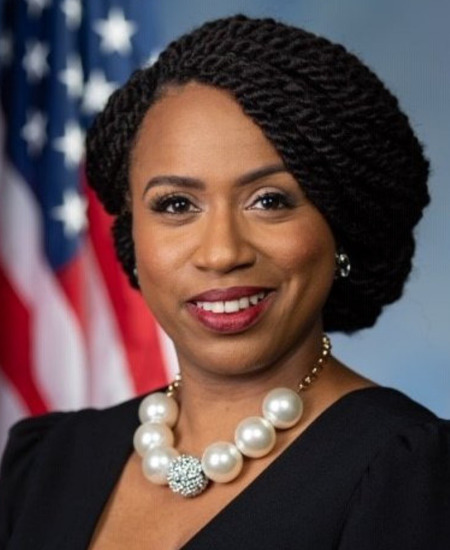
Rep. Ayanna Pressley
Sponsored bills
Maddy summaryHCONRES 22 is a symbolic resolution recognizing the persistent gender pay gap in the U.S., documenting that women earn significantly less than men across racial groups (e.g., Black women earn 67 cents for every dollar earned by White men). It highlights the economic impact of this disparity, noting women lose over $958 billion annually in wages and face barriers like occupational segregation and workplace harassment. The resolution does not create new laws or policies but formally acknowledges the issue and reaffirms Congress’s commitment to addressing the gap. It references specific Equal Pay Days (e.g., March 14 for all women) to underscore the time women must work to earn what men did the previous year.
Maddy summaryHR 1478 requires federal firearm dealers to implement physical security measures, including locked cabinets, security systems, and video surveillance, to prevent gun thefts. The bill mandates quarterly inventory checks, extends background check record retention from 24 hours to 90 days, and repeals restrictions that prevented the ATF from disclosing crime gun trace data. It increases penalties for violations, including fines up to $20,000 and license suspension or revocation for repeated failures. The bill directly affects all federally licensed firearm dealers, manufacturers, and importers by holding them accountable for security failures and recordkeeping. This legislation aims to reduce gun trafficking by strengthening enforcement and transparency in the firearm industry.
Maddy summaryThe Insulin for All Act of 2023 sets a federal price cap of $20 per 1,000 units of insulin sold in the U.S., applying to all insulin products licensed under federal law (including vials, pens, and cartridges). This directly affects insulin manufacturers by restricting their pricing and benefits people with diabetes who rely on insulin for daily health management. The law establishes a specific, enforceable price limit for all covered insulin products, regardless of brand or delivery method. It creates a concrete policy change by replacing current market pricing with a fixed maximum cost.
Maddy summaryHR 1510, the Improving Access to Nutrition Act of 2023, removes work requirements for Supplemental Nutrition Assistance Program (SNAP) recipients. It directly affects approximately 6.1 million people, including many Black, Hispanic, and Native American households disproportionately impacted by food insecurity (with rates 2-4x higher than White households), as well as families with children and individuals with health barriers to employment. The bill amends the Food and Nutrition Act by striking provisions requiring work for SNAP eligibility and related administrative requirements. This change aims to prevent vulnerable households from losing critical food assistance during the pandemic and beyond.
Maddy summaryHR 1511 amends Section 249 of the Immigration and Nationality Act to change eligibility criteria for certain immigration provisions. The bill replaces outdated language about entry dates (prior to July 1, 1924, or January 1, 1972) with a requirement that applicants must have been long-term residents of the United States for at least seven years before applying. This change would directly affect individuals seeking immigration status under the amended provisions who meet the new residency timeline. The bill is procedural in nature, updating the legal definition of qualifying residency without creating new benefits or restrictions. (Note: The bill's title incorrectly references the "Immigration Act of 1929," which never existed; the actual law amended is part of the 1952 Immigration and Nationality Act.)
This resolution supports the goals of a feminist foreign policy (i.e., a foreign policy that requires analysis of and challenges to power structures and inequalities that are based on systems of discrimination). The resolution also supports the adoption of policies that promote gender equity and the participation of women and girls in public life.
Maddy summaryThe WRCR Act of 2023 would expand the Earned Income Tax Credit (EITC) to include more low-income workers and students, lowering the minimum age requirement from 25 to 18 and allowing students receiving Federal Pell Grants or meeting specific income requirements to qualify. It would create a new program for monthly advance payments of the credit instead of a single annual payment, with taxpayers needing to report changes in circumstances to avoid overpayment. The bill also modifies income thresholds and credit percentages to increase access for more workers, with these changes taking effect for tax years beginning after December 31, 2022.
This resolution expresses the sense that the federal government should adopt a global health solidarity strategy to end medically avertable deaths and respond to the full burden of disease in poor countries; the federal government should use laws and diplomatic influence to stop ongoing economic harms to the global South; and it is the duty of the federal government to issue reparations, including for slavery and colonialism.
Maddy summaryHR 1404, the Facial Recognition and Biometric Technology Moratorium Act of 2023, bans U.S. federal agencies and officials from using facial recognition, voice recognition, or other remote biometric surveillance systems (like gait analysis) for law enforcement or surveillance in the United States. It directly affects federal law enforcement agencies and state/local governments receiving Byrne grant funding, which they would lose if they don’t adopt similar bans. Key provisions prohibit federal acquisition or use of these systems (except for narrowly defined congressional authorizations), ban federal funding for such systems, and make illegally obtained biometric data inadmissible in court. The bill also allows individuals to sue the federal government for violations and requires states receiving federal funds to implement comparable restrictions.