This resolution declares that decreasing the spread of COVID-19 (i.e., coronavirus disease 2019) in Africa is in the national interest of the United States, commends the work of Africa's frontline health workers, and calls on the United States and the international community to support African countries' responses to the pandemic.
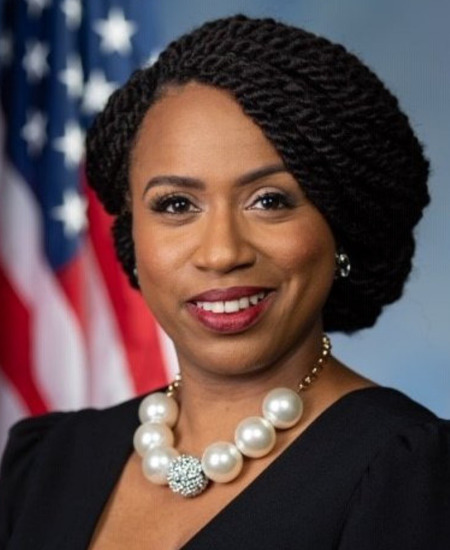
Rep. Ayanna Pressley
Sponsored bills
Fair Transportation Act This bill addresses the disbursement of surface transportation funding in an equitable way by federal, state, and local entities. Specifically, the Government Accountability Office (GAO) must review the extent to which states consider equity and improve equity outcomes in the use of federal surface transportation funds at all phases of project delivery, including the diverse transportation needs of economically disadvantaged and underserved populations. Additionally, the Department of Transportation (DOT) must carry out a transportation equity research program for research and demonstration activities that focus on the impacts that surface transportation planning, investment, and operations have on economically disadvantaged and underserved populations, including communities of color, low-income communities, and individuals with disabilities. The GAO must also review discretionary grant programs for surface transportation projects to determine the extent to which DOT is awarding funding through such programs to projects that serve groups or populations experiencing differential impacts in the transportation sector. Further, DOT must issue guidance on equity consideration metrics and best practices while disbursing federal funds.

Quit Because of COVID-19 Act This bill provides for Medicaid and Children's Health Insurance Program (CHIP) coverage of certain tobacco cessation services. Specifically, the bill provides for coverage, without cost-sharing, of diagnostic, therapy, and counseling services and pharmacotherapy, including prescription and nonprescription tobacco cessation agents, that are provided under medical supervision and in accordance with specified guidelines. It also applies a 100% Federal Medical Assistance Percentage (i.e., federal matching rate) for such items and services during the public health emergency relating to COVID-19 and for two years after the emergency period ends.
Minority Diabetes Initiative Act This bill authorizes grants for diabetes-related health care services in minority communities. The Department of Health and Human Services may make these grants to public and nonprofit health care providers.
Affordable Insulin for the COVID-19 Emergency Act This bill eliminates cost-sharing under the Medicare prescription drug benefit and Medicare Advantage for insulin and associated medical supplies during the public health emergency relating to COVID-19 (i.e., coronavirus disease 2019). The bill also allows beneficiaries to receive their insulin and supplies via mail order during the emergency period.
This resolution recognizes the disparity between wages paid to men and women, and its impact on women, families, and the nation and reaffirms Congress' commitment to supporting equal pay and to narrowing the gender wage gap.
This joint resolution eliminates the deadline for the ratification of the Equal Rights Amendment, which prohibits discrimination based on sex. The amendment was proposed to the states in House Joint Resolution 208 of the 92nd Congress, as agreed to in the Senate on March 22, 1972. The amendment shall be part of the Constitution whenever ratified by the legislatures of three-fourths of the states.
Housing Supply and Affordability Act This bill allows the Department of Housing and Urban Development to award grants to states, local governments, Indian tribes, and Native Hawaiian organizations for the development and implementation of housing policy plans. These plans must increase the housing supply while avoiding resident displacement, increase housing affordability, and reduce barriers to housing development. The amounts provided by the bill are designated as an emergency requirement pursuant to the Statutory Pay-As-You-Go Act of 2010 (PAYGO) and the Senate PAYGO rule. (This excludes the budget effects from being counted for the purposes of enforcing the PAYGO rules.)
Holistic Economic Aid for Low-Income Neighborhood Growth Act of 2021 or the HEALING Act of 2021 This bill directs the Department of Housing and Urban Development (HUD) to make grants to states, local governments, Indian tribes, insular areas, and other institutions serving or owned by minorities to carry out Community Development Block Grant activities and other assistance in low- and moderate-income areas. Additionally, HUD must carry out a Civil Unrest Business Recovery Program to provide compensation to certain for-profit entities for damages from social and civil unrest during 2020 and to support business-led economic development.
Senior Access to Vaccines Ensured Act of 2021 or the SAVE Act of 2021 This bill requires the Centers for Medicare & Medicaid Services (CMS) to establish a program that provides nonemergency medical transportation (NEMT) for Medicare beneficiaries to COVID-19 vaccination sites during the public health emergency. The CMS must contract with qualified transportation managers to implement the program, with preference given to those with prior experience under a state Medicaid NEMT program. The CMS must also establish criteria for beneficiary participation that is similar to the criteria used by states for Medicaid NEMT services.