

New Deal for New Americans Act of 2021 This bill provides assistance to immigrants and addresses issues related to naturalization. The bill establishes the National Office of New Americans to (1) welcome and support immigrants, (2) promote and support immigrant integration, and (3) promote the pursuit of U.S. citizenship among immigrants. The bill also establishes grant programs for eligible entities that provide (1) legal services for immigrants, (2) English language education that focuses on integrating students into society, and (3) workforce development training that supports the economic integration of immigrants. The bill also reauthorizes the Citizenship and Integration Grant Program within U.S. Citizenship and Immigration Services (USCIS). USCIS shall establish a nonprofit entity to spur innovation in the expansion of citizenship preparation programs and to support assistance for immigrants seeking permanent resident status or citizenship. The bill also requires the Department of Homeland Security to (1) report to Congress before increasing fees for immigration adjudication and naturalization services above the levels of such fees on January 1, 2019, and (2) waive or reduce certain immigration-related fees for low-income aliens. The bill also (1) waives the English proficiency requirement for the naturalization of certain permanent residents, (2) repeals the public charge ground for deportation, (3) requires states to provide for automatic voter registration to qualifying new citizens unless that individual declines, and (4) sets a floor of 125,000 to the maximum number of refugees who may be admitted into the United States each year.
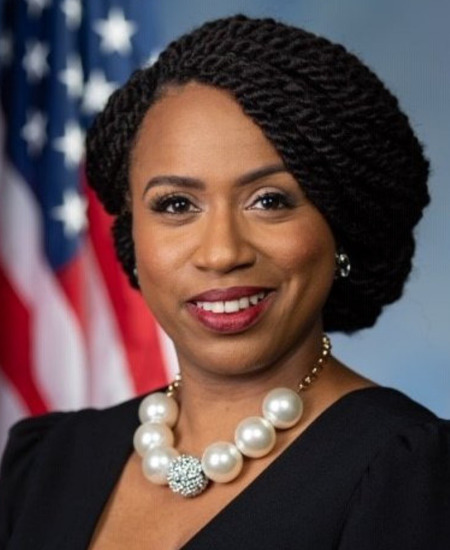
Rep. Ayanna Pressley
Sponsored bills
Repeal Existing Policies that Encourage and Allow Legal HIV Discrimination Act of 2021 or the REPEAL HIV Discrimination Act of 2021 This bill concerns the burdens that federal and state laws, policies, and regulations may place upon people living with human immunodeficiency virus (HIV). The bill directs the Department of Justice (DOJ), the Department of Health and Human Services (HHS), and the Department of Defense (DOD) to initiate a national review of federal (including military) and state laws, policies, regulations, and judicial precedents and decisions regarding criminal and related civil commitment cases involving people living with HIV. DOJ must transmit to Congress and make publicly available the results of such review with related recommendations. DOJ and HHS must (1) develop and publicly release guidance and best practice recommendations for states, and (2) establish an integrated monitoring and evaluation system to measure state progress. DOJ, HHS, and DOD must transmit to the President and Congress any proposals necessary to implement adjustments to federal laws, policies, or regulations. This bill shall not be construed to discourage the prosecution of individuals who intentionally transmit or attempt to transmit HIV to another individual.
No Money Bail Act of 2021 This bill restricts the use of money bail (i.e., the payment of money as a condition of pretrial release) in criminal cases. Specifically, it prohibits the use of money bail in federal criminal cases. Additionally, it makes a state that uses a money bail system ineligible for funds under the Edward Byrne Memorial Justice Assistance Grant Program.
COVID-19 in Corrections Data Transparency Act This bill requires the Bureau of Prisons, the U.S. Marshal Service, and state and local correctional facilities to publish on their websites and report to the Centers for Disease Control and Prevention certain data on COVID-19 (i.e., coronavirus disease 2019) cases, vaccinations, and outcomes.
Nuclear Weapons Abolition and Economic and Energy Conversion Act of 2021 This bill directs the U.S. government to sign and ratify the United Nations Treaty on the Prohibition of Nuclear Weapons or a similar international agreement that calls for the elimination of all nuclear weapons in every country. The government shall (1) redirect resources currently used in nuclear weapons programs toward building an ecologically beneficial peace economy and addressing human and infrastructure needs, and (2) actively promote policies to induce all other countries to take similar actions.
This joint resolution proposes a constitutional amendment to lower the minimum age for the right to vote from 18 to 16.
Black Maternal Health Momnibus Act of 2021 This bill directs multi-agency efforts to improve maternal health, particularly among racial and ethnic minority groups, veterans, and other vulnerable populations. It also addresses maternal health issues related to COVID-19 (i.e., coronavirus disease 2019). The Department of Health and Human Services (HHS) and other specified departments must address the social determinants of maternal health, which include child care, housing, food security, transportation, and environmental conditions. The bill also extends to 24 months postpartum eligibility for the Special Supplemental Nutrition Program for Woman, Infants, and Children. Additionally, HHS and other agencies must take actions to grow and diversify the maternal health workforce. To increase access to maternity care, HHS and other agencies must (1) award specified grants; (2) test an alternative payment model for perinatal care under Medicaid and the Children's Health Insurance Program (CHIP); and (3) support training, technology, and telehealth initiatives. The bill also increases research and data collection on maternal morbidity and mortality, particularly among tribal populations and minority groups. The Bureau of Prisons and the Department of Justice must establish programs to improve maternity care for incarcerated populations. The Medicaid and CHIP Payment and Access Commission must also report on the impact of Medicaid ineligibility for pregnant and postpartum prisoners. Additionally, as a condition for certain grants, states and territories must have laws limiting the use of restraints on pregnant individuals in prisons. The bill also directs activities to mitigate adverse maternal health outcomes associated with climate change and to improve maternal vaccination rates.
Justice for Incarcerated Moms Act of 2021 This bill establishes new requirements related to grants, programs, and reports to improve the treatment and care of pregnant and postpartum women who are incarcerated. Specifically, the bill requires the following: states must restrict the use of restraints on pregnant women in prison in order to receive full funding under the Edward Byrne Memorial Justice Assistance Grant program; the Bureau of Prisons must establish programs to optimize maternal health outcomes for pregnant and postpartum women in federal prisons; the Bureau of Justice Assistance must award state grants for programs to support pregnant and postpartum women in state and local prisons and jails; the Government Accountability Office must report on adverse maternal and infant health outcomes among incarcerated individuals and infants born to such individuals, with a particular focus on racial and ethnic disparities; and the Medicaid and CHIP Payment and Access Commission must report on the impact of Medicaid ineligibility for pregnant and postpartum women in prison.
Debt-Free College Act of 2021 This bill establishes measures to cover the unmet financial need of students who are enrolled at certain institutions of higher education (IHEs). Unmet financial need refers to the difference between a student's cost of attendance and the student's expected family contribution, plus any federal, state, and local sources of grant aid. In addition, the bill makes certain Dreamer students (i.e., students who have been granted Deferred Action for Childhood Arrivals status) eligible for federal financial aid. First, the bill requires the Department of Education (ED) to award grants for state-federal partnerships with a goal of providing debt-free college for all eligible students at in-state public IHEs. Eligible student refers to an individual who (1) is enrolled or is eligible to enroll in an in-state public IHE, (2) demonstrates eligibility for a Federal Pell Grant through institutional financial-aid eligibility forms, and (3) demonstrates satisfactory academic progress. Next, the bill requires ED to award grants to historically Black colleges and universities and minority-serving institutions to cover the unmet financial need of enrolled students. ED must establish an office to administer grants and provide oversight. In addition, the bill makes Dreamer students who entered the United States before the age of 16 and who meet certain educational criteria eligible for federal student aid.
Access to Counsel Act of 2021 This bill provides various protections for covered individuals subject to secondary or deferred inspections when seeking admission into the United States. Covered individuals include U.S. nationals, lawful permanent residents, aliens in possession of a visa, returning asylees, and refugees. The Department of Homeland Security shall ensure that a covered individual subject to secondary or deferred inspection has a meaningful opportunity to consult with counsel and certain related parties, such as a relative, within an hour of the start of the secondary inspection and as necessary during the inspection process. The counsel and related party shall be allowed to advocate on behalf of the covered individual, including by providing evidence and information to the examining immigration officer. A lawful permanent resident subject to secondary or deferred inspection may not abandon lawful permanent resident status until the individual has had a meaningful opportunity to seek advice from counsel, unless the individual voluntarily and knowingly waives in writing this opportunity to seek counsel's advice.