

Maddy summaryHR 8061, the Crime Victims Fund Stabilization Act of 2024, ensures stable funding for the Crime Victims Fund by directing certain False Claims Act collections into it from 2024 through 2029. Specifically, it adds a provision requiring that amounts collected under the False Claims Act (excluding whistleblower rewards and government reimbursement for damages) be deposited into the fund during this period. This directly affects crime victims who rely on the fund for services like counseling and emergency aid, as it prevents potential shortfalls in funding. The bill makes a concrete policy change by redirecting specific federal civil penalties into the fund, rather than altering the fund's existing purposes or eligibility rules.
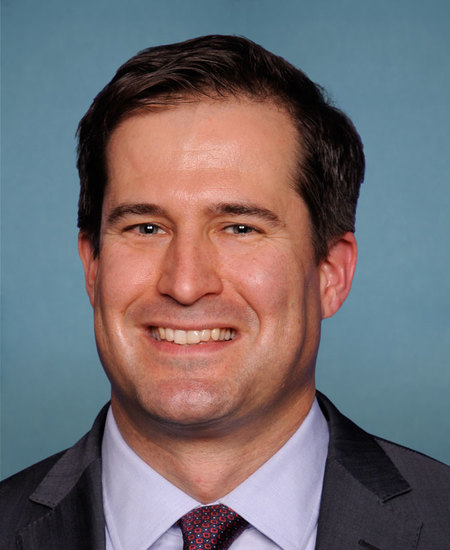
Rep. Seth Moulton
Sponsored bills
Maddy summaryHR 5917, the "Strengthening Tools to Counter the Use of Human Shields Act," expands sanctions against foreign individuals and entities that direct the use of civilians as human shields. It specifically adds members or agents of Palestine Islamic Jihad (PIJ) to the list of targets for sanctions when they order or control civilians to shield military objectives. The bill requires the President to justify sanction decisions to Congress within 120 days and extends the sunset date for related sanctions from 2023 to 2030. Additionally, it mandates a Department of Defense report within 120 days detailing strategies to counter human shield tactics used by groups like Hamas and PIJ, including plans for international coordination.
Maddy summaryHRES 1152 is a resolution passed by the U.S. House of Representatives to commemorate the 25th anniversary of the Columbine High School shooting. It honors the 13 victims, their families, and the survivors by formally recognizing their stories and the community's resilience. The resolution expresses condolences, applauds ongoing healing efforts, and reaffirms Congress's commitment to preventing gun violence through policy action and promoting safer schools. It does not create new laws but serves as a symbolic gesture of national solidarity.
Maddy summaryHR 8025, the Blast Overpressure Safety Act, requires the Department of Defense to implement new protocols for monitoring and addressing blast-related brain injuries among military personnel. The bill mandates baseline and annual neurocognitive assessments for all service members, establishes detailed blast exposure logs tracking each member's cumulative exposure to weapons firing and training, and sets safety thresholds for blast overpressure exposure. It also creates a Warfighter Brain Health Initiative requiring evidence-based prevention strategies, specialized treatment programs for high-risk personnel, and regular reporting on brain injury incidents to Congress. The legislation requires the Department to document all blast exposures, track treatment outcomes, and publish annual reports on the effectiveness of these safety measures.
Maddy summaryThe Love Lives On Act of 2023 modifies benefits for surviving spouses of military veterans and service members. It removes an expiration date on the Marine Gunnery Sergeant John David Fry Scholarship for surviving spouses, ensures remarriage doesn't automatically end eligibility for veterans' dependency and indemnity compensation, and expands access to commissary and exchange privileges for remarried surviving spouses. The bill also clarifies that remarried widows or widowers whose subsequent marriage ended (due to death, divorce, or annulment) can still be considered dependents under TRICARE. These changes directly affect surviving spouses of veterans and military members who have remarried or are considering remarriage, providing more consistent benefits regardless of marital status.
Maddy summaryHR 3303, the Maternal Health for Veterans Act, requires the Department of Veterans Affairs (VA) to annually report on maternity care coordination programs and maternal health outcomes for veterans receiving care through VA facilities or VA-contracted providers. The bill mandates the VA to collect data on maternal outcomes - including disparities affecting high-risk demographic groups - and submit recommendations to Congress by September 2028. It authorizes $15 million annually (2024-2028) for VA maternity care coordination programs, supplementing existing funding without reducing current resources. The law directly affects veterans using VA maternity services, aiming to improve care through data-driven strategies.
Maddy summaryHR 1083, the Caring for Survivors Act of 2023, increases financial support for surviving spouses of veterans. It amends Title 38 to raise dependency and indemnity compensation from a fixed $1,154 to 55% of the monthly compensation rate under section 1114(j), effective six months after enactment. The bill also modifies eligibility for survivors of veterans who died before 1993, ensuring they receive the greater of their current benefit or the new calculation. Additionally, it reduces the required continuous service rating period for survivors from 10 years to five years when a veteran was totally disabled at death. These changes directly affect surviving spouses, particularly those with veterans who died prior to 1993.
Maddy summaryHRES 1148 is a resolution passed by the U.S. House of Representatives that condemns the Iranian government for supporting terrorism, regional proxy conflicts, and internal suppression of dissent - including its crackdown on protests following Mahsa Amini's death in 2022. It specifically calls for maintaining sanctions against Iran, supporting the Iranian Resistance's Ten-Point Plan (which advocates for a democratic, secular, nonnuclear Iran), and protecting Iranian political refugees in Albania. The resolution also affirms the Iranian people's right to self-determination under international law and urges the U.S. to recognize their struggle for freedom. As a non-binding resolution, it does not create new laws but formally expresses congressional stance.
Maddy summaryHRES 1135 is a non-binding resolution supporting the "Rise Up for LGBTQI+ Youth in Schools" initiative. It calls for communities to demand equal educational opportunities, civil rights protections, and an end to exclusion for LGBTQI+ students in K-12 schools, particularly transgender, nonbinary, Black, Indigenous, and disabled youth. The resolution encourages states and school districts to adopt policies prohibiting bias-based bullying, harassment, and erasure - such as inclusive sports participation, bathroom access, and curriculum inclusion - without creating new legal requirements. It references growing state-level restrictions targeting LGBTQI+ students, including sports bans and curriculum censorship, as context for the call to action. The resolution itself does not enact new laws but formally recognizes efforts to foster safer, affirming school environments.
Maddy summaryHRES 1127 is a symbolic House resolution commemorating the 45th anniversary of the Taiwan Relations Act (TRA) and reaffirming U.S. policy toward Taiwan. It does not create new law but formally reiterates the U.S. commitment to Taiwan under the TRA framework, including regular defense transfers to support Taiwan's self-defense and advocacy for Taiwan's meaningful participation in international organizations. The resolution highlights longstanding U.S.-Taiwan cooperation on trade, security, education, and global challenges like public health and cybersecurity. It specifically calls on the Secretary of State to advance Taiwan's international engagement and supports existing programs like the Taiwan Fellowship Program and the American Institute in Taiwan. As a procedural resolution, it expresses congressional support for current policy without altering legal obligations.