

Maddy summaryHRES 337 is a symbolic House resolution honoring linemen for their critical role in maintaining power infrastructure and responding to emergencies. It recognizes them as first responders who work in dangerous conditions 24/7 to keep electricity flowing, supporting schools and businesses during storms. The resolution formally supports designating April 18, 2025, as "National Lineman Appreciation Day" to publicly acknowledge their contributions. As a non-binding resolution, it has no direct policy impact or effect on affected individuals.
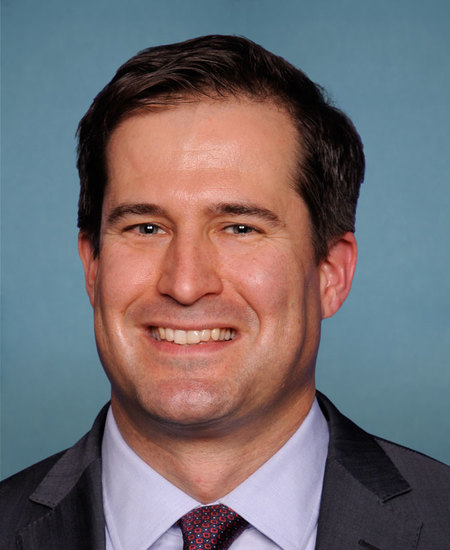
Rep. Seth Moulton
Sponsored bills
Maddy summaryHR 2910, the Youth Workforce Readiness Act of 2025, establishes a federal grant program to fund community-based organizations in creating after-school and out-of-school-time workforce readiness programs for youth aged 6-18. The bill authorizes $100 million annually (2026-2030) to support activities like career pathway planning, paid work experiences (including apprenticeships), occupational skill training aligned with local job needs, and employer partnerships. It directly affects eligible youth - particularly those in underserved communities - and requires grantees to coordinate with schools, employers, and local workforce boards, while mandating youth councils to advise on program design. The program emphasizes measurable outcomes, including improved school attendance, skill development, and transitions to postsecondary education or employment.
Maddy summaryThe New England Coastal Protection Act of 2025 prohibits the federal government from issuing new leases for oil and gas exploration, development, or production in offshore federal waters along the coasts of Maine, New Hampshire, Massachusetts, Rhode Island, and Connecticut. This bill directly affects the Department of the Interior (which manages offshore leasing) and any companies seeking to drill in these areas by blocking new lease permits. The key provision amends the Outer Continental Shelf Lands Act to explicitly ban the Secretary from granting such leases in the specified coastal region. As a result, the bill prevents new oil and gas drilling projects in these offshore waters, though it does not impact existing leases or activities.
Maddy summaryHR 2850, the Youth Sports Facilities Act of 2025, amends the Public Works and Economic Development Act of 1965 to expand eligibility for federal grants to include youth sports facilities. It specifically requires these facilities to address sedentary lifestyles and obesity, prioritize low-income rural youth in underserved communities, and serve children lacking access to physical education spaces or living in areas with high opioid use or violence. The bill mandates that grant-funded projects must benefit highly rural communities with limited tax revenue and support economic development through youth sports infrastructure. It directly affects communities and children in rural, underserved, or high-risk areas by directing federal funding toward building or improving local sports facilities. The key mechanism is modifying existing grant criteria to prioritize these specific community needs through new eligibility requirements.
Maddy summaryHR 2837 establishes an Advisory Council under the Department of Health and Human Services to improve access to existing resources for victims of gun violence. The council, composed of federal agency heads and appointed victims/support professionals, will assess needs, identify effective programs, and compile a public resource hub with contact information for medical, financial, mental health, legal, and government support services. It requires a detailed report within 180 days of enactment and a follow-up report within two years, focusing on gaps in current assistance and coordination. The bill directly affects individuals defined as victims of gun violence (including those wounded, threatened, witnessing incidents, or related to victims) and aims to connect them to existing federal, state, and nonprofit resources without authorizing new funding. The council will sunset after five years.
Maddy summaryHR 2831, the Small Business Energy Loan Enhancement Act, doubles the maximum loan amounts for certain small business energy projects under the Small Business Investment Act of 1958, raising the cap from $5.5 million to $10 million for two specific loan categories. This directly affects small businesses seeking financing for energy-related investments, such as efficiency upgrades or renewable energy installations. The bill requires the Small Business Administration (SBA) to annually report to Congress on which industries and geographic areas receive these loans. These changes aim to increase access to capital for qualifying energy projects without altering eligibility criteria.
Maddy summaryHR 2767, the BRAIN Act, aims to advance brain tumor research and improve patient care by requiring the NIH to create a public database of tumor samples collected with federal funding. It authorizes $50 million annually for a Glioblastoma Therapeutics Network to accelerate treatment development and $10 million for cellular immunotherapy research (including CAR-T therapies) targeting brain tumors. The bill also mandates a national awareness campaign to increase understanding of cancer clinical trials and biomarker testing, plus $5 million yearly for pilot programs studying survivor care coordination and follow-up services. Additionally, it directs the FDA to issue guidance ensuring brain tumor patients can access clinical trials. These provisions directly affect patients, researchers, and healthcare providers focused on brain tumors and rare cancers.
Maddy summaryThe American Family Act (HR 2763) establishes a new refundable child tax credit that provides monthly payments to eligible families with children. It would pay $300 per month for each child under age 6 and $360 per month (120% of $300) for each child age 6 or older, with income limits of $150,000 for joint filers and $112,500 for other filers. The bill creates a "period of presumptive eligibility" to determine eligibility for monthly payments, allowing families to receive advance payments based on information from previous tax returns. This would directly affect millions of families with children who meet the income requirements, providing more consistent financial support throughout the year rather than an annual tax credit.
Maddy summaryHR 2799, the Closing the Bump Stock Loophole Act of 2025, prohibits the sale, possession, and modification of devices that increase the firing rate of semi-automatic firearms to mimic machine guns (commonly called "bump stocks"). It specifically bans manual, power-driven, or electronic devices designed to speed up firing, as well as modified firearms that achieve this effect. Owners of pre-existing modified firearms must register them within 120 days of the law's enactment, with exemptions for government entities and firearms already lawfully modified and registered before the bill passes. The bill does not restrict standard semi-automatic firearms or require registration of unmodified guns.
Maddy summaryThis bill, the Servicemembers and Veterans Empowerment and Support Act of 2025, improves support for veterans and service members who experienced military sexual trauma (MST), which includes sexual assault, battery, or harassment during military service. It establishes specialized teams to review MST claims, allows veterans to choose where their VA medical exam for MST claims takes place, and expands eligibility for MST counseling to all former reserve members. The bill requires VA to provide sensitive communications to MST survivors, connect veterans to health care when they submit MST claims, and provide clear contact information for MST support resources. It also mandates annual reviews of MST claim processing accuracy and ensures individuals who withdraw from service academies can access care and records related to MST.