

Maddy summaryHRES 855 is a non-binding House resolution expressing support for National Adoption Day (November 22, 2025) and National Adoption Month (November). It promotes awareness about children in foster care awaiting adoption - highlighting that 49,994 U.S. children were waiting for adoptive families in 2023 - and encourages the public to consider adoption. The resolution recognizes that every child deserves a permanent, loving family and urges Americans to support this goal throughout November and the year. As a symbolic gesture, it does not create new laws or policies.
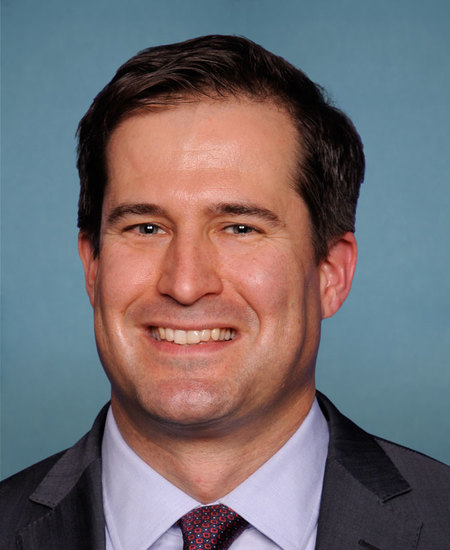
Rep. Seth Moulton
Sponsored bills
Maddy summaryHRES 854 is a non-binding House resolution commemorating the seventh anniversary of Jamal Khashoggi's murder in 2018 and calling for accountability. It acknowledges U.S. sanctions against 17 Saudi officials involved in his killing and urges Saudi Arabia to: (1) ensure accountability for those responsible, (2) release wrongfully detained individuals like Nourah al-Qahtani and Abdulrahman Alsadhan, and (3) respect freedoms of press and assembly. The resolution directly addresses the Saudi government and indirectly supports Saudi dissidents in the U.S. facing transnational repression. As a commemorative measure, it does not create new laws but formally expresses congressional concern over ongoing human rights abuses.
Maddy summaryHRES 846 is a symbolic resolution designating October 2025 as National Domestic Violence Awareness Month. It expresses the House's support for raising awareness about domestic violence and its impacts, and calls for continued congressional attention to ending domestic violence through existing programs. The resolution does not create new laws, allocate funding, or directly affect any specific groups - it is purely a statement of support. It references statistics on domestic violence prevalence but focuses on awareness rather than policy changes.
Maddy summaryHR 5849, the USCP Act, ensures Capitol Police officers continue receiving pay during government shutdowns. It directs funds from the Treasury to cover Capitol Police salaries and expenses if discretionary funding lapses after the bill's enactment. This directly affects U.S. Capitol Police employees, guaranteeing they are paid even when the federal government is partially closed. The bill provides a specific funding mechanism to prevent pay interruptions during shutdowns. It does not alter Capitol Police duties or create new requirements.
Maddy summaryThe American Energy Independence and Affordability Act extends multiple clean energy tax credits that were set to expire between 2025 and 2026. It specifically extends residential clean energy credits through 2034, clean electricity investment credits for wind and solar through 2032, and clean vehicle credits for electric vehicles through 2032. The bill also reinstates special rates for sustainable aviation fuel and modifies requirements for energy-efficient home improvements. These provisions directly affect homeowners installing solar panels, businesses investing in clean energy infrastructure, and manufacturers producing clean energy equipment.
Maddy summaryHR 5802, titled the "MAGA Act" (officially the "Make America Govern Again Act"), requires the withholding of salaries for certain federal officials during government shutdowns. It directly affects Members of Congress, the President and Vice President, and specific executive branch employees (including those in the Executive Office of the President or under certain appointment categories) by placing their pay in escrow during shutdowns. The bill mandates that their compensation for each day of the shutdown is withheld proportionally and released only after the shutdown ends or at the conclusion of the current congressional term or presidential term, whichever comes first. This is a procedural change to existing salary payment rules, not a policy altering shutdown causes or duration.
Head Start Shutdown Protection Act of 2025 This bill requires the Department of Health and Human Services to reimburse a state, local government, or school district that uses its funds to maintain participation in the Head Start program or the Early Head Start program during a government shutdown in which there is a lapse in federal appropriations for the programs. The Head Start programs provide comprehensive early childhood education and development services to low-income children. The programs seek to promote school readiness through the provision of educational, health, nutritional, social, and other services.
Maddy summaryThis bill requires FEMA to reimburse fire departments for specific expenses when National Fire Academy courses or activities are canceled due to a government funding gap. It covers travel costs and "backfill" expenses (like overtime pay for staff covering shifts) incurred by departments that planned to send personnel to in-person, off-campus, or virtual courses. Fire departments must submit an itemized claim within 30 days after funding resumes, and reimbursement must be issued within 90 days. Exceptions apply if cancellation is due to "good cause," such as facility closures unrelated to funding, instructor unavailability, or national emergencies.
Maddy summaryThis bill restores the pre-January 20, 2025, administrative structure of the Head Start program within the Department of Health and Human Services. It establishes a central Office of Head Start with 12 regional offices, requiring the Secretary to maintain all prior staffing levels, organizational structure, and functions. The bill prohibits the Secretary from restructuring the office or reducing staff without providing 60 days' notice to Congress and the public, ensuring continuity in program oversight. It directly affects the Office of Head Start, its regional offices, and HHS staff managing Head Start operations.
Maddy summaryThis bill prohibits the Department of Veterans Affairs (VA) from discriminating against transgender veterans in healthcare, specifically requiring the VA to provide medically necessary treatments for gender dysphoria. It directly affects transgender veterans seeking VA health services by mandating that the VA cannot deny such care or misgender patients based on gender identity. The law adds a new section to VA healthcare law explicitly banning gender identity discrimination and ensuring access to gender dysphoria treatments, aligning with existing protections under the Affordable Care Act. Additionally, it requires the VA to provide quarterly reports to Congress on how transgender veterans receive healthcare services under this new standard.