

Maddy summaryThe Perinatal Workforce Act directs the Department of Health and Human Services to issue guidance encouraging hospitals, insurers, and maternity care providers to recruit and retain diverse healthcare professionals, including midwives, physician assistants, and perinatal health workers, while incorporating implicit bias and racism training into their practices. The bill authorizes $15 million annually from 2027 to 2031 for grants that establish or expand accredited education programs for perinatal health professionals, prioritizing schools that recruit students from racial and ethnic minority groups and those planning to practice in areas with maternal health disparities. Additionally, the legislation creates a separate grant program for nursing schools to provide scholarships to students pursuing careers in maternal and perinatal health, with similar diversity and training requirements. The act also requires the Secretary of HHS to conduct a study on respectful maternity care practices and mandates periodic reports from the Government Accountability Office on barriers to maternal health education and access to care.
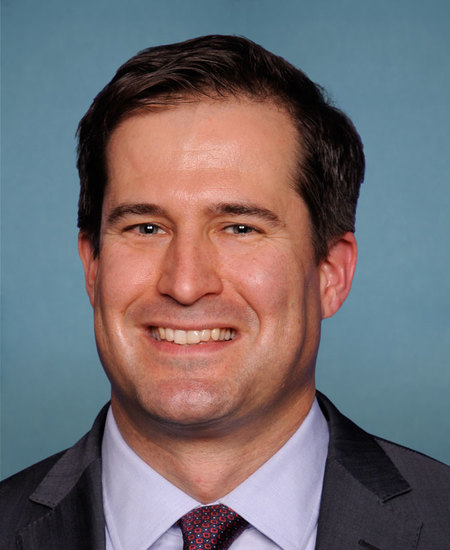
Rep. Seth Moulton
Sponsored bills
Extending WIC for New Moms Act This bill amends the Special Supplemental Nutrition Program for Women, Infants, and Children (WIC) to extend the eligibility periods for breastfeeding and postpartum women. Specifically, a state program may elect to certify a breastfeeding woman for up to 24 months (currently 1 year) postpartum. The bill also expands the eligibility period for postpartum women to up to 24 months after termination of pregnancy (currently 6 months). The Department of Agriculture must submit a report to Congress evaluating the effect of these changes to the program on (1) maternal and infant health outcomes, (2) breastfeeding rates, and (3) qualitative evaluations of family experiences under WIC.
Maddy summaryHR 7522, the Improving Access to Nutrition Act of 2026, removes work requirements from the Supplemental Nutrition Assistance Program (SNAP). It directly affects approximately 6.1 million SNAP recipients currently subject to these requirements, including people with health issues, Black Americans disproportionately impacted by such rules, families with children, and individuals experiencing homelessness. The bill amends the Food and Nutrition Act of 2008 by striking subsection (o) and related provisions that mandate work requirements for SNAP eligibility. This change would eliminate a barrier that studies show reduces participation without reducing poverty and increases administrative burdens. The bill does not create new benefits but removes an existing eligibility requirement affecting vulnerable populations.
Maddy summaryThis bill establishes a federal task force to address maternal health disparities by coordinating efforts across multiple government agencies and community stakeholders to reduce preventable maternal deaths and serious health complications. The task force will include representatives from various departments such as Health and Human Services, Housing and Urban Development, and Transportation, along with community leaders, patients, and healthcare providers focused on maternal health. Additionally, the bill authorizes $100 million over five years to provide grants to community organizations for addressing social determinants of maternal health including housing, transportation, nutrition, employment, and environmental conditions. These grants prioritize areas with high rates of maternal mortality and poverty, and recipients must submit annual reports on their activities and outcomes. The legislation defines key terms such as maternal mortality and social determinants of maternal health to guide implementation and reporting requirements.
Maddy summaryThis bill requires the Department of Homeland Security to release specific documents and materials related to two types of incidents: any officer-involved shootings that occurred on or after January 20, 2025, and any deaths of individuals in DHS custody during the same period. The law mandates that the DHS Secretary provide these records to congressional committees within 30 days of the bill's enactment. Required materials include video footage from body cameras and other recording devices, written reports, witness statements, internal communications, training records, and any disciplinary actions taken against involved officers. The bill also specifies that documents should be provided in unredacted form whenever possible, with written justifications required for any redactions made under legal authority.
Maddy summaryThe Energy Bills Relief Act aims to lower household energy costs and accelerate the development of low-cost, clean energy by modifying federal tax credits, expanding weatherization programs, and streamlining permitting processes. Key provisions include restoring tax incentives for renewable energy projects, increasing funding for low-income heating assistance, and requiring federal agencies to treat wind, solar, and storage projects with the same procedural fairness as oil and gas projects. The bill also establishes new incentives for upgrading the electricity grid, such as tax credits for transmission lines and grants for wildfire prevention measures, while creating mechanisms to ensure utilities serve public interests and protect consumers from price volatility.
Maddy summaryThe Feeding Families Not Fear Act of 2026 reverses specific provisions from the One Big Beautiful Bill Act of 2025 by restoring funding and benefits that were previously cut. It directly affects low-income families and individuals who rely on the Supplemental Nutrition Assistance Program (SNAP) by reinstating benefits that were reduced under earlier legislation. The bill achieves this by repealing two sections that increased funding for immigration and customs enforcement and another section that modified SNAP benefits under the Food and Nutrition Act of 2008. By removing these changes, the legislation returns SNAP provisions to their previous state as if the 2025 law had not been enacted.
Maddy summaryThis bill requires the Department of Veterans Affairs (VA) to cover abortion care, counseling, and related medication as part of standard hospital and medical services for eligible veterans and certain dependents. It amends VA healthcare law to explicitly include these services under existing coverage for veterans qualifying under section 1703 and dependents eligible under section 1781(a). The policy directly affects veterans and their dependents enrolled in VA healthcare programs by expanding covered benefits to include abortion-related care. This is a concrete policy change to VA healthcare benefits, not a broader abortion law.
Governing Unaccredited Representatives Defrauding VA Benefits Act or the GUARD VA Benefits Act This bill imposes fines on individuals for soliciting, contracting for, charging, or receiving any unauthorized fee or compensation with respect to the preparation, presentation, or prosecution of any claim for Department of Veterans Affairs benefits. The attempted commission of such offenses is also punishable by fine.
Maddy summaryThis bill exempts H-1B visa holders working in healthcare from a presidential restriction that requires a $100,000 payment for entry into the United States. It directly affects foreign medical professionals and healthcare workers who hold H-1B nonimmigrant visas. The legislation removes the additional fee requirement for these workers while limiting any fees that may be charged to the standard amount already established under immigration law. The bill defines healthcare workers using the existing definition from the Affordable Care Act and was introduced in the 119th Congress in March 2026.