Student Loan Rehabilitation and Credit Score Improvement Act of 2022 This bill provides for the removal of any adverse credit history related to a federal student loan from a borrower's credit history once the borrower has completed loan rehabilitation.
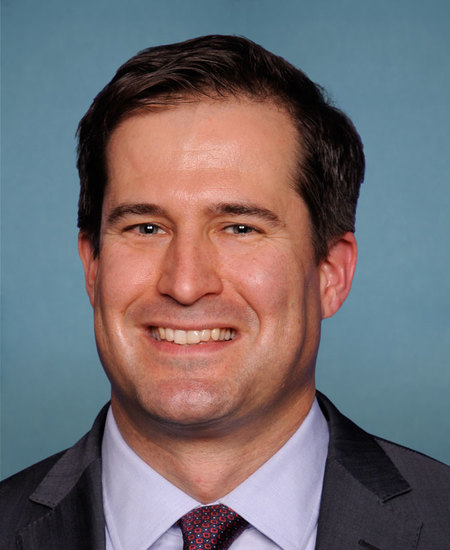
Rep. Seth Moulton
Sponsored bills
Albatross and Petrel Conservation Act This bill authorizes the United States Fish and Wildlife Service (USFWS) and the National Marine Fisheries Service (NMFS) to issue regulations to implement and enforce the Agreement on the Conservation of Albatrosses and Petrels, done at Cape Town, South Africa, on February 2, 2001. Specifically, the USFWS and the NMFS may take action to protect albatrosses and petrels and their habitats. The bill prohibits the taking of an albatross or petrel without a permit, authorization, or exemption. The FWS, in consultation with the NMFS, may authorize the taking of an albatross or petrel under exceptional circumstances or incidental to otherwise lawful activities. The bill gives the USFWS, the NMFS, and the Coast Guard authority to enforce this bill. Finally, the bill authorizes cooperation with other countries to achieve and maintain a favorable conservation status of albatrosses and petrels.
Maddy summaryThis bill (H.J.Res. 68) is a symbolic, procedural measure that would require the President to issue an annual proclamation designating a day as "Democracy Day." It directs the President to call on state/local governments and citizens to observe the day through programs and activities, with January 6 referenced as a potential date. The bill does not create new government programs or change existing laws - it only establishes a recurring presidential proclamation. It directly affects federal, state, and local governments by encouraging them to participate in annual observances. The bill has no budgetary impact and remains focused on promoting civic engagement through a designated day.
Maddy summaryHR 6278 amends the Servicemembers Civil Relief Act to upgrade penalties for violating protections against improper storage liens on military members' property. Currently a misdemeanor, such violations would become a felony, with first offenses punishable by up to one year in prison or fines, and repeat offenses carrying up to three years in prison. This directly affects storage facilities and lienholders who enforce liens against servicemembers during active duty. The key change elevates the legal consequences from civil penalties to criminal felony charges. The bill does not alter the Act's core protections for military members but increases penalties for those who break them.
PrEP Access and Coverage Act This bill requires private health insurance plans to cover prescription drugs that prevent HIV, including related screenings, diagnostic procedures, administrative fees, and clinical follow-ups, without any cost-sharing obligation for the plan holder. Further, insurance plans must not impose any preauthorization requirement for this coverage. These coverage requirements also apply to public health insurance programs, including Medicare, Medicaid, and the Children's Health Insurance Program. Additionally, the bill prohibits denying, limiting, or qualifying coverage or increasing premiums for disability insurance, long-term care insurance, or life insurance policies based on an individual taking medication for HIV prevention. The bill further requires the Department of Health and Human Services to award grants to states, or directly to eligible local organizations, to provide uninsured individuals and underinsured individuals access to prescription drugs and related services that prevent HIV. The Centers for Disease Control and Prevention also must develop a public awareness campaign that focuses efforts in communities with a high need for HIV prevention treatment.
College Student Hunger Act of 20 21 This bill modifies the eligibility requirements for the Supplemental Nutrition Assistance Program (SNAP) to make additional students at institutions of higher education eligible for benefits.
This bill revises enforcement provisions under the Animal Welfare Act (AWA), including by directing inspectors to confiscate or destroy in a humane manner animals found to be suffering physical or psychological harm as a result of failure to comply with the AWA.
Accelerating Access to Critical Therapies for ALS Act This bill establishes grant programs to address neurodegenerative diseases, such as amyotrophic lateral sclerosis (also known as ALS or Lou Gehrig's disease), and contains other related provisions. The Department of Health and Human Services (HHS) shall award grants to eligible entities for scientific research utilizing data from expanded access to investigational ALS treatments for individuals who are not otherwise eligible for clinical trials. The Food and Drug Administration (FDA) shall award grants to public and private entities to cover the costs of research and development of drugs that diagnose or treat ALS and other rare neurodegenerative diseases. HHS shall also establish the Public-Private Partnership for Neurodegenerative Diseases between the National Institutes of Health, the FDA, and at least one eligible entity (generally, an institution of higher education or a nonprofit organization). The partnership shall support the development and regulatory review of drugs that address ALS and other rare neurodegenerative diseases. The FDA shall publish on its website a five-year action plan for fostering the development of drugs that improve or extend the lives of people living with rare neurodegenerative diseases. The Government Accountability Office must report to Congress about the grants provided under this bill, including an analysis of the impact of such grants on research and development of treatments for ALS.
Wildlife Conservation and Anti-Trafficking Act of 2021 This bill sets forth provisions relating to wildlife conservation, anti-trafficking and poaching, and illegal fishing. Specifically, the bill directs the Departments of Justice, the Interior, Commerce, State, and the Treasury to develop a plan of action for awards to whistleblowers of violations of laws applicable to wildlife trafficking; directs Interior to carry out the International Wildlife Conservation Program to, among other things, address global conservation threats and combat wildlife trafficking and poaching; provides funding for the conservation of certain endangered species; authorizes Interior, in consultation with the State Department, to station not less than one U.S. Fish and Wildlife Service officer in the primary diplomatic or consular post of the United States in a focus country or country of concern (i.e., countries engaging in wildlife trafficking); and directs Commerce to make amounts available for illegal, unreported, and unregulated fishing enforcement. The bill also modifies the federal criminal code to make wildlife trafficking and illegal fishing predicates with respect to the enforcement of certain criminal offenses, including racketeering and money laundering.
Responsible Education Mitigating Options and Technical Extensions Act or the REMOTE Act This act addresses the administration of certain Department of Veterans Affairs (VA) educational assistance benefits. First, the act extends through June 1, 2022, certain adjustments for veterans' education benefits that were put in place due to COVID-19. The act allows the VA to waive the requirement that an educational institution verify the enrollment of a student utilizing VA educational assistance if the VA determines the institution uses a flat rate tuition and fee structure that would make the use of a second verification unnecessary. The act provides an exception from the imposition of specified disciplinary actions (e.g., suspending course and program approval) in situations where an educational institution provides a commission, bonus, or other incentive payment to entities engaged in student recruiting or admission activities related to recruiting foreign students who reside in foreign countries and are ineligible for federal student assistance. Additionally, the act generally exempts from certain requirements and restrictions imposed by the VA or a state approving agency educational institutions (1) located in foreign countries, or (2) that provide information regarding the costs of a program of education using a form or template developed by the Department of Education. The act also exempts educational institutions located in foreign countries from (1) having records and accounts that pertain to an individual who is not receiving VA educational assistance examined by government representatives, and (2) furnishing certain information related to tests that require payment. The act authorizes the VA, in certain circumstances, to provide educational assistance (including a housing stipend) to veterans or eligible persons who are in their last academic period (e.g., semester) of a program of education and are pursuing the program on less than a half-time basis. Specifically, such assistance may be provided if the number of credits the person needs to complete the program of education is less than the number of credits that would constitute enrollment on more than a half-time basis for that last academic period and the person (1) is enrolled in or has completed every course offered by the program of education during that academic period, and (2) enrolls in an additional course that is not required for the program of education to reach enrollment on a more than a half-time basis. The act extends certain loan fee rates through January 14, 2031, under the VA's home loan program. Finally, the act removes the cap on the number of full-time VA employees who provide equal employment opportunity counseling.