

Maddy summaryThis bill authorizes $350 million annually for fiscal years 2024-2026 to establish the "Baltic Security Initiative," a U.S. defense program focused on strengthening security cooperation with Estonia, Latvia, and Lithuania (the "Baltic countries"). It requires the Secretary of Defense to develop a strategy within one year to enhance military capabilities like missile defense, cyber resilience, long-range weapons, and coordination with NATO allies - including Poland - to deter Russian aggression and address security threats from Russia and China. The initiative operates under existing U.S. defense authorities (Title 10, U.S. Code) and mandates a report to Congress detailing how these security objectives will be achieved. The bill directly affects U.S. defense funding and the security planning of the three Baltic nations.
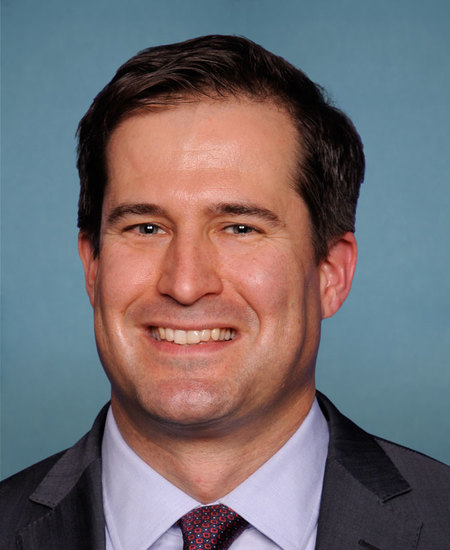
Rep. Seth Moulton
Sponsored bills
Maddy summaryThe Election Mail Act (HR 2987) establishes new requirements for handling mail-in ballots in federal elections to improve reliability and accessibility. It requires the Postal Service to process absentee ballots on the same day received, place postmarks indicating mailing dates on ballot envelopes, and treat election mail as first-class mail with free postage for completed ballots. The bill also mandates states to use intelligent mail barcodes on return envelopes, affix specific tags for ballot visibility, and adopt a uniform 7-day deadline for accepting mailed ballots postmarked on or before election day. These changes apply to federal elections, with most provisions taking effect for the 2024 election cycle. The bill includes additional provisions for the Postal Service to consult with Indian Tribes about voting barriers on tribal lands.
Maddy summaryThe Child Care for Working Families Act establishes a federal entitlement program providing subsidized child care for working families with children under age 6 who are not yet in kindergarten. It creates a sliding fee scale where families at or below 85% of State median income pay no copayment, while higher-income families pay up to 7% of their income based on income thresholds. The bill requires states to develop quality rating systems for child care providers and ensures providers receive sufficient funding to meet quality standards, including wages equivalent to elementary educators. It prioritizes access for underserved populations including children with disabilities, infants and toddlers, children experiencing homelessness, and families in low-income communities. The program is funded with $20 billion for fiscal year 2024 and subsequent years through 2029.
Raise the Age Act of 2023 This bill establishes new restrictions on the sale or transfer of certain semiautomatic firearms to individuals under 21 years of age. Specifically, this bill makes it unlawful for a licensed gun dealer, importer, manufacturer, or collector to sell or deliver a semiautomatic center-fire rifle or semiautomatic center-fire shotgun that has (or has the capacity to accept) an ammunition feeding device with a capacity of more than five rounds to an individual who the licensee knows or has reasonable cause to believe is under age 21. The prohibition does not apply if the individual under age 21 is a full-time law enforcement officer or active-duty member of the Armed Forces. The bill also requires the Federal Bureau of Investigation to report on the operation of its public access line, including a description of information sharing protocols and recommendations for improving such protocols.
Maddy summaryThis bill prohibits the use of federal funds to develop or deploy autonomous weapons systems that lack meaningful human control for nuclear weapon launches or target selection. It directly affects federal agencies, particularly the Department of Defense, by banning spending on such systems for nuclear purposes. The key provision requires human oversight over target selection and launch decisions, aligning with existing U.S. policy and international law requiring human control in nuclear command. The bill does not ban autonomous systems generally but specifically restricts their use in nuclear contexts where human judgment is mandated.
Maddy summaryThe Right to Read Act of 2023 defines an "effective school library" as one with certified librarians, adequate resources, and support for digital and information literacy. It requires states and school districts to ensure all students, particularly those in under-resourced schools, have access to such libraries through new reporting requirements and funding mechanisms. The bill provides $500 million annually for literacy programs and mandates biennial data collection on school library resources. It also protects staff from liability for following right-to-read policies and requires school libraries to uphold First Amendment rights by providing diverse reading materials without political bias.
Partner with Korea Act This bill creates an E-4 treaty trader visa category for up to 15,000 nationals of South Korea each fiscal year who are coming to the United States solely to perform specialty occupation services, subject to various requirements. The 15,000 limit shall only apply to principal recipients of such visas and not their accompanying spouses or children. (A specialty occupation is one that requires the theoretical and practical application of highly specialized knowledge and a bachelor's degree or higher.)
Ending Qualified Immunity Act This bill eliminates the defense of qualified immunity in certain civil actions for deprivation of rights. Qualified immunity is a judicially created doctrine that protects government officials from being held personally liable for constitutional violations. The bill provides that, under the statute allowing a civil action alleging deprivation of rights under color of state law, it shall not be a defense or immunity to any such action that (1) the defendant was acting in good faith or believed that his or her conduct was lawful at the time it was committed; (2) the rights, privileges, or immunities secured by the Constitution or federal laws were not clearly established at the time of their deprivation; or (3) the state of the law was such that the defendant could not reasonably have been expected to know whether his or her conduct was lawful.
Maddy summaryHR 1788, the "Goldie’s Act," strengthens USDA enforcement of the Animal Welfare Act. It requires annual inspections of all regulated animal businesses (like dealers, research facilities, and exhibitors) and mandates immediate, humane confiscation of animals suffering due to violations, while prohibiting owners from destroying animals during this process. The bill increases civil penalties to $10,000 per violation, requires hearing panels including veterinarians, and mandates that penalties consider business size and violation severity. It also requires USDA to share violation records with local animal control within 24 hours.
Maddy summaryThe Military Family Nutrition Act of 2023 amends the Food and Nutrition Act to exclude a military member's basic housing allowance (BAH) from income calculations when determining eligibility for nutrition assistance programs like SNAP. This change directly affects military families who receive BAH as part of their housing benefit but currently have that allowance counted as income, potentially disqualifying them from food assistance. The key provision adds a specific exclusion for BAH paid to or on behalf of uniformed service members under Title 37, U.S. Code. As a result, military families will have their housing costs subtracted from their income for program eligibility, making it easier for them to qualify for nutrition support.