

Maddy summaryThe Barriers to Suicide Act of 2023 establishes a federal grant program to fund evidence-based suicide deterrents on bridges. The Transportation Secretary will award competitive grants to states or local governments for installing proven safety measures like nets or barriers, prioritizing areas with high suicide rates, with federal funding covering up to 80% of project costs. The bill also mandates a study by the Comptroller General to assess effective deterrents for non-bridge structures (e.g., buildings) and report findings within one year. It authorizes $10 million annually for 2024-2028 to support these initiatives. The law directly affects bridge safety planning for state and local agencies seeking federal assistance.
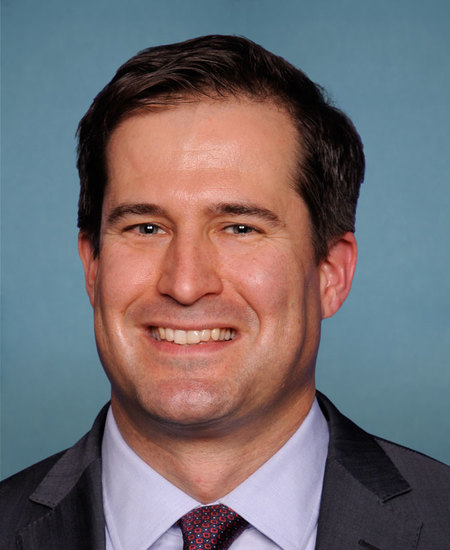
Rep. Seth Moulton
Sponsored bills
Maddy summaryThe Universal School Meals Program Act of 2023 would establish a universal school meals program providing free breakfast and lunch to all children enrolled in participating schools, regardless of family income. Key provisions include eliminating income-based eligibility requirements for school breakfast and lunch programs, setting specific reimbursement rates ($2.80 for breakfast and $4.63 for lunch with annual inflation adjustments), and prohibiting schools from collecting debt for unpaid meals or "shaming" students. The bill also replaces references to "free or reduced price" with "economically disadvantaged students" in related laws and establishes new methods for identifying children from low-income backgrounds. This legislation would directly affect all public schools participating in the National School Lunch Program and School Breakfast Program.
Maddy summaryThis bill removes a barrier for college students seeking food assistance by amending the SNAP program rules. It directly affects students enrolled at least half-time in recognized colleges or training programs, who were previously automatically ineligible unless they met separate requirements. The key change eliminates the prior restriction (in section 6(e)) that barred most higher education students from SNAP, allowing them to qualify under the new provision in section 3(m)(5)(F). The changes take effect January 2, 2024.
Maddy summaryThe Closing the Meal Gap Act of 2023 amends the Food and Nutrition Act to update how SNAP (Supplemental Nutrition Assistance Program) benefits are calculated. It replaces the "thrifty food plan" with a "low-cost food plan" based on a specific 4-person family diet, requiring the government to reevaluate this plan by 2029 and every 5 years after. The bill also updates medical expense deductions, eliminates time limits on benefits, and allows Puerto Rico to join SNAP with specific transition requirements. These changes directly affect SNAP recipients, particularly in Puerto Rico, Hawaii, and Alaska, by adjusting benefit calculations to better reflect current food costs.
Maddy summaryHR 3751, the Department of Defense Overdose Data Act of 2023, requires the Secretary of Defense to submit annual reports on overdoses among active-duty military personnel (servicemembers) and their military family members. These reports must include detailed data on fatal and non-fatal overdoses, such as demographics, substances involved, prior mental health or substance use treatment, naloxone use, and overdose intent. The bill also mandates a separate report analyzing barriers to care and recommending improved access to mental health services, non-opioid pain management, and overdose prevention tools like naloxone. Privacy protections under HIPAA ensure personal information remains confidential, and the data aims to identify patterns and guide better treatment responses within the military system.
Maddy summaryHRES 434 is a non-binding resolution declaring a mental health crisis among U.S. youth, citing statistics like 49.5% of adolescents experiencing mental health disorders and a 30% rise in emergency visits for youth during the pandemic. It urges states and schools to improve educator training, expand on-campus mental health resources, remove harmful practices (such as risk assessment teams disproportionately affecting students of color), and address barriers for undocumented and low-income students. The resolution also emphasizes combating stigma, integrating mental and physical health care, and reaching high-risk communities with better resources. As a declaration - not a law - it expresses congressional support for historic federal investments in youth mental health care but does not create new policy.
Maddy summaryHR 3713 creates federal grants to fund comprehensive school-based mental health programs for students in grades K-12, including those in Bureau of Indian Education schools. It requires partnerships between schools and community mental health providers to deliver trauma-informed, culturally appropriate services addressing suicide risk, grief, violence, and trauma exposure. The bill authorizes $300 million annually (2024-2027) for these programs, mandating privacy protections under HIPAA and FERPA, and requires annual reporting on program effectiveness.
Maddy summaryThe Cady Housh and Gemesha Thomas Student Suicide Prevention Act of 2023 requires states to establish a policy mandating annual suicide prevention training for school staff and high school students (grades 9-12). The training must be evidence-based, cover recognizing suicide warning signs, appropriate responses, and referrals to mental health services, while including cultural competency. It allocates $48 million in federal funds, with at least 15% dedicated to supporting this training program, and requires states to collaborate with mental health experts. The bill directly affects school staff and high school students in states that adopt the policy and receive federal funding.
Maddy summaryThe PREVENT HPV Cancers Act of 2023 requires the CDC to launch a national public awareness campaign to increase HPV vaccination rates, particularly among males and underserved communities. It mandates culturally tailored materials targeting rural areas, Black and Hispanic women, LGBTQ+ individuals, and populations with high HPV cancer rates, while combating misinformation about vaccine safety. The campaign, funded at $5 million annually from 2024-2028, will use media, community partnerships, and provider outreach to promote vaccination for adolescents aged 9-17. Additionally, the bill increases annual funding for the Breast and Cervical Cancer Early Detection Program to $300 million per year through 2028. The bill directly affects adolescents, healthcare providers, and communities facing HPV cancer disparities.
Create Accountability and Liability Against Lifeline Attacks Act of 2023 or the CALL Act of 2023 This bill establishes a new criminal offense for intentionally impeding the 9-8-8 Suicide & Crisis Lifeline (including the Veterans Crisis Line). Specifically, the bill prohibits an individual from making a wire communication or an electronic communication to the lifeline with the intent to impede the provision of services through or the operation of the lifeline. A violator is subject to criminal penalties—a fine, a prison term of up to six months, or both.