

Maddy summary# Comprehensive Summary: Maternal Health and Vaccination Legislation This proposed legislation establishes a comprehensive framework to improve maternal health outcomes across multiple dimensions, with a strong focus on equity and addressing systemic disparities. The bill is organized into 13 titles covering various aspects of maternal health care. ## Key Focus Areas 1. **Maternal Health Equity**: The legislation emphasizes reducing racial and ethnic disparities in maternal health outcomes, with specific provisions targeting communities of color and underserved populations. 2. **Incarcerated Mothers**: Includes provisions to end shackling of pregnant individuals in correctional facilities and establishes programs for maternal health care in prisons and jails. 3. **Technology and Telehealth**: Creates grant programs for telehealth models, technology-enabled collaborative learning, and digital tools to improve access to maternal care. 4. **Climate Change Impact**: Addresses how climate change affects maternal and infant health, with a focus on vulnerable populations. 5. **Public Health Emergencies**: Establishes protocols for maternal care during public health crises like pandemics. 6. **Vaccinations**: Expands maternal vaccination awareness and equity campaigns. ## Major Provisions **Maternal Vaccination Campaign (Title XIII)**: - Expands awareness campaigns to specifically target pregnant and postpartum individuals - Allocates $17 million annually (2024-2028) for vaccination outreach - Includes specific efforts to increase vaccination rates among racial/ethnic minority groups **Technology and Telehealth (Titles IX)**: - $6 million annually for technology-enabled collaborative learning models - $6 million annually for digital tools to promote equity in maternal health - Creates a demonstration project for alternative payment models in maternal care **Climate Change and Maternal Health (Title XII)**: - $100 million for a grant program to protect vulnerable mothers and babies from climate change risks - $5 million for education and training at health profession schools - Establishes a National Institutes of Health Consortium on Birth and Climate Change Research **Incarcerated Mothers (Title VIII)**: - Requires 25% grant reduction for states that don't restrict restraints on pregnant incarcerated individuals - Establishes model programs in Bureau of Prisons facilities for pregnant and postpartum incarcerated individuals - $10 million annually for State and local prison and jail programs **Public Health Emergency Response (Title XI)**: - $100 million for data collection on maternal health during public health emergencies - $30 million for expanding maternal mortality reviews - $45 million for Pregnancy Risk Assessment Monitoring System (PRAMS) - $15 million for research on public health emergencies' impact on maternal health ## Cross-Cutting Themes - **Equity Focus**: Nearly every provision includes specific measures to address racial and ethnic disparities - **Data Collection**: Strong emphasis on collecting and analyzing demographic data - **Community Involvement**: Requires input from community-based organizations and affected populations - **Interagency Coordination**: Mandates collaboration between multiple federal agencies - **Long-Term Investment**: All funding is allocated for 5-year periods (2024-2028) The legislation represents a comprehensive, multi-faceted approach to improving maternal health outcomes in the United States, with particular attention to vulnerable populations and systemic barriers that contribute to poor maternal health outcomes.
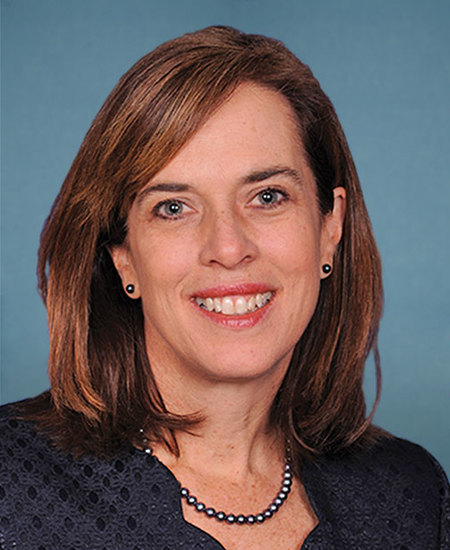
Rep. Katherine M. Clark
Sponsored bills
Maddy summaryThe Child Care for Working Families Act establishes a federal entitlement program providing subsidized child care for working families with children under age 6 who are not yet in kindergarten. It creates a sliding fee scale where families at or below 85% of State median income pay no copayment, while higher-income families pay up to 7% of their income based on income thresholds. The bill requires states to develop quality rating systems for child care providers and ensures providers receive sufficient funding to meet quality standards, including wages equivalent to elementary educators. It prioritizes access for underserved populations including children with disabilities, infants and toddlers, children experiencing homelessness, and families in low-income communities. The program is funded with $20 billion for fiscal year 2024 and subsequent years through 2029.
Maddy summaryHR 2725, the "Do No Harm Act," amends the Religious Freedom Restoration Act (RFRA) to clarify that RFRA does not apply when federal laws protect against discrimination or promote equal opportunity. It specifically exempts protections under the Civil Rights Act, Americans with Disabilities Act, workplace benefits like leave, child labor safeguards, and healthcare access from RFRA challenges. The bill also clarifies that RFRA does not block private lawsuits between individuals, applying only to cases involving government entities. This amendment ensures that existing federal civil rights and workplace protections remain enforceable under RFRA.
Maddy summaryThe Women's Health Protection Act of 2023 would protect access to abortion services by prohibiting states from imposing restrictions that are more burdensome than those for comparable medical procedures. The bill would ensure people can obtain abortion services before fetal viability without unnecessary limitations like mandatory waiting periods or biased counseling, and after viability when necessary to protect the patient's life or health. It would preempt state laws that conflict with these protections and allow for civil enforcement actions to challenge restrictive state laws. This bill directly affects people seeking abortion services (including transgender and nonbinary individuals who can become pregnant), health care providers, and states that have implemented abortion restrictions.
Maddy summaryHR 2403, the Enhanced Background Checks Act of 2023, modifies federal firearm background check procedures to address delays. It requires firearm licensees to wait at least 10 business days after a prospective buyer submits a petition verifying they are not prohibited from owning firearms before completing a sale, if the background check system hasn't cleared the transaction. The bill also mandates the Attorney General to create an electronic petition form, provide timely responses to petitions, and track delays. Additionally, it requires multiple reports analyzing implementation, transaction delays, denial reasons by state, and potential impacts on domestic violence victim safety, with the first report due within 150 days of enactment.
Maddy summaryThe International Human Rights Defense Act of 2023 creates a permanent Special Envoy at the State Department to coordinate U.S. efforts against discrimination and violence targeting LGBTQI+ people globally. The bill requires the development of an annual global strategy to address criminalization, discrimination, and violence based on sexual orientation, gender identity, or sex characteristics. It also mandates that U.S. country reports on human rights practices include detailed information about laws and practices affecting LGBTQI+ communities. The legislation authorizes U.S. foreign assistance programs to support LGBTQI+ rights through health services, legal protections, and community capacity building. This bill aims to strengthen U.S. diplomatic engagement on LGBTQI+ rights as part of broader human rights policy.
Maddy summaryHR 1831 would award Billie Jean King a Congressional Gold Medal to honor her lifelong advocacy for equal rights in sports and society. The bill directs the Secretary of the Treasury to strike the medal and have it presented by congressional leaders, recognizing her pivotal role in advancing women's equality through tennis (including founding the Women’s Tennis Association and securing equal prize money) and her broader impact on society through initiatives like Title IX advocacy.
Maddy summaryThis bill authorizes a Congressional Gold Medal to honor the "Hello Girls" - female telephone operators who served in the Army Signal Corps during World War I. They provided critical battlefield communications in France (connecting 26 million calls), wore military uniforms, and faced combat risks, but were denied veteran benefits for 60 years due to being classified as civilian contractors. The medal recognizes their pioneering service, devotion, and the decades-long struggle to gain military recognition. The award follows similar recognition for other WWII women veterans and aims to correct the historical injustice they faced.
Maddy summaryThe Paycheck Fairness Act (HR 17) strengthens equal pay protections by amending the Fair Labor Standards Act. It prohibits pay discrimination based on sex, pregnancy, childbirth, sexual orientation, gender identity, and sex characteristics. The bill modifies employer defenses for pay differences to require demonstration that any disparity is job-related, consistent with business necessity, and accounts for the entire pay differential. It also prohibits employers from relying on wage history when making hiring decisions or setting pay, enhances penalties for violations, and requires the EEOC to collect compensation data disaggregated by sex, race, and national origin.
Maddy summaryHR 1247 would award a Congressional Gold Medal to the Freedom Riders collectively, honoring their pivotal role in challenging segregation in interstate travel during the Civil Rights movement. The medal, to be struck by the U.S. Mint and displayed at the Smithsonian Institution, recognizes their nonviolent protests that led to the 1961 federal ban on segregation in interstate public facilities. This is a symbolic tribute with no legal effect, as the bill does not create new policies or alter existing laws.